Showing posts with label TUNNELS. Show all posts

9 August 2022 - GRIC TUNNEL - CROATIA


GRIC TUNNEL

 - CROATIA -


G'day folks,

A World War II evacuation tunnel turned into a history display of Croatian state and people. 


 This pedestrian tunnel in the city of Zagreb runs underneath the historic neighborhood of Grič. Built during World War II, the tunnel was originally intended to serve as a bomb shelter and transport link through the hill of Gornji Grad. It measures 350 meters long and up to 5.5 meters wide, connecting Mesnička and Stjepan Radić Streets. Construction began in 1943 and finished 1944. The tunnel was harshly criticized for its expense, and many argued that it was not necessary. Work continued nevertheless, though changes were made to the project. The original plans included a large underground hall to be placed in the center. But in the end, that feature went unrealized, and only an east-west transport corridor was finished.


After the end of World War II, the tunnel was remodeled and the planned central hall was added. It was used as a warehouse for a food company but was soon forgotten and largely abandoned. It attracted unhoused people and others seeking temporary shelter.

Interest in reviving the tunnel started in the 1990s, when energetic rave parties were held inside. Proposals for the remodeled tunnel included a “museum of senses” and a lift that would allow people to reach the neighborhood above without climbing the steep hill. 

But instead in 2016, the remodeled tunnel opened to public as a cultural center. You can literally walk through the history of Croatia and Zagreb and familiarize yourself with different historical events by information displays and objects. The tunnel is structured to different compartments that are arranged to various displays about culture, everyday life and science. Curators have used different image and light effects and interesting sound options.

The central underground hall has been turned into a Rain Room where visitors walk under water drops (umbrellas are provided by the Tunnel) and images of famous persons of Croatia are displayed. Another interesting exhibit is a Tesla machine that uses sound and electicity and fires out a lightning effect analogous to a Tesla coil.


5 August 2022 - SECRET TUNNEL BENEATH FAMOUS CAFE


SECRET TUNNEL 

BENEATH FAMOUS CAFE


G'day folks,

Famed for its pie, this eatery has a hidden tunnel that allowed Catholics to secretly walk to church during the Reformation. 

On its surface, Cafe Papeneiland is the perfect example of  the gezelligheid, or “coziness,” for which Dutch “brown cafes” are renowned. With its brown walls, chandeliers emitting soft light, and display of beautiful Delft plates and tiles, the eatery offers a warm, welcoming place for a hot drink or stellar slice of apple pie. But beneath its comfy exterior lurks a hidden history of religious resistance.

During the Dutch Protestant Reformation of the 16th and 17th centuries, the government outlawed Catholicism. As a result, Catholics had to worship in secret. This led to the establishment of hidden churches, some of which still exist today. Our Lord in the Attic, for example, is a beautiful, 150-seat chapel, complete with pillars, a giant painting of Christ’s baptism, and a marble-and-gilt altar, all tucked away in (you guessed it) an attic.


In Amsterdam’s Jordaan neighborhood, worshippers once secretly entered a church through a tunnel that ran beneath the canal. That tunnel opened at the building that houses Cafe Papeneiland, and it can still be seen today. The cafe’s very name is a nod to this history: Papeneiland means “papists’ island,” referencing how the building was a sanctuary for Roman Catholics, who were also known as “papists” due to their allegiance to the Pope. 


Today, the cafe is most well-known for its apple pie (or “tart,” depending on where you’re from). The fame is  deserved: The pie has a flaky crust, the perfect balance of tart-sweet apples and cinnamon spice, and a light-yet-rich tuft of whipped cream on the side. Order a slice, then ask your server to point you in the direction of the tunnel’s entrance. It’s behind a green-barred gate along the stairs to the basement. Sometimes obscured by brooms and other cleaning supplies, this doorway to the past can be easy to miss.


26 July 2022 - ROVE TUNNEL - ABANDONED CANAL TUNNEL in FRANCE


ROVE TUNNEL

 - ABANDONED CANAL 

TUNNEL in FRANCE -


G'day folks,

Welcome to the longest canal tunnel in the world, abandoned in the 1960s. 

Between 1911 and 1916, the Rove Tunnel was built to link the Marseille Harbor to the Rhone River. But it wasn’t until 1926, after twenty years of work and a World War, that the tunnel was finally opened for use, surviving a little under 40 years before collapsing in 1963.


The longest canal tunnel in the world, the Rove Tunnel passes through Berre Lake (adjacent to the Mediterranean to the west of Marseille) and Martigues (a commune in the southeastern part of France, to the northwest of Marseille), and stretches about 4.5 miles in length and 72 feet in width, which, before it was closed to public use, enabled about two ships to cross inside.

Although it has been abandoned for years, a project has been launched to bring this tunnel back to life by using it as a salty water supply for the Berre Lake, which is slowly drying.


25 July 2022 - ABANDONED RAILWAY TUNNEL - ARIZONA


ABANDONED 

RAILWAY TUNNEL

 - ARIZONA -


G'day folks,

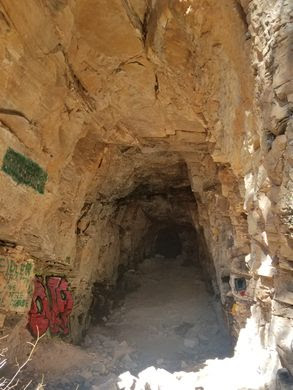
A partial tunnel blasted into a steep ridge is all that remains of a failed railway across Arizona.  

In 1881, businessman James Eddy was struck by inspiration. Northern Arizona was connected to the rest of the country by transcontinental railways and was dense with ponderosa pine forests and a burgeoning timber industry. Southern Arizona, meanwhile, was even more populated, and the isolated mining boomtowns in the deserts were home to some of the richest silver and copper veins in the world. If he could connect the south to the railroad network in the north, he would stand to make a fortune.

The benefit of connecting the two halves of the state would be twofold: sending much-needed lumber and supplies to the communities in the south, and freighting mined minerals back north where they could more easily be shipped to the industrial centers on the coasts. Only one thing stood in the way of Eddy’s plan: the Mogollon Rim.


The southern boundary of the Colorado Plateau, an elevated region that crosses into four states, is the Mogollon Rim, a massive ridge of steep slopes that cross much of Arizona. When Eddy formed the Arizona Mineral Belt Railroad company, his engineers calculated that to run a railway across the Mogollon Rim at a gentle enough grade for trains he would need to create a tunnel 3,100 feet long and 16 feet wide.

In 1883, work on the tunnel began. Over 40 men spent all summer blasting a passage through the rock. Only 70 feet of the tunnel had been completed, however, when the company ran out of funds and the work came to a halt. Eddy spent the next several years finding investors and hyping the railroad project, managing to get another 35 miles of track laid when the money ran dry and the work stopped again, this time for good.

Over the subsequent years, the 35 miles of track south of Flagstaff were torn up by locals who reused the scrap. Today, the only remaining evidence of Eddy’s ambitious but failed project is the partially completed tunnel deep in the Tonto National Forest. Other than some graffiti near the entrance, it still looks more or less exactly as it did when the Arizona Mineral Belt crews left it in 1883. The crumbling structure to the right of the tunnel entrance is the remains of the powder house where the workers stored their explosives while blasting through the ridge.


29 July 2022 - RIFLE SIGHT NOTCH - COLORADO


RIFLE SIGHT NOTCH 

- COLORADO -


G'day folks,

 This old train trestle and collapsed tunnel once allowed the railroad to negotiate the steep slopes of the Colorado Rockies. 

Colorado’s mountains do not lend themselves well to the building of railroads. Due to the limitation of grade, engineers had to develop novel approaches for getting trains up and down steep canyons and high mountains. This often involved building trestles and digging tunnels, or combining both to make what was known as a loop. 


By passing the tracks across a high trestle traversing a narrow gap, gradually spiraling around the mountain then back under the trestle to complete the loop, the trains could navigate the high elevation of the Rocky Mountains. One of the few remaining examples of such a loop is the Rifle Sight Notch on the Rollins Pass route near Winter Park.

Looping around Spruce mountain, the route passes over Tunnel 33 on a 3-mile loop at a 2.5 percent grade, rather than take a 2-mile route that is more direct but includes 8 percent grades that are impossible for trains to negotiate. The loop allowed the train to gain or lose 175 feet of elevation per mile. Yet even with this gentle grade, trains managed to fall off the tracks with frightening regularity on this section of the Moffat Road. Evidence of at least two wrecks can still be found on the western approach to Tunnel 33.

From the pass, the trestle looks like the notch in a rifle sight, which is how it got its name. The tunnel under the trestle caved in following the closure of the route in 1928. The trestle—one of only three left on the Moffat Road—is unstable, but it remains as a testament to the engineering know-how needed to cross Colorado’s rugged mountains.


30 June 2022 - TUNNEL NUMBER 3 - MANHATTAN, NEW YORK


TUNNEL NUMBER 3

 - MANHATTAN, NEW YORK -


G'day folks,

Deep under Manhattan is the largest construction project in city history. So far, the project has taken the lives of 23 workers, or "a man a mile." 

The state of New York began digging this tunnel in 1970 to provide water to the city from its upstate source.

When completed, the tunnel will be over 60 miles long, snaking across the city from Yonkers across Central Park, the East River and Roosevelt Island and ending up in Astoria, Queens. 


The construction project costed over $6 billion and was not finished until 2020. The costs for the ambitious project have already been high with 23 workers losing their lives to the tunnel, averaging about one life each mile.


9 May 2022 - BOURBON TUNNEL IN NAPLES, ITALY


BOURBON TUNNEL 

IN NAPLES, ITALY


G'day folks,

Dug as a secret royal escape route, the tunnel became a wartime bomb shelter and dumping ground for vintage cars. 

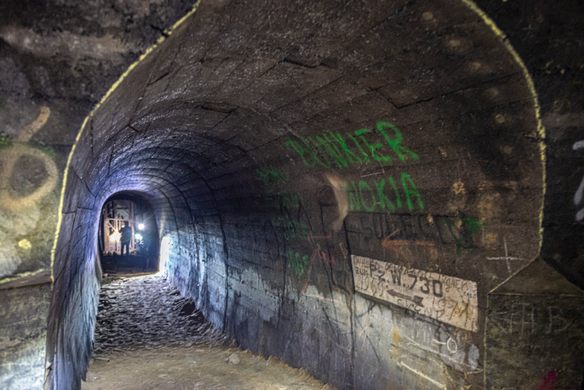
Lurking about 100 feet below the streets of Naples is a cavernous tunnel filled with rusting vintage cars and wartime relics, that was originally built to be as a secret escape route for the royal family in 1853.

The tunnel was commissioned by King Ferdinand II of Bourbon (the same French dynastic house that lent its name to New Orleans’ famous Bourbon Street), who reigned over Sicily and Naples during a tumultuous period marked by riots and uprisings. It was meant to be a passageway from the Royal Palace to the military barracks, in case the royal family needed to flee the revolting populace.

The tunnel was dug out of the volcanic rock below the city, connected to the existing, early-17th-century Carmignano aqueduct system. However, the king died before the tunnel was completed, and it was left unfinished and largely forgotten until World War II. 


During the war the subterranean corridors and neighboring cisterns were used as air raid shelters, housing up to 10,000 Neapolitans. On a historic tour of the tunnels you can see artifacts left by the people who sheltered here, including children’s toys, gas masks, and personal items like hair brushes. You can even see the remains of toilet blocks and beds.

After the war the Bourbon Tunnel (Il Tunnel Borbonico) became a dumping ground for wartime rubble and unwanted debris, storing everything from fascist statues to impounded cars from the end of the war until the 1970s, when the tunnel was forgotten again.

The tunnel was restored in the 2000s and now the vintage cars and wartime rubble scattered throughout the tunnel are on display in the eerie space, dubbed the Bourbon Gallery (Galleria Borbonica). It’s not far from the Naples Underground, another entrance to see the maze of underground tunnels hidden beneath the ancient city. Tours of the site are given, including expeditions into the darker corridors of the historic tunnel.


Clancy's comment: Naples is one of my favourite cities, but I never knew this existed.

I'm ...


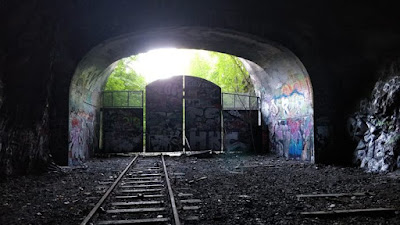
7 May 2022 - ABANDONED RAILWAY TUNNEL IN SWEDEN


ABANDONED RAILWAY 

TUNNEL IN SWEDEN


G'day folks,

It was meant to help transport wounded soldiers to a secret underground hospital. 

An old overgrown train track and tunnel with an intriguing history hide close to one of Stockholm’s most popular bathhouses.

The old industry track was built between 1925 and 1940. It stretches from the top northeastern tip of the Södermalm and arcs to the southwest. It begins near the harbor, as the idea was that wounded men arriving via ship to the harbor could be ferried away to an underground disaster center hidden beneath the hospital.


But no ships full of wounded World War II soldiers ever arrived. The railway did see some violence, though, as it was one of the places bombed by the Soviets during the February bombings of 1944.

The city has made several requests to remove the train tracks to construct houses in their place. The request keeps being denied, leading the city to find other uses for the space. Marathons have been held there, as well as theater shows and art exhibits. Proposed plans for the tunnel include a pedestrian path, concert hall, and even a ski trail.

Clancy's comment: It always staggers me when I read about the infrastructures constructed during our major wars.
I'm ...


6 May 2022 - THE OSTWALL FORTIFICATION - POLAND


THE OSTWALL FORTIFICATION 

- POLAND  -


G'day folks,

What was once an underground Nazi city is now Europe's largest bat reserve. 

When the Nazis built the imposting Ostwall Fortification in the mid-1930s the intention was to create a defense against invading Russian forces, but they clearly could not have foreseen the invasion of bats that would overtake the tunnels once they were abandoned.   

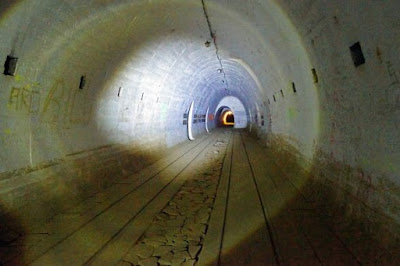
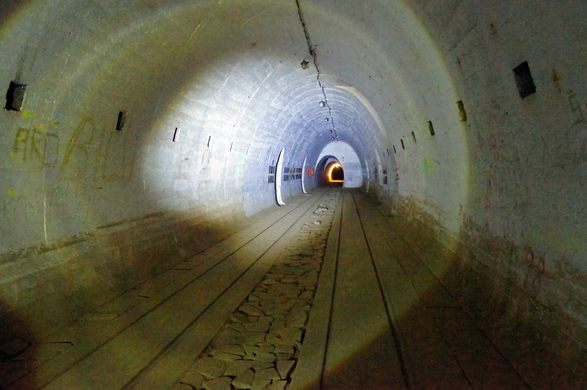
The Ostwall Fortification, otherwise known as the tongue twisting “Festungsfront Oder-Warthe-Bogen,” was constructed as a massive self-sufficient bunker defense system that was connected by almost 25 miles of tunnels and underground support chambers. The underground complex connected around a hundred pillbox bunkers creating one of the largest and most extensive defense lines Nazi Germany ever created. It was estimated that at full capacity and operation the system could house 24,000 soldiers comfortably. 


The bunker system was seen as a bit of a revolutionary endeavor at the time, both in terms of efficiency and efficacy. However when the attack on the base actually came, there were just 1,000 soldiers manning the massive defense. The Nazi’s impressive defensive juggernaut fell in just three days.

After the Nazi’s fled from their bunker city the site was essentially abandoned by humans but became home to some new tenants: tens of thousands of bats! Attracted to the tunnels thanks to the dark, temperate atmosphere and shelter for their winter hibernation, the flying mammals took to the tunnels in droves.

Today the tunnel complex has become the largest man-made bat reserve in Europe, holding around 37,000 bats during the packed winters during which tourists are not allowed in the tunnels. Many portions of the tunnels are open to visitors at other times of the year, but during bat season the Ostwall Fortification provides a safe space for the animals to rest defended from the outside world. The Nazis could only have wished it would’ve been so effective for them.   

Clancy's comment: The Nazis built extraordinary infrastructures during the war, many of which were never fully used.

I'm ...