Showing posts with label TRAINS. Show all posts

10 November 2022 - SIERRA LEONE'S NATIONAL RAILWAY MUSEUM


SIERRA LEONE'S 

NATIONAL RAILWAY MUSEUM


G'day folks,

After Sierra Leone's railways shut down in 1974, a collection of engines and other artifacts spent decades hidden away in this old workshop—now a museum. 

The Sierra Leone railroad system was built in 1897, with one line to Daru in the eastern part of the country (and a small branch to Makeni the largest town in the north).

The railroad system operated until 1974, then shut down due to a combination of increased car traffic and country policy. Since that year, some of the locomotives were bought and shipped to Wales, the others were kept in the capital city of Freetown. They were stored in the former train workshop, with the intention to convert it into a museum.


The collection survived despite years of neglected upkeep, and the workshop turning into a shelter during Sierra Leone’s civil war. From 1992 to 2002, some 50,000 people lost their lives and hundreds of thousands more lost their homes. Many of those displaced people found the former workshop complex and turned it into a temporary shelter.

 After the war’s end, the collection of railway engines was located and restoration work began. A team set about cleaning and repairing the engines as well as the workshop space. The museum officially opened in 2005, and has continued to grow since then. The museum shows maps of the railroads, their history, and photos of the stations. One of the unusual items in the museum’s collection is a couch specially made for Queen Elizabeth II to use while traveling through the country in 1961 (she never wound up using it), located on a tank locomotive built in 1915.

2 September 2022 - RUSTED RAILWAY MUSEUM IN ETHIOPIA


 RUSTED RAILWAY

 MUSEUM IN ETHIOPIA


G'day folks,

Rusting railcars and locomotive equipment fill this Ethiopian train graveyard. 

Usually when a rail line is decommissioned, the cars and equipment simply disappear, sold off or thrown away, but this old Ethiopian line has been turned into a sort of rusty folk museum.  

The Railway Station at Dire Dawa was the only formal waystation on the railway line which operated from Djibouti on the coast to Addis Ababa in the Ethiopian highlands. The railway line which was constructed and operated by a French company the Chemin de Fer Ethiopien began operations in the reign of Emperor Menelik II and was completed in 1929.


The Railway Line ceased running in the early 2000s and is currently being upgraded into a more modern service. However, when the service stopped, most of the rolling stock, trains, and carriages ended up in the Dire Dawa Station where a museum of sorts has been established.

The museum is a wonderful collection of train memorabilia slowly decaying in the Ethiopian sun. One will receive a tour from the curator, an elderly man who was employed by the railway and speaks a smattering of English, fluent Amharic, and good French, the operational language of the railway. French signs can still be seen hanging in the workshops and there are railway carriages from the 1st, 2nd, and 3rd classes dating from the 1950s. There are a selection of diesel engines and some minor gems such as the rusted shell of an Italian locomotive from the 1940s and some wagons supposedly gifted to the former Communist regime by Mugabe and used to transport tanks.

Wandering around, with bee-eaters providing little bursts of color as they flit between the old telegraph wires, the curator is perfectly happy for all the exhibits to be handled and clambered on, actively encouraging people to “get in,” unafraid that a little bit more of an engine may crumble into the rust colored soil.


29 July 2022 - RIFLE SIGHT NOTCH - COLORADO


RIFLE SIGHT NOTCH 

- COLORADO -


G'day folks,

 This old train trestle and collapsed tunnel once allowed the railroad to negotiate the steep slopes of the Colorado Rockies. 

Colorado’s mountains do not lend themselves well to the building of railroads. Due to the limitation of grade, engineers had to develop novel approaches for getting trains up and down steep canyons and high mountains. This often involved building trestles and digging tunnels, or combining both to make what was known as a loop. 


By passing the tracks across a high trestle traversing a narrow gap, gradually spiraling around the mountain then back under the trestle to complete the loop, the trains could navigate the high elevation of the Rocky Mountains. One of the few remaining examples of such a loop is the Rifle Sight Notch on the Rollins Pass route near Winter Park.

Looping around Spruce mountain, the route passes over Tunnel 33 on a 3-mile loop at a 2.5 percent grade, rather than take a 2-mile route that is more direct but includes 8 percent grades that are impossible for trains to negotiate. The loop allowed the train to gain or lose 175 feet of elevation per mile. Yet even with this gentle grade, trains managed to fall off the tracks with frightening regularity on this section of the Moffat Road. Evidence of at least two wrecks can still be found on the western approach to Tunnel 33.

From the pass, the trestle looks like the notch in a rifle sight, which is how it got its name. The tunnel under the trestle caved in following the closure of the route in 1928. The trestle—one of only three left on the Moffat Road—is unstable, but it remains as a testament to the engineering know-how needed to cross Colorado’s rugged mountains.


5 July 2022 - TITO'S BLUE TRAIN - SERBIA


TITO'S BLUE TRAIN
 - SERBIA -

G'day folks,

Ride in 1960s style on the private luxury train Marshal Josip Tito used to travel around Yugoslavia. 

In an unassuming railway depot south of Belgrade lies a relic of a forgotten era. Built in a time when Yugoslavia was recovering from the Second World War, this iconic blue train served to transport the country’s leaders around the different republics of Yugoslavia, and entertain foreign dignitaries so critical to the diplomatic success of the socialist nation.

The Blue Train, Marshal Josip Tito’s private train, was built with luxury in mind. Tito preferred to travel by rail, and as Yugoslavia became more prosperous in the years after the war, the train reflected the optimism and wealth of its primary user, if not that of the average citizen.


Custom-built coaches were decorated in a simple yet modern socialist realist style, with certain classical holdovers such as intricate mosaics and dark hardwood lining. The overall effect is one of understated power, which comes as no surprise considering some of the train’s clientele.

Used often by Tito for domestic purposes, the Blue Train also served an important diplomatic role. Its guest list is a veritable who’s-who of 1960s power players, from Queen Elizabeth to Charles de Gaulle to Yasser Arafat. It’s easy to imagine diplomats and party officials seated around the massive main dining table or crammed into the modernist, Zodiac-themed bar, as Tito sought to provide the world a path between the American-led West and the Soviet sphere of influence.

It’s still possible to enjoy the splendor of the Blue Train, which has been remarkably preserved in its original state.  If your pocketbook is big enough, you can do so as Tito did: for a hefty fee, the Serbian Railways will hook up the train for a trip on the spectacular Belgrade-Bar railway. The line is one of Tito’s biggest public works projects and one of the most scenic rail journeys in Europe; the 296-mile route between the Serbian capital and the Montenegro coast passes over 435 bridges and through 54 tunnels.

For those whose wallets aren’t quite as fat, it’s still possible to enjoy the Blue Train, and walk through the very same cars where Haile Selassie sat, Queen Elizabeth dined, and Josip Broz Tito slept.


15 February 2022 - FIRST PASSENGER TRAIN REACHES 15 MPH


FIRST PASSENGER TRAIN

 REACHES 15 MPH


G'day folks,

 For the first time in history a steam locomotive carried passengers on a public railway in 1825. The engine was called Locomotion No. 1 and in control was its designer, the engineer George Stephenson.

It belonged to the Stockton and Darlington Railway, which operated across the North East of England. Apart from 36 wagons filled with sacks of coal and flour, the train included a purpose-built passenger coach called The Experiment. Bone-shaking and springless, the carriage resembled a shed on wheels and was occupied by various dignitaries.

The rest of the passengers stood in open coal wagons, though a few had the "luxury" of temporary wooden benches.

The directors had allowed room for 300 passengers, but the train left carrying between 450 and 600 people, some travelling on top of wagons full of coal.

As the train set off, watched by hundreds of curious onlookers, it was led by a man on horseback with a flag and managed to cover eight and a half miles (14km) in two hours at an average speed of 8mph (13km/h).

The historic journey came about after a meeting between Stephenson, who had built steam engines to work in local collieries, and Edward Pease, the son of a wool merchant.

Pease rode round the country buying fleeces from farmers and in the course of his travels became convinced of the need for a railroad to carry coal from the collieries to an East Coast port. In 1821, with a group of businessmen, he formed the Stockton & Darlington Railway company.

Then he came up with a plan for an eight-mile (12.9km) line to exploit a rich vein of coal. The coal wagons would be pulled by horses.


When he heard of the scheme, Stephenson contacted Pease and told him that he should consider building a locomotive railway and that he had already built a locomotive that was "worth fifty horses".

Pease saw the engine at work, realised Stephenson was right and offered him the post of chief engineer at the railroad company.

So it was that the historic "passenger train" made its first run. But it was not the only railway "first": it was also the scene of the first recorded accident involving a passenger. When the horseman ahead of the train was out of the way and the train was going down a slope, Stephenson opened the throttle and his train reached the staggering speed of 15mph (24km/h).

This so unnerved one passenger that he fell off and his foot was crushed by the following wagon.

Clancy's comment: Well, there ya go. Now, we have trains doing amazing speeds.

I'm ...


4 December 2021 - TURKISH TRAIN CLIMBS STEEP HILL IN 90 SECONDS


TURKISH TRAIN CLIMBS 

STEEP HILL IN 90 SECONDS


G'day folks,

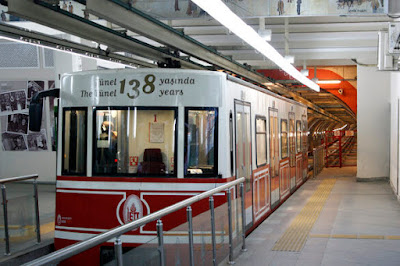
This train can climb a steep hill in 90 seconds on the second-oldest urban subway in the world. 

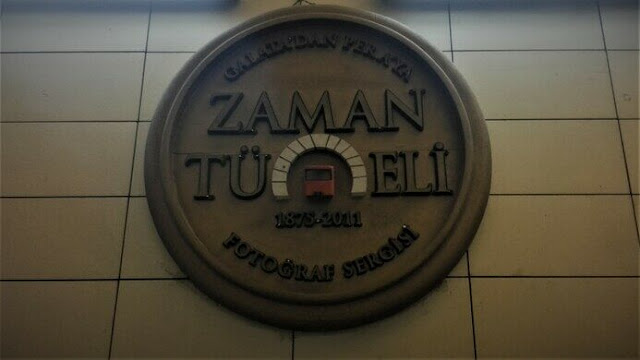
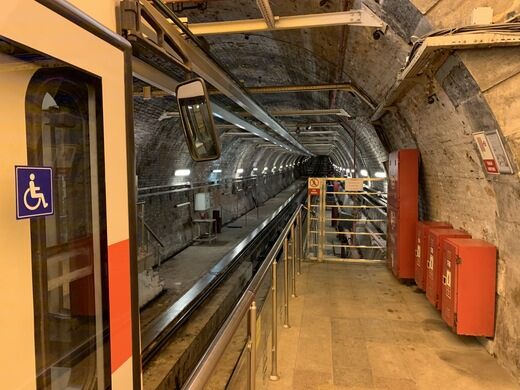
This short railway has served Istanbul’s residents and visitors since the late 19th century. It is the oldest existing underground train in continental Europe, and second-oldest in the world after the London Underground.

In the mid-19th century, the Ottoman Empire was opening to international trade and many Europeans began to settle in the then capital. Many of them lived in the ​​Pera neighborhood (today known as BeyoÄŸlu), where residences, luxury hotels, and embassies were located at the top of a steep hill, and the banks, warehouses, and exchange offices where many Europeans worked were located at the base, closer to the ports lining the Golden Horn. 

When the French engineer Eugène-Henri Gavand first arrived in Istanbul in 1867, he was surprised to see how many people trekked down and up the steep hill on Yüksek Kaldirim Avenue every day. He thought a funicular railway would make the trip easier. 


 Gavand returned to France to prepare his project, and in 1869 presented it to Sultan Abdelaziz. The project was approved but delayed for several years during the Franco-Prussian War. Construction resumed after the war and Tünel opened to the public in January 1875. 

At that time, the train consisted of a steam engine pulling two wooden cars. The first car held passengers, while the second was used to transport goods livestock and carriages. 


The line was closed for modernization in 1968, reopening in 1971 with electric power and steel cars. It continues to operate today. The Tünel is part of the historic city’s transportation network, moving about 12,000 people between the Karakoy and BeyoÄŸlu stations every day.

Clancy's comment: Istanbul is one of my favourite cities. 

I'm ...


10 October 2019 - 'RED STAR TRAIN' GRAVEYARD IN BUDAPEST, HUNGARY


'RED STAR TRAIN' GRAVEYARD
 IN BUDAPEST, HUNGARY

G'day folks,

Well, here is another abandoned place in the world. The abandoned "Red Star Train Graveyard" is the final rusting place for precious artifacts of train history. 

The abandoned Istvántelek Train Yard (Istvántelki fÅ‘műhely), otherwise known as the “Red Star Train Graveyard,” occupies a vast area of land outside Budapest. More than 100 locomotives and train cars rot away, some in deteriorating depots, others out in the field. Among these are some very rare train engines, and a few cars that are said to have transported prisoners to Auschwitz during the Holocaust.


Built at the beginning of the 20th century as a repair yard for the national railway, only a few southern parts of the train yard are still in use, while most of it is abandoned.


Two large depots, a few smaller sheds and open-air areas are scattered with locomotives and railcars, some of them very ancient, others more recent, from Hungarys time as part of the Soviet Regime. Some of the trains were brought here to be repaired and exhibited in the Budapest Railway Museum but never made it to the display and were instead left behind in the train yard.

There are a few gems rusting away in the graveyard that are sure to make any train enthusiast’s heart beat faster. A few Hungarian MAV 424 steam engines weigh in at 137 tons and bear a red star on their fronts, which earned the train yard its nickname. There is also an engine of the MAV 301 series, used from 1911 to 1914, which is one of only a few still in existence.


Linked to this engine are several German freight cars, which may be the very ones that transported hundreds of thousands of Hungarian Jews to their death in Auschwitz during Nazi occupation in World War II. Standing in front of the freight cars, one can only imagine the horror, tragedy, and despair that went on inside of them.


Among the more recent items in the train graveyard are some engines and cars from the Soviet era, inside of which rail tickets from the 1960s can still be found. Altogether the train graveyard offers a great alternative to the usual Budapest tourism sites, not only for train lovers, but for anyone with an eye for history. The engines and cars are slowly losing their battle against nature, and before long the trains may be entirely obscured by overgrown plant life. 

Clancy's comment: Wow, so much history rotting away. Train buffs would be mortified.
I'm ...


19 August 2019 - THE TUNNEL OF LOVE - UKRAINE


THE TUNNEL OF LOVE 
- UKRAINE -

G'day folks,

This beautiful natural train tunnel is said to grant the wishes of visiting lovebirds. 


 Just outside the city of Klevan in Ukraine, a nearly two-mile stretch of private railway has turned the surrounding trees into an enchanting natural tunnel.


A train transporting wood to the nearby fiberboard factory runs three times daily. Otherwise, the railway tracks through the tree tunnel make for a lovely stroll for couples and singles alike. The romantic setting earned this stretch of track its nickname, the “Tunnel of Love.” It’s also called the Green Mile Tunnel, for the bright leafy branches that arch over the railway.


The tunnel is at its lushest during the spring and summer when the trees are at the peak of their leafiness, but the colorful foliage of fall and snow-covered branches of winter make for captivating sights as well.


Local legend has it that couples who visit the tunnel will be granted a wish, provided their intentions are sincere.

Clancy's comment: Enchanting, eh? Certainly worth a photograph.

I'm ...