Showing posts with label JAPAN. Show all posts

2 November 2022 - TOWER OF WIND IN TOKYO


TOWER OF WIND 

IN TOKYO


G'day folks,

Curious onlookers have suspected this strange structure is a secret government base. 

When a strange structure with sail-like towers appeared in the middle of Tokyo Bay, the internet began to ponder its purpose. Some suspected—jokingly, one would hope—nefarious ends. Was it a secret government installation, or a supervillain’s underwater lair? Or maybe an early warning system for an encounter with Godzilla?

The truth was far more prosaic. It was, in fact, the Kaze no Tō, or Tower of Wind, a ventilation shaft supplying air to the tunnel section of the Tokyo Bay Aqua-Line.


Opened in 1997, the Tokyo Bay Aqua-Line is a bridge-tunnel combination that crosses Tokyo Bay. It consists of two bridges at either end, connected by a six-mile-long tunnel underneath the bay. The tunnel currently ranks as the fourth-longest underwater tunnel in the world, and the longest undersea tunnel for cars (the three longer tunnels all carry trains).

The Tower of Wind sits above the midpoint of the tunnel, which lies about 131 feet below the surface. Designed by the acclaimed Pritzker Prize-winning Japanese architect Toyo Ito, the two elegant towers look like domes from some angles and wind-filled sails from others. Each tower captures the almost constant winds that blow across the bay, supplying the tunnel below with fresh air.

Users of the Tokyo Bay Aqua-Line can stop at a second artificial island, known as the Umihotaru, located at the bridge-tunnel crossover point, which has a rest area with restaurants, shops and amusement facilities. The Tower of Wind, however, is off limits. But you can still see it from across the bay, or from the window of your plane as you fly into Tokyo’s Haneda Airport.

22 July 2022 - GORGEOUS WYSTERIA TUNNEL - JAPAN


GORGEOUS WYSTERIA 

TUNNEL 

- JAPAN  -


G'day folks,

Welcome to an exquisite tunnel of cascading flowers.

 It’s practically impossible to walk through the pastel-colored passageway of wisteria flowers at the Kawachi Fuji Gardens in Kitakyushu without imagining an elegant fairy princess and her one-horned white steed prancing alongside you. 


A member of the pea family, wisteria is an ornamental vine, wildly popular in both Eastern and Western gardens for its graceful hanging flowers and its ornate, winding branches. Easily trained, the woody vines tend to reach maturity within a few years, at which point they bloom in cascades of long, lavender flowers of varying pastel shades. There are about 150 flowering wisteria plants of roughly 20 species that create this famous colorful flower tunnel.

Make sure to visit in late April or Early May, during the “Fuji Matsuri,” or “Wisteria Festival,” when the magical tunnel is in full bloom. Because many visitors come to the gardens during the blooming season, you need to book your time slot in advance.

Arrive at any other time of year, and its appearance will be a disheartening mass of lifeless, twisted branches.


12 July 2022 - AKIYOSHHIDO CAVE - JAPAN


AKIYOSHHIDO CAVE 

- JAPAN -


G'day folks,

Approximately 300 million years ago, a massive coral reef existed in what is now the largest limestone cave in Japan. 

Deep within the mountains of Yamaguchi Prefecture lies Akiyoshido Cave, the longest network of limestone caves in Japan. While the total length of the cavern is nine kilometers (5.5 miles), about one kilometer (0.6 miles) of the cave is open to explore. These chambers are beautifully illuminated and are easily traversed via built up walkways.

There are three entrances to Akiyoshido Cave: the Akiyoshido Entrance, the Kurotani Entrance, or through an elevator. 


The chambers of the cave are decorated with an abundance of stalactites and terraces. Within the caves is a large underground lake, which can be comfortably appreciated from the walkway. The water from this lake feeds into a waterfall at the cave’s opening. This waterfall can also be admired from the walkway. Towards the end of the caves is a colorfully illuminated tunnel, this serves as a tribute to the evolution of the human race throughout the ages.

Just outside the caverns are also several hiking trails that wind through the Akiyoshidai Plateau. These trails weave through a hilly landscape littered with fragments of limestone. Some 300 million years ago, the plateau was the site of a coral reef. Over time, the limestone eroded into the formations that we see today.

Akiyoshidai is a wondrous place to visit all year round, with each season presenting the caves from a unique angle. 


21 April 2022 - JAPANESE TUNNELS IN RABAUL


JAPANESE TUNNELS 

IN RABAUL


G'day folks,

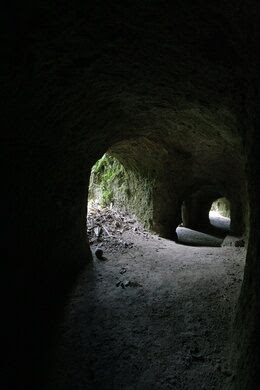
This volcanically volatile island town is home to an abandoned series of tunnels left by the Japanese during WWII. 

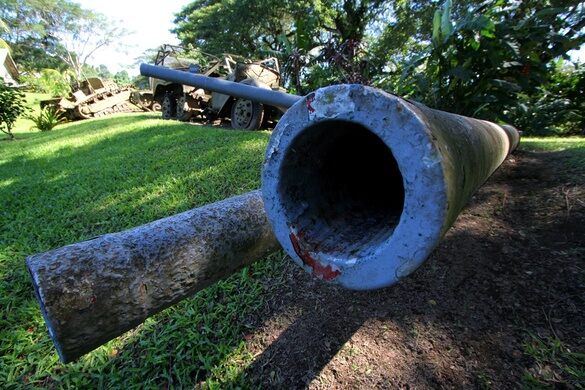
Home to two active volcanoes and some of the most abundant earthquake activity in the world, the township of Rabaul in Papua New Guinea does not seem to be the ideal place for a massive military encampment. But thanks to a strategically significant harbor, the Japanese built one anyway during World War II, leaving behind over 500 miles of tunnels snaking beneath the island when they were routed.    

Japanese forces overtook the town of Rabaul in 1942 as WWII was in its final years, and quickly established a massive military complex serving their navy, air force, and, infantry. At its height, the Rabaul base and its surrounding encampment served over 97,000 soldiers and thousands more accompanying personnel.

Due to the island’s remote location, the main threat to the base was bombardment from the air, which was frequent and often devastating. To counteract this, hundreds of miles of tunnels were built beneath the town where a number of fully functioning facilities were installed. The tunnels were dug by laborers who were captured in Malaysia, China, and Singapore and transported to Rabaul. Many of these laborers died from disease, starvation, poor treatment, and overwork. The Japanese also used local Tolai labor from surrounding villages and prisoners of war.


The hospital, barracks, storehouses, and command centers were moved into the underground labyrinth with some of the chambers built as large as four stories tall. Some of the tunnels were hewn right from the existing rock, and some were crude structures supported by palm beams, while others still were fully built out concrete bunkers. All in all, the system became one of the longest and most elaborate in the world. 

When the Japanese were driven from the island at the end of the war, the base and its copious tunnels were simply left behind. Today, most of the contents of the base have been cleared out but dangerous ammunition and other remnants can still be found in the depths of the tunnels. A volcanic eruption in 1994 nearly buried the entire city beneath volcanic ash and most of the populace were forced to evacuate, but the area is slowly recovering and the tunnels beneath the island are slowly being rediscovered.

Clancy's comment: Many Australians would have died here. Lest we forget ...

I'm ...


18 April 2022 - TALLEST STATUE OF BUDDHA IN JAPAN - SHOWA DAIBUTSU


TALLEST STATUE OF 

BUDDHA IN JAPAN

 - SHOWA DAIBUTSU  -


G'day folks,

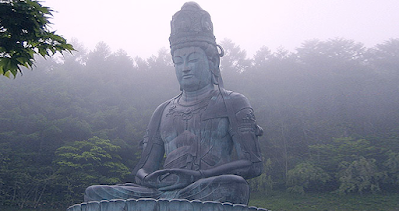
Welcome to the tallest bronze seated statue of the Buddha in Japan. 

Located in Aomori, at the Seiryuji (Blue-Green Dragon) Temple is a colossal likeness of Dainichi Nyorai completed in 1984. This particular Buddha, known primarily as Vairocana in the sanskrit, is the principal deity of the esoteric Shingon sect of Buddhism. This particular Daibutsu is the tallest seated bronze statue of the Buddha in Japan, taller even than the famous Daibutsu of Nara.


Shingon Temples hold light ceremonies during the Bon Festival, in mid-August, to help those in a liminal state between life and death successfully transmigrate. Often, during this time, parents of a recently departed child will pray for the pacification of their own souls, and for that of the child’s. The Seiryuji Temple is no different in this respect, holding grand light ceremonies for the entirety of the Bon Festival.

Clancy's comment: Trust me. This is big, but I have seen bigger statues in SE Asia.

I'm ...


13 April 2022 - SEIKAN TUNNEL - JAPAN


SEIKAN TUNNEL

 - JAPAN -


G'day folks,

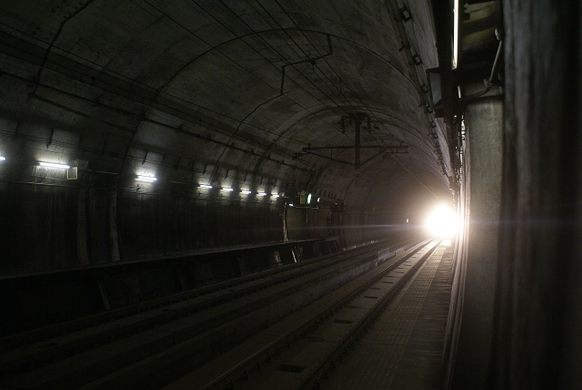
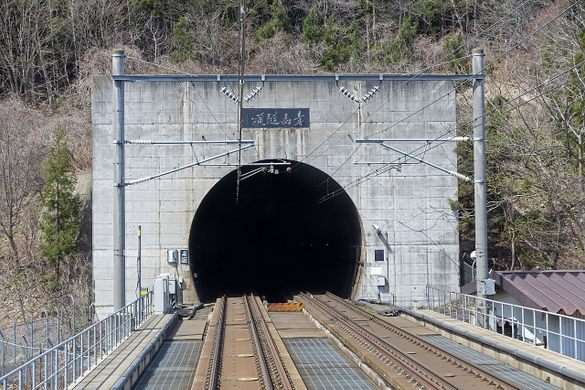
This is the world's longest tunnel with an undersea section.  

As early as 1946, Japan began looking at ways to build a fixed connection between the main island of Honshu and the nation’s second largest island to the north, Hokkaido. After decades of surveying and construction, the Seikan Tunnel was finally completed in 1988, becoming the world’s longest tunnel with an undersea segment.

Before the existence of the tunnel, ferries provided transport between the two islands. After the Tōya Maru Typhoon of 1954, which sank five ferries and killed 1,430 passengers, a more concerted investigation began into the feasibility of a tunnel that would run beneath the seabed to connect the two islands.

Work on the tunnel began in 1971. Building the tunnel, which was designed with a cross-section capable of carrying Japan’s Shinkansen (bullet train) network, was a massive undertaking. During the whole construction process, 34 workers died because of cave-ins, flooding, and other accidents.

Work began with the pilot tunnel, which had a diameter of 16.35 feet. Excavation began at both ends, eventually meeting in the middle in January 1983.


Work on the entrance to the main tunnel began in August 1982. Workers then drilled and blasted their way through the seabed, using almost 3,300 tons of explosives. The submarine section was completed in March 1985. Two undersea stations were built, one on the coast of each island, to serve as escape points in the event of an emergency.

The Seikan Tunnel was opened in March 1988, at a total cost of around US$7 billion (almost 12 times the original budget). It runs for a total length of 33.46 miles, 14.5 miles of which are under the seabed, at a depth of 790 feet below sea level. That makes it the longest tunnel in the world with an undersea section (at 23.5 miles, the Channel Tunnel is the longest underwater tunnel in the world, but Seikan is longer overall, and deeper). The Seikan Tunnel was the world’s longest railway tunnel until the opening of the Gotthard Base Tunnel in Switzerland in December 2016.


Today, about 50 freight trains and 30 Shinkansen bullet trains pass through the tunnel every day, carrying more than two million tons of cargo each year. But freight trains and high-speed bullet trains are not the best of traveling companions, especially in the tunnel.

The Hayabusa Shinkansen series, a Japanese bullet train with a top speed of 199 miles per hour, has to slow down to 87 miles per hour in the tunnel to avoid disrupting the freight trains. At full speed, the wind pressure created when the two trains cross paths could cause the freight trains to spill their loads. Ways to manage this situation, and to raise the speed limit, are still being investigated.

Clancy's comment: I love train travel in Japan. 

I'm ...


8 December 2021 - IMAGES OF THE FUKUSHIMA EXCLUSION ZONE


IMAGES OF THE FUKUSHIMA 

EXCLUSION ZONE 

G'day folks,

On March 11, 2011 a magnitude 9.0 earthquake struck off the coast of Japan. The earthquake caused a tsunami that caused great damage to some of the northern provinces of Japan. 

Fukushima province was among one of the worst hit. A nuclear power plant located in Fukushima was severely damaged by the earthquake and subsequent tsunami. It was and still is the worst nuclear disaster since the Chernobyl disaster of 1986. There have not been many major nuclear reactor meltdowns since nuclear power was introduced as a mass-energy source. We do know however that even with protective equipment, side effects can occur.

 Clean up crews that were sent in to deal with the Fukushima disaster are starting to develop cancer years after their exposure. Studying the areas that are affected by nuclear disaster is considerably difficult because of the high levels of radiation that are present in the areas immediately surrounding the nuclear reactors.

The piles and piles of garbage bags you see in front of you contain contaminated soil from the disaster site. They are stacked on top of each other to save space.

 A photographer named Arkadiusz Podniesinski decided to brave the elements (literally) and capture what the site of the nuclear disaster looks like 9 years later. He has also visited many other abandoned places and documented his journeys. The results of journey are absolutely incredible and are must see.

Check out pictures of the Fukushima exclusion zone below … cars abandoned, classrooms left, supermarkets abandoned.


Clancy's comment: Wow. It was a big earthquake and tsunami, but man has a lot to answer for.

I'm ...