Showing posts with label GERMANY. Show all posts

3 December 2022 - THE COIN CABINET of DRESDEN


THE COIN CABINET

 of 

DRESDEN


G'day folks,

Known as the "Coin Cabinet of Dresden," this museum houses over 300,000 currency-related artifacts.  

The hobby of coin collecting has been practiced since antiquity. This type of collecting was not only to accumulate great wealth but also to display an appreciation of the intricacies of engraving art. These collections of coins were often stored in large wooden cabinets during the post-Renaissance years, and many national collections in Europe are still referred to as “coin cabinets” by modern numismatists.


Founded circa 1530, the Münzkabinett, or Coin Cabinet of Dresden is one of Europe’s largest-scale numismatic collections, as well as one of the oldest museums in Germany. Currently, over 300,000 items call the cabinet home—from ancient coinage to minting equipment and historic documents, only a tenth of which are on permanent display.

The public portion of the coin cabinet is housed in the museum at Dresden Castle and consists of coins, banknotes, medals, seals, counterfeits, primitive forms of money, and minting equipment from the ancient Greco-Roman world to the modern European Union. These exhibits focus especially on the monetary history of Saxony and Germany in general.


In addition to research facilities and five centuries’ worth of artifacts, the Münzkabinett also possesses legal claim to any hoard of coins excavated on the Saxon territory, whose soil is rich in such hidden treasure. Coin hoards are now worth more than their bullion values when melted down, as they provide a good glimpse into the past. 

11 December 2022 - CUCUMBER MUSEUM in GERMANY


CUCUMBER MUSEUM 

in GERMANY


G'day folks,

A museum honoring Germany’s cucumber mecca offers a great dill of gherkin history.  

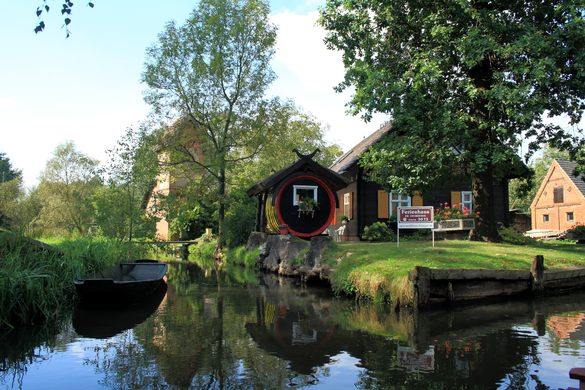
Spreewald, a wetland region in eastern Germany, is known for its plethora of pickles. Cucumbers have been one of its agricultural staples for centuries. The Starick family opened Gurkenmuseum, a private museum in the quaint village of Lehde, to honor the area’s star fruit.


Spreewald’s gherkins have held worldwide fame for the last 150 years among pickle partisans. It’s been said the region once had as many different types of cucumbers as it had farms. But the fruit’s importance goes back for millennia. The Sorbs, the people who have inhabited the region since the 6th century, placed great importance on the crop.


The Gurkenmuseum, which is housed in one of Lehde’s oldest buildings, is full of information about the traditions associated with cucumber cultivation and processing. Visitors can also peruse the many different pickling tools on display, as well as sort their way through photographs and trivia. They can also relish in the abundance of gherkin recipes and even sample some of the region’s renowned produce.

Each August, Spreewald holds a gherkin festival, where the year’s current Gherkin Queen is crowned and celebrated. The museum also features the 500-gallon barrels used to soak the gherkins. There’s also a replica of a Sorbian bedroom, which displays the traditional communal family bed.


1 November 2022 - UNDERGROUND GERMAN MILITARY HOSPITAL - GUERNSEY


UNDERGROUND GERMAN

 MILITARY HOSPITAL 

- GUERNSEY -


G'day folks,

This underground hospital complex was constructed by slave laborers during the German occupation of the Channel Islands. 

Between the years of 1940 and 1945 hundreds of slave laborers working under the direction of German occupying forces dug 7,000 square meters in underground tunnels beneath Les Naftiaux in the British territory island of Guernsey.


The laborers, men and women of numerous nationalities, many of whom died in the tunnels’ construction, used explosives, drills, hand tools, and their bare hands to carve these tunnels from solid rock. The subterranean complex was intended for use as a German military hospital and ammunitions storehouse.

By the time construction ceased at the onset of the D-Day invasion the hospital complex was large enough to house 500 patients and included facilities such as an operating room, X-ray room, dispensary, laboratory, and staff quarters, as well as a cinema, central heating plant, and kitchen. In addition to the three main entrances, the ventilation shafts were equipped with stairs and ladders so they could double as emergency exits.


For all its planning, after three years of construction the hospital was only in use for around three months during the summer of 1944 when German casualties of the D-Day invasion filled all available wards. Hospital operations were eventually moved above ground when it became clear that the tunnels’ damp, dark atmosphere was not conducive to recovery. The ammunitions storage facilities fared slightly better, serving their intended purpose for around nine months.

Although much of the remaining equipment was removed by Allied forces in 1945, some remnants of the hospital’s wartime use remain, including hospital beds, kitchen and heating equipment, and signs in German posted throughout. The tunnels are privately owned by Joyce Browning who opened them to the public in 1954.

7 September 2022 - WW11 AIR RAID SHELTERS & TUNNELS - BERLIN


WW11 AIR RAID 

SHELTERS  & TUNNELS

 - BERLIN -


G'day folks,

A tour of underground Berlin takes you through WWII air raid shelters and tunnels used to smuggle people out of East Germany. 

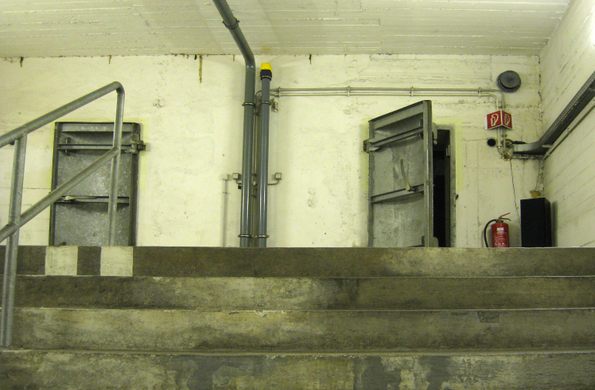
It’s a strange feeling to come into a dark, half-blasted bunker, see parts of stairways and cables hanging out of the wall and walk through rubble in between holes that go several meters down into the ground. It’s eye-opening to crouch down in an air raid bunker and experience how it must have felt when the situation was for real.


These are just a couple of examples of the unique experiences offered at Berliner Unterwelten (Subterranean Berlin). The museum offers tours of some of Berlin’s most important underground structures, such as bunkers, abandoned subway stations, air raid shelters dating back to World War II and tunnels for smuggling people out of East Germany during the Cold War.

Berliner Unterwelten was founded in 1997 to explore, document and preserve the city’s subterranean architecture. The organization’s base is in a former air raid bunker in the Gesundbrunnen subway station, now a museum—the Unterwelten Museum (Subterranean Museum)—that offers various tours through Berlin’s underground.  The bunker was cleared and reconstructed by the group and transformed into a museum while maintaining its original character. Hiding on four floors below Berlin are dozens of bunkers, tunnels, walkways, canals, the route of a pneumatic postal system, storage rooms, bomb and ammunition storage, and abandoned subway stations.

Berlin, so full of history above ground, has a lot to tell in its subterranean areas as well. There are exhibits about everything from air raid bunkers to the removal of rubble from the destruction during World War II. Berliner Unterwelten found a huge file system about slave workers during the war in a forgotten bunker, helped the former workers to receive reparation pay and have an exhibition about slave workers in Berlin. Found objects such as ammunition, grenades, gas masks, etc. are on display as well. There is an exhibition about Hitler’s “Germania,” his utopian vision to rebuild Berlin. (The exhibition shows that the project was not, of course, a utopia after all.) 


Berliner Unterwelten also works to preserve subterranean areas. They have dug and cleared out many locations, including half-destroyed bunkers, and opened them to the public. Several different tours are offered, including underground bunker hospitals, mother-and-child bunkers, flak bunkers, subterranean factories, examples of subterranean escape routes from East to West Berlin, flak towers, an underground prison, Cold War bunkers for nuclear war and a tour through the Schwerbelastungskörper, a heavy tower built to test the possibilities of erecting Germania on the sandy ground of Berlin. 

17 September 2022 - FORMER NAZI ANTI-AIRCRAFT TOWERS - BERLIN


FORMER NAZI

 ANTI-AIRCRAFT TOWERS 

- BERLIN -


G'day folks,

These former Nazi anti-aircraft towers offer a singular view of the north of Berlin in the summer, and a sanctuary for bats in winter. 

Volkspark Humboldthain is a large landscaped park in the Gesundbrunnen area of north Berlin, built in the 1870s to commemorate the 100th birthday of the Prussian polymath and explorer Alexander von Humboldt. In addition to an open-air swimming pool, rose and sculpture garden, vineyard and several playgrounds, its main attractions are the two historic flak towers at the top of a World War II air-raid shelter, a monstrous concrete structure from the early 1940s that offers a singular view of the north of Berlin.


The flak towers were built by personal order of Adolf Hitler in 1940. Following the first lethal air raids of the Royal Air Force on German cities, thousands of air-raid shelters were built all across the German Reich. This massive construction effort included building so-called flak towers, huge above-ground blockhouse towers equipped with anti-aircraft guns. Eight of these structures were built in Berlin, Hamburg, and Vienna. Flak is the abbreviation of Fliegerabwehrkanone, which literally translates to “aircraft defense cannon.”

These massive concrete structures served a dual purpose: The flaks were to defend nearby factories against Allied aerial attacks and the air-raid shelters to protect 10,000s of local civilians. Much of the original park was destroyed to make room for the towers, which were built using scores of forced laborers who worked around the clock. Due to the nearby factories, which the anti-aircraft towers were built to protect, the Humboldthain area was a key target for British and American bombers. Many of the forced laborers perished during the raids.

After the war, French soldiers took down all but two of these defensive structures. The two northern towers were spared because demolition was considered too dangerous. The nearby train tracks to the north were under Soviet administration and damaging them could have sparked a diplomatic situation. In the years after 1945, Allied troops transported 1.4 million cubic meters of wartime debris to what was once Humboldthain park, creating two hills of rubble that covered most of the remaining concrete structures. This was common practice in Berlin after the war and several such rubble hills were created, including Teufelsberg (Devil’s Mountain) in Grunewald and Großer Bunkerberg (Large Bunker Hill) in the Friedrichshain district. The two Humboldthain hills were named Humboldthöhe (Humboldt Heights) and the 29-hectare park was restored to its former glory in the 1950s. The open-air swimming pool was also built during that time and remains open to this day.


Today, Humboldthöhe is completely covered in trees. In the summer, when the trees are in full leaf, the massive bunker is almost invisible except for the two flak towers and the large aluminum sculpture by artist Arnold Schatz, which was put up in 1967. It symbolizes the two German states during the Cold War and the persisting hope for reunification. Before enjoying the view, visitors must hike up 100 meters of serpentine to the top of the tower. On the way up, there is a members-only climbing wall of the German Alpine Club.

While the view from the leafy hills, the rose garden, and the swimming pool make Humboldthain park a natural summer destination, visiting in autumn and winter also has its perks. For one, when the trees on the hill’s south side lose their leaves, the towers offer a great view of the city center south of the hill. Second, the bunker becomes a sanctuary for bats. Hundreds of the little flying mammals spend their winters in the depths of the bunker, which is why guided tours are only offered between April and October. During that time, it is possible to take tours of two of the massive bunker’s seven stories. All other stories are inaccessible due to debris. 

25 August 2022 - AQUEDUCT AT THE RED GATE - GERMANY


AQUEDUCT AT 

THE RED GATE 

- GERMANY  -


G'day folks,

What appears to be an ordinary bridge is actually a rare aqueduct.  

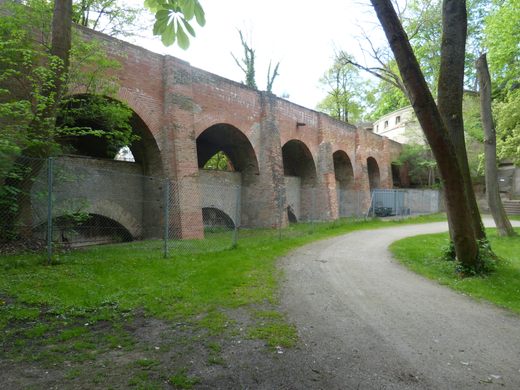
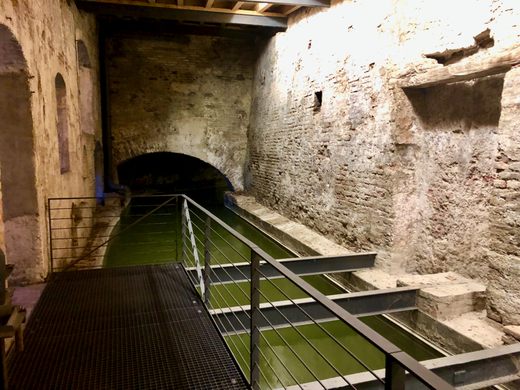
This ancient bridge towards the old town region of Augsburg dates back to the 18th-century. Taking a descent into the moat allows visitors to view the massive aqueduct that once supplied the city with drinking water and power to move waterwheels. 

This aqueduct is one of the more unique found in the city because the water transportation system is divided into two, designed to lead two channels into one aqueduct into the city. It was constructed this way so that one channel, fed by the nearby river Lech, could power waterwheels and could be used to dispose of waste. The other channel, fed by springs in the forest, provided drinking water as it was completely separated from the other channels.


The aqueduct was originally comprised of wood but was replaced with the structure seen today around 1777 by Johann Christian Singer. The aqueduct also included a water tower that pumped water into the city’s public wells and private households with perfect pressure. 

Today, the water in the canals is no longer used for drinking, and the two streams now flow together before reaching the aqueduct. 

In 2019, the city’s water system was declared a World Heritage Site. It considers 22 different objects like water barriers, hydroelectric plants, in total 77 kilometers of canals and also the world’s first artificial canoe trail where competitions of the Olympic Games in 1972 took place.


14 August 2022 - HITLER'S EXPLOSIVES FACTORY


HITLER'S EXPLOSIVES

 FACTORY


G'day folks,

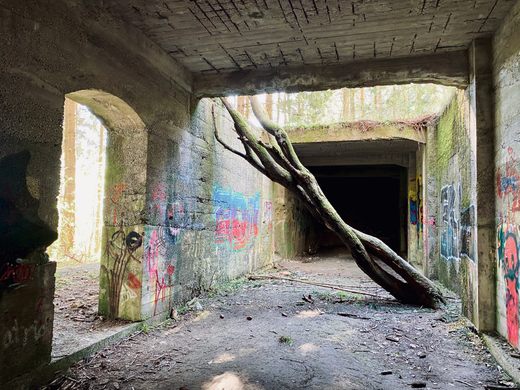
Hidden in the forest are the crumbling, graffiti-covered remains of the factory where most of Germany's explosives were produced during World War II. 

During World War II, the Wehrmacht produced many of their explosives at a factory in the town of Bobingen in southern Germany. Run by the arms company Dynamit AG, the Fasan explosives factory was built in the 1930s. In 1939, a new facility was built in the forest near the village. The factory is long abandoned, but its crumbling walls still stand among the trees, where they are being slowly reclaimed by nature.

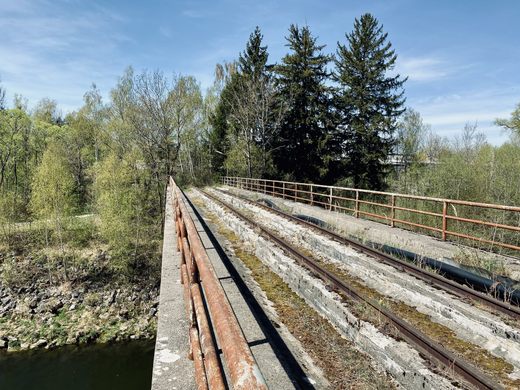
The original factory, known as Fasan I, was located on the eastern bank of the river Wertach. The secondary facility, Fasan II, was across the river in the western area, a railway bridge that can still be seen today was built. The two plants were scattered across the premises to avoid larger damages in case of an accidental explosion, and also to hide it from aerial reconnaissance by foreign adversaries. 


Fasan I consisted of 65 buildings and was originally only a testing facility designed to check out a large-scale industrial production of explosive materials, Fasan II consisted of only 25 buildings for the later mass production. During World War II, Fasan was used to produce hexogen, an organic compound that was used to create powerful explosives. In 1945, up to 300 tons of hexogen were produced per month at Fasan.

After the arrival of the U.S. Army in 1945, the factory was closed down. Today only one of Fasan II’s factory halls is publicly accessible—the remains of Fasan I are located on private property. 

Since then, nature has taken over of the former factory hall: Trees grow up from the floor through the ceiling and cover the roof.  Graffiti covers the walls and the explosive-resistant concrete partitions that divide the hall into three sections. The first two are partially exposed by daylight through the broken ceiling. For the third section a flashlight is required, especially as sometimes it is filled with ground water.

1 May 2022 - THE SECRET MISSION OF RUDOLF HESS


 THE SECRET MISSION

 OF RUDOLF HESS

G'day folks,

 Hitler's deputy, Rudolf Hess, mysteriously parachuted into Scotland on this day intending to negotiate a peace deal with the British. He did so without the knowledge of the Führer, who was absolutely livid when he heard the news.

Hess had met the Duke of Hamilton at the Berlin Olympics in 1936 and learned that the duke was a member of a far-right group who were interested in a "German-English agreement."

He hoped that Hamilton would arrange for him to meet King George VI, believing he could persuade the king to sack Winston Churchill, then Britain could make peace with Germany and join forces against the Soviet Union.

At 6,000 feet and within 30 miles of the duke's residence near Glasgow, Hess bailed out of the Messerschmitt that he had piloted by himself and parachuted safely to the ground. His first contact was a Scottish farmer who was told in English by Hess: "I have an important message for the Duke of Hamilton."

Interrogated at an army barracks, he proposed that the British should allow Germany to dominate Europe, in return for which the British Empire would be safe from attack by Adolf Hitler. He insisted that German victory in the war was inevitable and threatened that the British people would be starved to death by a blockade around the country unless his generous peace offer was accepted.

Hitler quickly issued a statement saying that his deputy was mentally disordered and "a victim of hallucinations." He immediately stripped Hess of all the ranks he held in the Nazi party including being a party member and secretly ordered him shot on sight if he ever returned to Germany.

Hess was born Rudolf Walter Richard Hess in Alexandria, Egypt, in 1894, the son of a Bavarian wholesaler and exporter. He did not live in Germany until he was 14.

When the First World War broke out in 1914 he enlisted in the 7th Bavarian Field Artillery Regiment as an infantryman, was wounded several times and won the Iron Cross in 1915.

Sharing Hitler's stab-in-the-back notion that Germany's failure to win the 1914-18 war was caused by a conspiracy of Jews and Bolsheviks rather than a military defeat, Hess joined the Nazi party in 1920 and quickly became Hitler’s friend and confidant.

He was at Hitler’s side in November 1923 for the Beer Hall Putsch, a failed Nazi attempt to seize control of the government of Bavaria. While the pair were serving time in jail for this attempted coup, Hess helped Hitler write his book, Mein Kampf, which became a foundation of the Nazis' political platform.


After the Nazi seizure of power in 1933, Hess was appointed Deputy Führer and as well as appearing on Hitler’s behalf at speaking engagements and rallies, he signed into law much of the legislation that stripped German Jews of their rights.

Hess’s peace proposals met with no response from the British government and he was held prisoner until the end of the war.

In 1946 he was sent for trial at Nuremberg where he was acquitted on charges related to war crimes and crimes against humanity, but convicted of crimes against peace.

In his final speech to the judges he continued to display loyalty to Hitler, declaring: "It was granted me for many years to live and work under the greatest son whom my nation has brought forth in the thousand years of its history.

"Even if I could, I would not expunge this period from my existence. I regret nothing. If I were standing once more at the beginning I should act once again as I did then, even if I knew that at the end I should be burnt at the stake."

He was sentenced to life imprisonment and with other Nazi leaders sent to Spandau Prison in Berlin. After 1966 he was the only prisoner there. Hess was held as Prisoner No. 7, always denied parole, and hanged himself in the grounds of the jail on 17 August 1987 at the age of ninety-three.

After his death the prison was demolished to prevent it from becoming a neo-Nazi shrine.

Clancy's comment: A sad tale of a sad time. Lest we forget those who perished.

I'm ...


25 March 2022 - WHAT HAPPENED TO ADOLF HITLER'S BODY?


WHAT HAPPENED TO 

ADOLF HITLER'S BODY?


G'day folks,

He boasted that his Third Reich would last for a thousand years. But Adolf Hitler, who would go down in history as an evil tyrant, shot himself on this day, probably after taking poison, painfully aware of the disintegration of his twelve-year-old regime and with his capital city reduced to ruins and rubble.

As the Second World War was coming to a close the desperate Führer tried to wage war by telephone from his bunker beneath his headquarters, the Chancellery building in Berlin, issuing futile orders to his defeated generals.

The 3,000-square-foot underground bunker, completed in 1942, was basically an extension of the Chancellery’s air raid shelter. It consisted of two levels and 18 rooms. However, Hitler had his favourite architect, Albert Speer, build an additional bunker under the Chancellery’s garden.

It was finished in October 1944 and was known as the Führerbunker. And it was here, alongside his wife of a few hours, that Hitler ended his life.


For three months military advisers had been urging the Führer to abandon the bunker and flee to his Eagle’s Nest retreat high above the Bavarian Alps at Berchtesgaden. But he refused to leave his underground lair, remaining there for about 100 days.

It is believed he feared the possibility of capture and being put on display – dead or alive – by his enemies, especially the Russians.

Just a few days before Hitler’s 56th and final birthday on April 20, the Russians arrived at the edge of Berlin. By April 24, they had the city completely surrounded as the Americans and the British moved closer.

By April 29, knowing all was lost, Hitler was preparing for death, taking with him his 33-year-old companion Eva Braun who had flown from Munich to Berlin earlier that month to be with the man she worshipped.

They had been together since 1932 when Braun, an attractive young photography assistant at the time, came under Hitler’s spell. Urged by Hitler to leave the bunker for her own safety, she refused, allegedly saying: “Do you think I will let you die alone?”

Despite her dedication, her chances even now of Hitler yielding completely to her charms seemed unlikely if his earlier words were to be believed.

Author Gitta Sereny tells in her book 'Albert Speer: His Battle With Truth' how the architect was dining one night with Hitler, Eva Braun at his side. The Nazi leader said that a highly intelligent man should always choose a primitive and stupid woman:

"Imagine if on top of everything else I had a woman who interfered with my work! In my leisure time I want to have peace. I could never marry."

Nevertheless, shortly after midnight on April 29, 1945, Hitler did marry Eva Braun, a minor official from the Propaganda Ministry having been summoned to conduct the ceremony in the bunker.

A few hours later Hitler dictated his last will and a Political Testament. The statement laid all blame for the war on "international Jewry" and urged all Germans to continue fighting.

The will, dated 4am, 29th April, 1945, declared: "As I did not consider that I could take responsibility, during the years of struggle, of contracting a marriage, I have now decided, before the closing of my earthly career, to take as my wife that girl who, after many years of faithful friendship, entered, of her own free will, the practically besieged town in order to share her destiny with me.

"I myself and my wife - in order to escape the disgrace of deposition or capitulation - choose death. It is our wish to be burnt immediately on the spot where I have carried out the greatest part of my daily work in the course of a twelve years' service to my people."

The next day, 30th April, with the Russians less than a city block away, Hitler and Braun ate their final meal. Shortly after 3pm, they said goodbye to the staff in the bunker and retired to their private chambers, taking with them revolvers and thin glass vials of cyanide.

There was a loud gunshot at about 3.30. After waiting a few minutes, Hitler’s valet, Heinz Linge, opened the door and saw the Führer almost upright in a sitting position on a blood-soaked sofa.

It was assumed that Hitler had made certain of death by using his pistol on himself after biting the cyanide vial. Blood had trickled from a small hole in his right temple. The pistol lay on the floor where it had dropped from his right hand.

Eva Braun lay beside him, but she had made no use of the revolver at her side, preferring to take the poison instead.

Later, Radio Hamburg announced that "our Führer Adolf Hitler died for Germany in his command post in the Reich Chancellery this afternoon, fighting to his last breath against Bolshevism".


The bodies of Hitler and Braun were wrapped in blankets and carried to the Chancellery garden. There, one of the Führer's personal assistants, SS Officer Otto Günsche, doused the bodies in petrol and burned them, in accordance with Hitler’s final orders.

What happened to the charred remains is still uncertain. Hitler's men buried them in a nearby shallow bomb crater where apparently they were discovered by the Russians. The remains were then transported to the city of Magdeburg, south-west of Berlin, after being buried and exhumed several times by Russian soldiers.

Finally, the story goes, they were buried in the courtyard of the Russian counter-intelligence agency's facility in Magdeburg and remained there for 25 years.

When control of the city was handed to East Germany in 1970, the KGB exhumed and fully cremated the remains fearing that Hitler's burial site could become a place of worship for supporters of fascist ideas. The ashes were then scattered in the River Elbe. So it is said. But nobody knows for sure.

Clancy's comment: Have we learnt anything from all this? I don't think so. 

I'm ...