6 April 2019 - The Wadi Dawkah Frankincense Trees


The Wadi Dawkah 
Frankincense Trees

G'day folks,

Here is a tree I've heard of but never seen. These gnarly desert trees produce the prized aromatic resin traded along the ancient incense trail. 


 Frankincense is one of those words with strong biblical associations and relatively little everyday use. That is, if you’re not in or from the Arabian Peninsula.

Frankincense is a resin of the Boswellia sacra tree, more commonly referred to as the frankincense tree. These gnarled trees may not be the most majestic plants on earth, but they are extremely sturdy, and they can be tapped for their aromatic resin. Frankincense resin is used for the production of incense, perfumes, and essential oils, and it was a highly prized product in antiquity.


This natural park of frankincense trees is located in Wadi Dawkah, an important stop along the ancient Frankincense Trail, an incense trade route that’s been used by merchants for millennia. Around 5,000 frankincense trees can be found in this desert valley, including some ancient specimen. Although frankincense trees can reach a height of 26 feet, most trees in Wadi Dawkah are no more than 10 feet high.


 Around age 8 to 10, frankincense trees are mature enough to be tapped. In April, when the temperatures are rising fast, the trees can recover from the tapping process. Using a putty knife, workers scrape the bark of the tree; the exact location and number of incisions per tree are dictated by the knowledge that has been passed down from one generation to the next. Resin oozes from the wound, which is left on the tree for two or three weeks to harden. 


The first harvest, however, is not usable. Workers will repeat the tapping process soon after the first harvest, and the second harvest yields the raw material for the production of incense and essential oils. The same goes for the third and final tapping of the season. A mature healthy tree can produce around 7 to 9 pounds (3 to 4 kg) of frankincense a year.


 Unfortunately, frankincense trees have drastically decreased in number over the years due to over-exploitation. The natural park in Wadi Dawkah has the dual purpose of protecting the existing trees and growing new ones in order to increase the population of frankincense trees in the wadi.


Clancy's comment: Interesting, eh?  I can only assume that this tree provides  the incense used in modern church services. 

I'm ...


5 April 2019 - IT'S A WEIRD LIFE AS A COMMUTER


 IT'S A WEIRD LIFE
 AS A COMMUTER

G'day folks,

When you don’t have access to a car, you have to rely on public transportation. This means dealing with all of the other people traveling from home to work and back again. Of course, with so many work-exhausted people together in tight spaces, you’re bound to be in for a surprise sometimes.

While there is some unspoken commuting etiquette (not to mention all the signs and announcements that urge you to be considerate towards others), not everyone behaves on buses and trains. Sometimes that can lead to irritation — but other times, you can’t help but laugh!


Clancy's comment: Mm ... Amazing, eh? Welcome to the real world. Check out the guy below.

I'm ...


4 April 2019 - THE GREY WOLF


THE GREY WOLF

G'day folks,

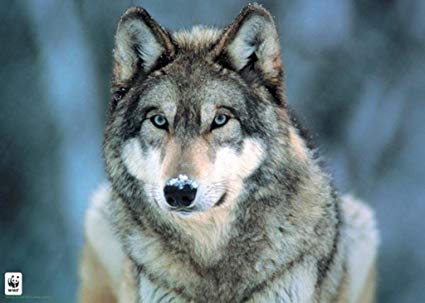
This is one creature I'd rather not tangle with when it's hungry. Wolves develop close relationships and strong social bonds. They often demonstrate deep affection for their family and may even sacrifice themselves to protect the family unit. The wolf, also known as the grey/gray wolf or timber wolf, is a canine native to the wilderness and remote areas of Eurasia and North America. It is the largest extant member of its family, with males averaging 43–45 kg and females 36–38.5 kg. 


Quick Facts
  • Type: Mammal
  • Diet: Carnivore
  • Life span: 6 to 8 years
  • Size: Head and body 91 to 160 cm, Tail 33 to 51 cm
  • Weight: 18 to 79 kg
  • Habitat: plains, forests, tundra
  • Range: northern United States, Canada, and Alaska, with some scattered populations left in Europe and some reintroduced populations in the American southwest and, notably, in Yellowstone National Park.
  • Scientific name: Canis lupus 
  •  Wolves are the largest members of the dog family.
  • The Grey Wolf is known as the Timber Wolf in North America and the White Wolf in the Arctic, or more generally as the Common Wolf.
  • Wolves are legendary because of their spine-tingling howl, which they use to communicate. A lone wolf howls to attract the attention of his pack, while communal howls may send territorial messages from one pack to another. Some howls are confrontational. Calls may be answered by rival packs. Much like barking domestic dogs, wolves may simply begin howling because a nearby wolf has already begun.
  • There are many subspecies of wolf including the Arctic wolf, all of which use a variety of howls to communicate to one another.
  • They have a highly organised social structure enabling them to enjoy maximum cooperation when hunting, communicating and defending territory.
  • Wolves live and hunt in packs. They are known to roam large distances – as much as 20km in a single day. Wolf packs in the far North often travel hundreds of kilometres each year as they follow migrating herds.
  • Wolves are highly territorial animals, and generally establish territories far larger than they require to survive; in order to assure a steady supply of prey. Territory size depends largely on the amount of prey available: in areas with an abundance of prey, the territories of resident wolf packs are smaller.
  • These social animals cooperate on their preferred prey. A single wolf is capable of catching and killing a deer unaided, but when hunting as a pack they prey on much larger animals, including deer, elk, and moose. Wolves also eat smaller mammals such as birds, fish, lizards, snakes, but also eat fruit.
  • When they get a successful kill, wolves do not eat in moderation. A single wolf can consume 9 kg of meat in one sitting! The highest ranking wolf will eat first and what cannot be consumed is left for the scavengers, even though they may have to wait another three days for their next meal.
  • Wolves are not particularly fast, with a top speed of about 45km/h (28mph).  They instead rely on their hearing and sense of smell to detect prey.  They have remarkable powers of endurance and are known to follow their target all day and night if necessary.
  • Once a wolf has found a mate, they usually stay together for life.
  • Wolf packs are established according to a strict hierarchy, with a dominant alpha male at the top and an alpha female not far behind. Usually this male and female are the only animals of the pack to breed. Packs consist of between five and ten animals – usually offspring from several years.  All of a pack’s adults help to care for young pups by bringing them food and watching them while others hunt.
  • The hierarchy that exists within each pack is maintained by dominant or submissive body posturing, and by other behaviour patterns such as the communal care of the young.
  • Wolves feed their young by carrying chewed-up food in their stomachs and throwing up, or “regurgitating”, the food for the pups when they come back to the den.
  • Wolves have only one breeding season per year – in the winter. They have their puppies in late April or early May. They have their puppies in an underground hole, or den. There are usually four to six puppies in a litter. The puppies grow up fast and are their adult size by the end of their first winter. They are grown up by the time they are two years old.


  • Wolves develop close relationships and strong social bonds. They often demonstrate deep affection for their family and may even sacrifice themselves to protect the family unit.
  • A wolf which has been driven from the pack or has left of its own accord is called a lone wolf.  It avoids contact with packs and rarely howls.
  • The grey wolf has been the notorious villain of fables and fairy stories for centuries, yet this highly intelligent and sociable animal has done little to warrant its terrifying reputation.
  • Once widespread throughout North America, Europe and the Far East, the grey wolf is, sadly, now only found in large numbers in specific parts of the USSR, North America and Eastern Europe.
  • The grey wolf has always been feared by man and has probably been persecuted more than any other animal. Did you know that centuries ago, wolves were ‘tried’ by people and burnt at the stake? However its intelligence and flexibility have saved it from extinction.
  • Another reason for their decline has been the dramatic reduction of their natural prey.  This has largely been replaced by farm stock which is protected by the use of poison, traps and guns.  The final fate of wolves will depend on whether man is prepared to coexist with them.


Clancy's comment: Interesting facts, eh?
I'm ...


3 April 2019 - AWESOME PHOTOGRAPHS


AWESOME PHOTOGRAPHS

G'day folks,

Yesterday, I was given a swag of books on photography. Some of the photographs contained in those books are breathtaking. As are these shots taken by talented photographers.


Clancy's comment: Yes, some of the best shots I've ever seen are the ones that most people never see. The photographer does.

I'm ...


2 April 2019 - RARE 1,000 YEAR-OLD COPPERHEAD ARROW FOUND


RARE 1,000 YEAR-OLD
 COPPERHEAD 
ARROW FOUND

G'day folks,

A rare example of copper metallurgy has been found in Yukon.

IN JUNE 2016, GREG HARE, an archaeologist working for the territory of Yukon, in northwestern Canada, was standing on a patch of ice near Carcross, where Bennett Lake and Nares Lake meet, when he noticed something sticking out of the ground. Carcross was a famous stopover during the Klondike Gold Rush, and also a fertile caribou-hunting ground for First Nations peoples, so it is not uncommon to find wood, antler, or bone hunting implements sticking out of the ice. Such tools are easy to lose track of once they have been launched.

“We knew it was an arrow right away as we have recovered enough similar tools before,” Hare says, “but the curious part was that when we tried to extract it from ice it kept sticking.” That’s because attached to the barbed antler arrowhead was a large, heavy tip made of copper, a very unusual find in Yukon. “The few copper arrowheads that were found before had never been attached to anything,” he explains. “This is the first intact copper arrow we encountered.”

Around 1,100 years ago, local indigenous people made the transition from hunting with darts, launched with a spear-thrower known as an atlatl, to bow-and-arrow technology. Radiocarbon dating places the new arrowhead at nearly 1,000 years old, just after the transition, and well before any contact with Europeans. “The arrowhead is made of 99.5 percent pure copper,” Hare continues, “which shows it comes from local copper nuggets as opposed to European smelted copper [alloys].” Such a find is exceptionally rare and is providing insight into the evolution of hunting technology in this part of the Arctic.

Clancy's comment: I love reading about these finds. They prove how little we have come, or how advanced our forebears were.
I'm ...