Showing posts with label WILDLIFE. Show all posts

27 August 2022 - THAM LOD CAVE - THAILAND


THAM LOD CAVE

 - THAILAND -


G'day folks,

Welcome to a mile-long navigable cave adorned with stalactites and stalagmites reaching up to 65 feet tall. 

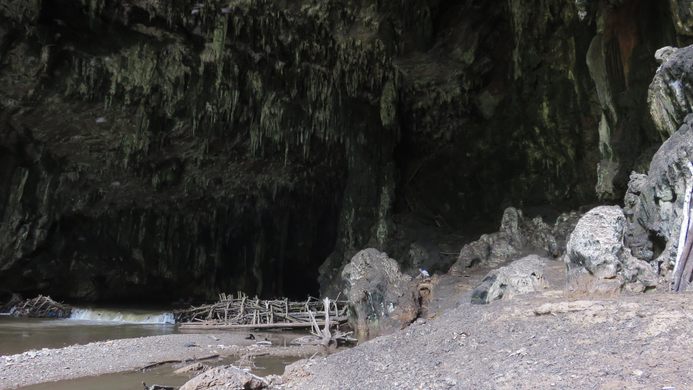
Tham Lod is a cave system in Thailand’s Mae Hong Son province that stretches nearly a mile long. The Lang River (Nam Lang) runs through the entire length of the cave, from one side of the mountain to the other, and the only way to explore the long cavern is to hire a rickety bamboo raft and a local guide with a gas lantern.


Upon arriving at the entrance of the cave, it is obvious that you are not the first visitor to get here, but once you get inside the cave, the utter lack of artificial lights and permanent facilities adds a certain sense of adventure. In no time, stalactites and stalagmites put up a show that took millions of years to form. At different points of the trip, depending on the time of the year, guides stop to let visitors step on the muddy ground and slippery bamboo passageways to get a closer look at the rock formations, which can exceed 65 feet in height. 

As the end of the trip approaches a shaft of light cuts through the darkness, and the emerald green of the vegetation outside can be blinding. The opening at the end of the cave is huge and thousands of birds dart in all directions.  The chirping can be deafening, but it is an impressive sight.

The Lawa people used to bury their dead inside caves, and at one point 1,400-year-old coffins were found inside Tham Lod. You won’t be able to see the coffins upon visiting, but archaeological excavations in the area have proved that Tham Lod was used as a burial place by the Hoabinhian people between 5,500 and 9,000 BC.



21 August 2022 - BATTAMBANG BAT CAVE - CAMBODIA


 BATTAMBANG

 BAT CAVE 

- CAMBODIA -


G'day folks,

Here, you can take a hidden path to the mouth of a cave to watch millions of bats swarm at sunset.  

Just down the road from the Killing Caves of Phnom Sampeau, visitors gather at sundown for an incredible spectacle of nature: the nightly exodus of a gargantuan colony of hungry wrinkle-lipped free-tailed bats.

Most spectators convene at the bars and stalls on the side of the road, where food and drinks (and cover) are available. But for those wanting a more intimate experience, you can have a local guide lead you up the hidden path to the mouth of the cave.

Standing so close to the cloud of flying creatures whooshing out of the cave is an enthralling encounter. The bats won’t hurt you—they’re too busy hunting for bugs to even care about you—but the swarm is so large and furious you can actually feel the temperature rise as they soar overhead.


The bat population is so high it can take upwards of 20 minutes for the cave to clear. Once they’re out, it’s amazing to watch the animals streak across the sky. The hordes of flying bats seem to paint the air with fluid black shapes, forming a series of striking images against a sky tinged with the last bits of sunset colors.


27 April 2022 - LEKKI CONSERVATION CENTRE - NIGERIA


LEKKI CONSERVATION

 CENTRE 

- NIGERIA  -


G'day folks,

 This Nigerian nature reserve is home to the longest canopy walkway in Africa. 

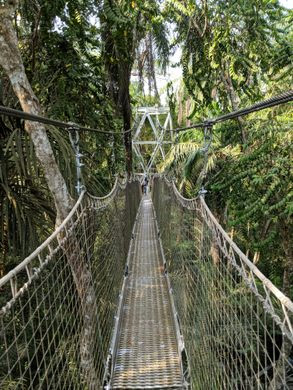
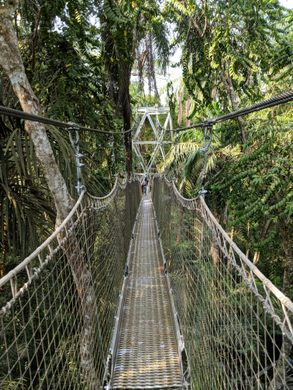
The Lekki Conservation Center in Lekki, Nigeria, is an oasis of nature within the urban chaos of Lagos, and the suspended canopy walkway that rises over the reserve is the longest in all of Africa.


The canopy walkway features six towers that rise over 22 feet each. They are connected by a series of suspended (and swinging) walkways that offer a unique (if somewhat harrowing) 360-degree view of this part of the world from high above the treetops. The treetop walk stretches about 1,315 feet long (more than three and a half football fields), setting the record for the longest on the African continent.

Founded in 1990 by the Nigerian Conservation Foundation, the conservation center preserves a large part of the region’s biodiverse coastal ecosystem and educates visitors on the importance of coexisting with nature. The reserve is home to a plethora of wildlife, including monkeys, tortoises, and rare birds. 


Clancy's comment: What a great place for photographers to capture wildlife.

I'm ...


20 April 2022 - THE GIANT ANTEATERS OF BRAZIL


THE GIANT ANTEATERS

 OF BRAZIL 


G'day folks,

 This breathtaking national park is one of the best places to see the weird and wonderful giant anteater in the wild. 

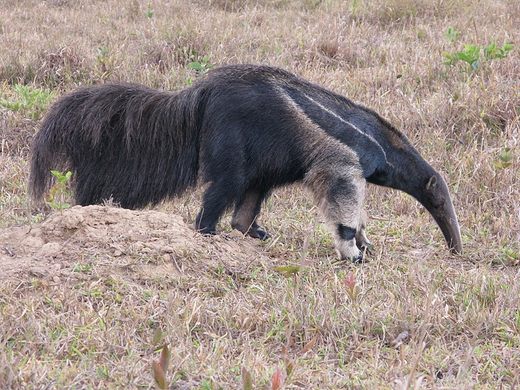
The wonderfully unique giant anteater is an endangered species that is disappearing from many regions of Brazil. But there are still wild areas where this strange species clings on to survival and can be seen easily. One of the best places in the country to observe these bizarre beasts is in the magnificent Serra da Canastra National Park in the state of Minas Gerais.

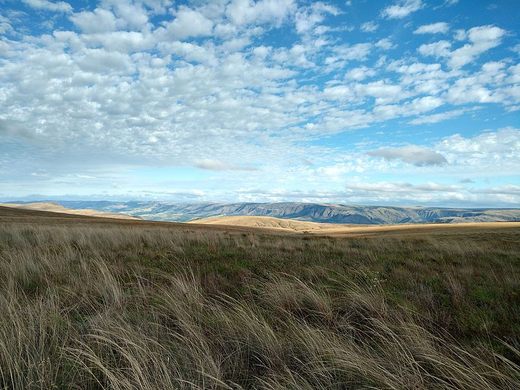
Serra Da Canastra has been a national park since 1972 and comprises an area of 72,000 acres of Cerrado savanna, hills, and forest, through which the São Francisco river flows. Highly biodiverse, over 350 species of animal live in the park and many rare and endangered plant species such as orchids are found here too. Still the real highlight of the park is undoubtedly its large mammal species, and especially the giant anteater.

This large creature may be seen very easily as it ambles on its knuckles through the long grass in search of its prey using its strange elongated snout to detect nearby anthills to raid. When visiting the park, you’re likely to see an anteater feed using its sharp claws to break open an anthill and its extraordinary long tongue to extract the insects. If you are really lucky, you may even see a mother anteater with her baby clinging to her back.


Other endangered species may also be observed here, such as the pampas deer, maned wolf, puma, pampas cat, rhea ostrich, giant armadillo, and the critically endangered Brazilian merganser duck. But these are much harder and more time-consuming to find than the anteater, and will typically make seasonal movements to less accessible areas of the reserve. (If you want to stand a good chance of seeing these creatures it’s best to plan the timing of your visit in advance with the animals’ seasonal behavior patterns in mind.)

Serra Da Canastra is also an area of astounding landscapes with many trails to explore. A particularly famous natural landmark is the Casca D’Anta waterfall, which is over 610 feet tall and a renowned site of tranquility and enchanting natural beauty. The park is also home to many curious prehistoric rock formations that form eerie shapes. They are best seen at the Curral de Pedras and Garagem de Pedras sites.

Clancy's comment: Obviously a great place for wildlife photographers. 

I'm ...


1 March 2022 - BERTHA'S BEACH - FALKLAND ISLANDS


BERTHA'S BEACH 

- FALKLAND ISLANDS -


G'day folks,

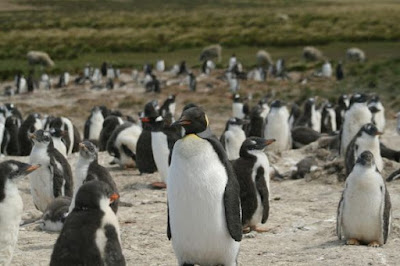
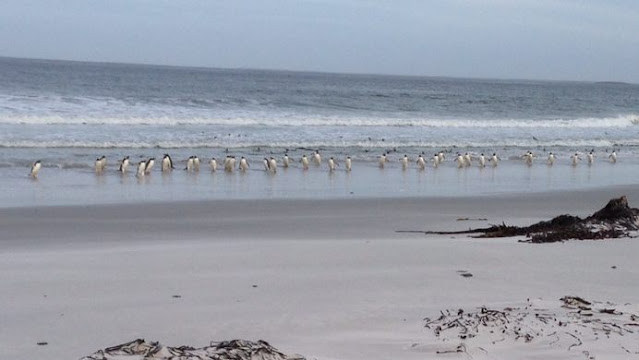
This remote stretch of sand is a penguin lover's paradise. 

This beach is named after the Bertha ship that wrecked on the beach, though the wreck is no longer visible. But a lost shipwreck isn’t its only draw. If you’re a keen birder, this stretch of sand is a must-see.

Bertha’s Beach is classed as both an important bird area and a Ramsar Wetland site because of the various birds that call it home. Head to the beach, and you’ll likely spot penguins waddling around.


A number of Gentoo penguin colonies live on the beach year-round. For about half the year, it’s also frequented by Magellanic penguins. In addition to the penguins, the beach is also home to South American terns, ruddy-headed geese, the endemic Falkland flightless steamer duck, and various other birds.

Although not as reliable as the bird watching, you can often see both Commerson’s and Peale’s dolphins playing and hunting in the surf of the beach. Sometimes the dolphins come close to the shore and essentially surf in the shallows to catch fish before returning to the waves. Although rare, if you are very lucky, you may be able to see beaked, toothed, baleen, or killer whales swimming by.

Additionally, various types of sea lions and seals often come ashore to bask on the beach. The majority of them are harmless, but the leopard seals have been known to bite people who get too close to them.

The flora is just as interesting as the fauna. The beach is also home to over 80 types of plants, with five of them being endemic and the Dusen’s moonwort ferns being very rare.

Clancy's comment: A great place to photograph wildlife.

I'm ...


9 December 2021 - RANIBARI COMMUNITY FOREST - NEPAL


RANIBARI 

COMMUNITY FOREST 

- NEPAL -


G'day folks,

This conservation area filled with colorful birds is the last community forest within the city of Kathmandu. 

Long-time residents of the Kathmandu Valley often lament the concrete jungle their city has become, but one green hillock in the shadow of the Himalayan foothills has been preserved. Once the site of religious retreats for Nepal’s kings, the Ranibari Community Forest is now an oasis of nature with footpaths that explore 17 acres of densely forested parkland. 

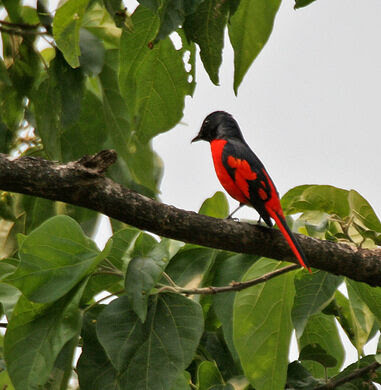
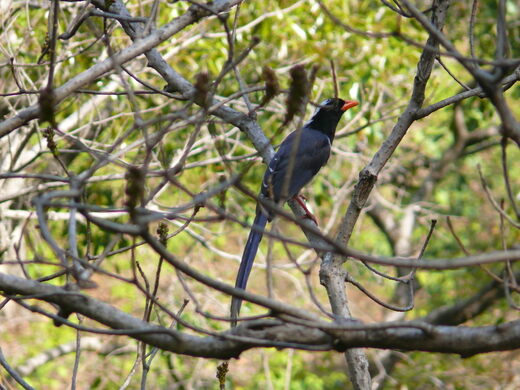
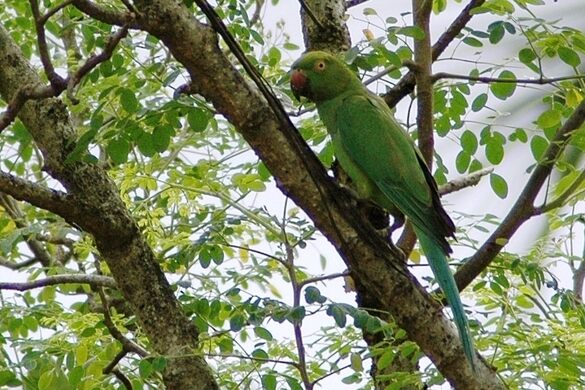
The forest is most notable for the abundance of birds that make it their home, with more than 67 species regularly spotted here. Visitors can easily spy Alexandrine parakeets fluttering colorfully through the trees, black kites arguing with crows, or scarlet minivets frolicking in the canopy. And the extravagantly tailed red-billed blue magpies are one of the highlights of any birding trip to the forest. Fittingly, Bird Conservation Nepal has developed the forest as a bird and biodiversity conservation learning center.


Two main trails encircle the forest, one at the base which staves off the ever encroaching city development, and one that circles the top of the hill allowing views of the city and Himalayas beyond. Also at the top of the hill is a small Ranidevi temple with murti dedicated to Shiva, Krishna, and Ganesh. Otherwise, the forest is the domain of native flora and fauna.

Nepal launched the community forest program in 1973 and currently there are nearly 20,000 forests across the country. The Kathmandu Valley region has 144 community forests, but Ranibari is the only one within the boundary of the Ring Road that encircles the cities of Kathmandu and Patan. Anyone looking for a respite from the functional anarchy of Kathmandu’s crowded city center will undoubtedly find nirvana tucked in the Ranibari forest. 

Clancy's comment: Wow, 144 community forests. Well done. 

I'm ...


7 December 2021 - INDIA'S MULTI-COLOURED SQUIRRELS


INDIA'S MULTI-COLOURED

 SQUIRRELS


G'day folks,

These particularly resplendent rodents are the state animal of Maharashtra. 

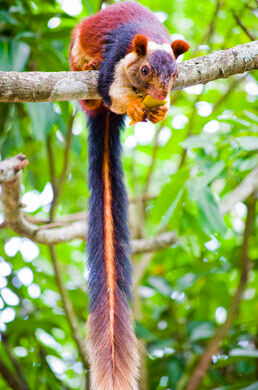
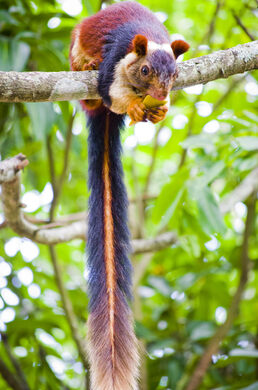
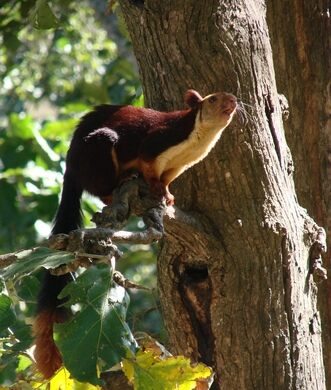
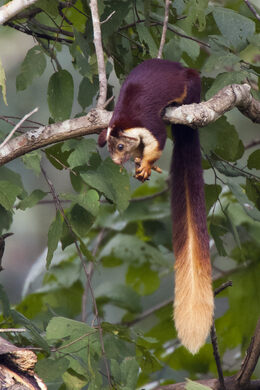
If you’re passing below a thick tree canopy in peninsular India and happen to hear a scurrying above you, be sure to look up. You might catch a glimpse of a striking squirrel whose fur appears to have been hand-painted with splashes of brown, orange, maroon, and black.

Meet the Malabar giant squirrel, which boasts an all-natural technicolor coat. Also known as shekru, these bright, bushy beauties, which are endemic to India, stretch as much as three feet long—much longer than the eastern gray squirrel and other svelter counterparts. 

The patchwork fur may help the squirrels hide up in the sun-speckled canopy, which would be an advantage, because they spend most of their lives up there, scampering among the branches and nibbling on flowers, bark, seeds, insects, and bird eggs. Their feathery, charcoal-colored tails help them balance while they teeter on narrow branches or hang straight down to feast. High above the forest floor, they’re out of many predators’ reach—but if they are startled, though (say, by one of their winged predators, like the crested serpent eagle), they plop down flush against the branches, as though trying to melt into them.

The cute critter is the state animal of Maharashtra—and if you’re setting out to spot some, your best bet will be in that region’s Bhimashankar Wildlife Sanctuary, tucked among the green, rolling Western Ghats mountain range.

The site is also home to one of India’s 12 jyortirlingas, or shrines, dedicated to the god Shiva. Devotees often flock to the temple during monsoon season—an especially wild time to trek through hills tangled with dense, fog-cloaked forests, and dip a toe into the pools at the base of waterfalls. 


 The sanctuary was established in the 1980s and has seen the squirrel population grow since. The animals have popped up on endangered species lists, but a census of the furry residents found that their numbers climbed by eight percent in the sanctuary between 2015 and 2016. Researchers surveyed squirrel nests in the nearby mango, coconut palm, and jamun trees and estimated that there were 2,145 individuals bedding down in the branches there. Each squirrel may build as many as eight nests; in 2017, the sanctuary’s census counts more than 22,000 of them. 


 As an extra boost to the animal’s numbers in the wild, the Rajiv Gandhi Zoological Park and Research Centre launched a breeding effort in July 2018. Soon, there may be more of these colorful creatures than ever. 

Clancy's comment: These are one of my favourite animals, but they are very hard to photograph.

I'm ...