Showing posts with label TB. Show all posts

11 August 2022 - ANOTHER ABANDONED TUBERCULOSIS HOSPITAL


ANOTHER ABANDONED

TUBERCULOSIS HOSPITAL


G'day folks,

Sadly, here is yet another beautiful building going to waste. An abandoned tuberculosis hospital moulders on into an uncertain future. 

Located behind fencing on private property in Perrysburg, New York, are the remains of the J.N. Adam Memorial Hospital. They still stand, despite having laid empty for years, yet another historic hospital site that’s too expensive to remove or rehabilitate.


The hospital was opened in 1912 by a former mayor of Buffalo, New York, James Noble Adam, who also owned the J.N. Adam & Co. department store. Its primary purpose was to treat victims of tuberculosis. This hospital was known for what was called the “Sun cure,” or “heliotherapy.” This involved relying on the rays from the Sun to help cure the patients of their disease. 

In 1960, the hospital was converted from a tuberculosis hospital into an institutional mental facility. It finally closed its doors for good in 1993 and has not been reopened since. Officials have looked into tearing down or refurbishing the remaining structures at the site, but since both options would cost millions of dollars to implement, no one has been willing to pay, and the site continues to deteriorate.


31 July 2022 - ABANDONED SEASIDE SANATORIUM


ABANDONED 

SEASIDE 

SANATORIUM 


G'day folks,

The  abandoned ruins of a historic medical facility sits eerily by the water. 

This brick fortress, designed in 1934 by architect Cass Gilbert, was America’s first medical facility designed to offer heliotropic treatment to children with tuberculosis. This type of treatment involved spending prolonged periods of time in the sun, in hopes that the exposure might help cure the patient.

The theory is literally built into the facility, which is renowned for its Tudor Revival architecture. Massive terraces facing the sea wrap around the main building, so the children could try to sun themselves to health. It wasn’t long, however, before new drugs were developed that rendered this treatment obsolete. 


As such, the building’s role would shift several times over the next six decades before it was added to the National Register of Historic Places in 1995. Over the ensuing decades, the facility would turn first into a home for the elderly, then into a traditional medical hospital, and finally into a hospital for the intellectually disabled.

It was showcased in the expose book named: Christmas in Purgatory, A Photographic Essay on Mental Retardation, by Burton Blatt and Fred Kaplan. The expose was written to show the appalling condition in various state schools through the country. The majority of the institutions included in the book were not named. Yet, the last chapter did name one institution: Seaside Regional Center (AKA Seaside Sanatorium). This institution was not named due to anything bad that occurred in the center but how it was an example of how state schools should be run. The book commented that the staff really cared for the residents and that there had never been any overcrowding, underfunding, abuse, or understaffing like in other similar institutions. 


It closed in 1996 due to a lack of need.

Now a Connecticut State Park, visitors can enjoy the grounds and walk the perimeters of the various buildings. 

Still an architectural marvel, the Seaside is today a complicated monument to both genuine attempts at medical innovation.


18 July 2022 - TUBERCULOSIS SANATORIUM - PORTUGAL


TUBERCULOSIS 

SANATORIUM 

- PORTUGAL -


G'day folks,

Welcome to some panoramic views from the mountains over a facility built to provide tuberculosis patients with fresh mountain air. 

At an altitude of 1,300 meters, this overlook offers a wide panoramic view over the southern half of the district of Guarda, the northernmost sectors of the district of Castelo Branco, and the western parts of the provinces of Salamanca and Cáceres in Spain.


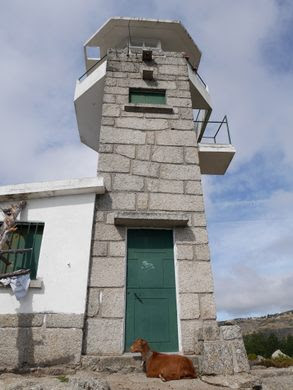
A small tower is visible from the road—walk up to it and you might hear some goat bells clanging and see the shepherd on the tower with binoculars. He’s either birdwatching or on fire watch. The goats and sheep are rummaging around and you have a great view over the town of Covilha and the former Sanatório da Covilhã (Sanatorium of Covilha) just below. The sanatorium was built in the 1930s by the by the Companhia dos Caminhos de Ferro Portugueses (Portuguese Railways Company) as a treatment facility for tuberculosis patients. It was thought that the fresh mountain air of the Serra da Estrela would help them recover.

The facility was designed by the actor, director, and architect José Ângelo Cottinelli Telmo. He is famous for designing the Monument of Discoveries in Lisbon. Telmo planned the sanatorium as a great hotel in the mountains, a romantic idea that aimed to overcome the stigma associated with tuberculosis. It was built in a V-shape and designed to look like a train, according to the architect.

As medical advancements helped lessen the impact of tuberculosis, the need for sanatoriums fell off. Operation of the Sanatório da Covilhã was handed over to the government in the 1950s. By the end of the 1960s, the last remaining patients were gone, and the sanatorium was closed in 1970. For a time it was used as a refugee center for people returning from former Portuguese colonies.  By the 1980s it was largely abandoned, and had fallen into disrepair. In the late 1990s it was turned into a pousada with spa facilities.


20 July 2019 - BRESTOVAC SANATORIUM IN ZAGREB FINDS A NEW USE


 BRESTOVAC SANATORIUM 
IN ZAGREB FINDS A NEW USE

G'day folks,

Once a state-of-the-art tuberculosis treatment spa, these ruins are now ruled by paintball players. Hidden in the woods of Zagreb, Croatia, the remains of an old tuberculosis hospital have crumbled away into a haunting ruin. From sanatorium to military hospital to paintball arena, the Brestovac Sanatorium has lived a number of lives.


First built in 1909, at the time of its creation, the hospital was one of the finest tuberculosis care facilities in all of Europe. Nestled in the calming mountain woods, it gave its patients a beautiful spot in which to relax and recuperate. But it was not just the scenery that led to the creation of the sanatorium. As the story goes it was actually love that led to the founding of the Brestovac facility.


As the tale goes, Croatian doctor Milivoj Dezman fell in love with a beautiful theater actress known as Lady Sram. Dezman lived for his lady love, so when she came down with tuberculosis, he convinced the city founders to build a hospital to treat the disease, making sure that it was one of the best to accommodate his lover, who was one of the first patients. Sadly Lady Sram is said to have died in 1913, leaving Dezman to operate the hospital for years after.


The sanitarium was used as a military hospital in both of the World Wars, but 1968, the facility had fallen into disrepair, and eventually it was simply abandoned, leaving the main building and a number of other structures to slowly decay into haunting ruins.


Today the site is open for any explorers who want to check out the mouldering hospital remains, but they seem to be used pretty frequently by paintballers who are indiscriminate in their targets, so watch your back.   


Clancy's comment: How often do we find beautiful old buildings that have been abandoned? Too often.

I'm ....