Showing posts with label HEALTH. Show all posts

18 July 2022 - TUBERCULOSIS SANATORIUM - PORTUGAL


TUBERCULOSIS 

SANATORIUM 

- PORTUGAL -


G'day folks,

Welcome to some panoramic views from the mountains over a facility built to provide tuberculosis patients with fresh mountain air. 

At an altitude of 1,300 meters, this overlook offers a wide panoramic view over the southern half of the district of Guarda, the northernmost sectors of the district of Castelo Branco, and the western parts of the provinces of Salamanca and Cáceres in Spain.


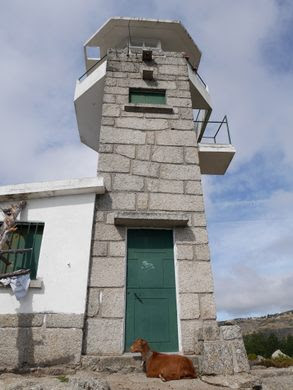
A small tower is visible from the road—walk up to it and you might hear some goat bells clanging and see the shepherd on the tower with binoculars. He’s either birdwatching or on fire watch. The goats and sheep are rummaging around and you have a great view over the town of Covilha and the former Sanatório da Covilhã (Sanatorium of Covilha) just below. The sanatorium was built in the 1930s by the by the Companhia dos Caminhos de Ferro Portugueses (Portuguese Railways Company) as a treatment facility for tuberculosis patients. It was thought that the fresh mountain air of the Serra da Estrela would help them recover.

The facility was designed by the actor, director, and architect José Ângelo Cottinelli Telmo. He is famous for designing the Monument of Discoveries in Lisbon. Telmo planned the sanatorium as a great hotel in the mountains, a romantic idea that aimed to overcome the stigma associated with tuberculosis. It was built in a V-shape and designed to look like a train, according to the architect.

As medical advancements helped lessen the impact of tuberculosis, the need for sanatoriums fell off. Operation of the Sanatório da Covilhã was handed over to the government in the 1950s. By the end of the 1960s, the last remaining patients were gone, and the sanatorium was closed in 1970. For a time it was used as a refugee center for people returning from former Portuguese colonies.  By the 1980s it was largely abandoned, and had fallen into disrepair. In the late 1990s it was turned into a pousada with spa facilities.


3 October 2021 - TIPS FOR YOUR WELLBEING


TIPS FOR YOUR

 WELLBEING


G'day folks,

Now in lockdown again due to Covid 19, I thought some of these tips might help others.

Most of us tend to go through our daily routines in a similar manner every day. We are so used to this daily rhythm, to the point where our actions can become automatic – we can go through a whole day in that robotic fashion, following the same fixed orders our brain sends us. But shouldn’t you be the one in control of your mind rather than vice versa?

A good way to regain that control is by practicing mindfulness. This technique originates in Buddhism, and it started gaining popularity in the west by the late 1970s when it was incorporated in medical practices and mental health treatments. Nowadays, mindfulness programs are applied in schools, hospitals and even prisons around the world. 


When we get out of bed mindlessly in the morning, without a guiding thought or a specific goal for the day, we give our minds “permission” to operate through the subconscious. When that happens, our decision-making process is aimless and can feel random or meaningless. You can overcome that feeling by creating a mindful morning routine. Instead of checking your phone and your e-mails first thing in the morning, try to do the following: 
 
 1. When You Wake Up, Sit Up in Bed For a Few Moments – Close your eyes, and feel the sensation in your body when you’re sitting up. Feel the weight of your body and the softness of your bed. Make sure you are sitting up straight. 
 
 2. Take 3 Deep Breaths – Inhale through the nose, exhale through the mouth. After that, let your breath take its natural course and listen to it. Pay attention to the movements happening in your body when you breathe – how your chest and abdomen rise and fall. 
 
 3. Ask Yourself ‘What Are My Intentions Today?’ – Think of the people you’re about to see today and the activities and tasks you will do. What are your intentions? Maybe leaving others with a positive impression of you? Or feeling more at ease in your interactions? 
 
4. Set a Goal For the Rest of the Day – For example, “today I will be kind to myself, joyful and patient with those around me”. 
 
 5. Check on Yourself During the Day – Stop what you’re doing from time to time, take a breath and remind yourself of the goal you set in the morning. Practicing these steps over time can lead to an overall improvement in your mood, and in your relationships.


Clancy's comment: Mm ... good advice, especially for me. Hope these help.

I'm ...


17 August 2019 - SOME CREEPY ANIMALS MAY SAVE LIVES


SOME CREEPY ANIMALS 
MAY SAVE LIVES

G'day folks,

Wasps, spiders, and cockroaches may be creepy, but all 3 may soon be able to revolutionize medical research. Let’s all admit it, the majority of people have a difficult relationship with most arthropods. 

One of the most common phobias in the world is arachnophobia, the fear of spiders (and other arachnids such as scorpions), so that relationship has gone downhill before it had a chance to start. The story with insects is very similar: we consider a lot of them to be pests, and the rest are just some strange alien creatures that just happen to live on the same planet with us. Little did we know that these creepy-crawlies may hold the key to the medical research of the future.


SPIDERS

Although arachnid research in the field of medicine is still in the developing stages, scientists managed to isolate two main resources (spider venom and spider silk) that could potentially transform the way we treat certain conditions.


Spider venom, in particular, has been tested as an experimental treatment of pain caused by IBS (irritable bowel syndrome), as well as a substance that could potentially treat epileptic seizures.

More specifically, an Australian research team has managed to isolate a protein from the venom of a species of tarantula, Heteroscodra maculata, that can block the pain signals from the intestines to the central nervous system. The researchers then developed a treatment that was shown to inhibit IBS-related pain, at least in animal models. A different Australian research group looked at how a peptide isolated from spider venom can potentially help treat seizures in Dravet’s syndrome, a severe type of epilepsy characterized by an extreme sensitivity to high temperatures. 

Spider silk is the strongest biological material on the planet, not to mention it’s very flexible and light, no wonder researchers are looking at its potential to be used in sutures and bandages, as well as medical devices and prosthetics. A research team based at the University of Massachusetts Lowell promises to come up with a new generation of spider silk-based materials that may soon transform not only medical supplies but also protective and sports equipment.


COCKROACHES

Cockroaches may be a pest in your mind, which they definitely are, but medical science found a use even for these creepy creatures. Some researchers plan on using them as a cheaper alternative to common lab animals, like mice, in some experiments, whereas others claim the cockroach brain may hold the secret to treatment for antibiotic-resistant bacteria.

In fact, in China, there are entire cockroach-breeding farms, as ground-up cockroaches are believed to treat gastrointestinal problems. Also, a research team in the UK found that the brains of cockroaches and locusts contain at least 9 different compounds that could potentially kill drug-resistant bacteria.
 The researchers hope one of these compounds may be the key to a cure for infections caused by such increasingly-resistant bacteria, like Escherichia coli and MRSA.
WASPS

A fear of wasps is completely warranted, as their stings can be not only spontaneous and extremely painful, but also commonly cause allergic reactions. But, as it often happens in medicine, toxic substances may hide a secret medical use that may save lives in the future.

In the case of wasp and hornet venom, there are at least 2 different compounds that may open the door to medical innovation. The most-studied compound is mastoparan, a peptide that can be found in the venom of different species of wasps and hornets. 
Mastoparan has been found to have antimicrobial, antibiotic and even anti-cancer properties, but there is a catch.

It turns out that, while mastoparan does kill the harmful bugs and makes certain tumors vanish, it is toxic to the healthy cells as well, so the next hurdle in clinical research is a more targeted treatment. Finally, a different type of peptides (ampulexins) from the venom of emerald jewel wasps, on the other hand, are currently reviewed as a potential treatment of Parkinson’s disease.

As you can tell, the majority of these research projects are a work in progress, but it’s fun to entertain the idea of these arthropods saving human lives nevertheless. It would be an unexpected turn of events to find yourself in a situation where you owe your health to a creature you despise, wouldn’t it?
Clancy's comment: I'm not surprised at all. Who cares where we find things to repair humans?
I'm ...


7 December 2017 - ASIA'S CLEANEST VILLAGE


ASIA'S CLEANEST
VILLAGE

G'day folks,

One of the biggest scourges in Asia is the constant use of plastic bags. However ...

From discarded plastic bottles and wrappers to the cow dung littering the streets of major cities like Delhi, trash is a big problem in India, but not in the small village of Mawlynnong. People here have zero tolerance for garbage and spend a lot of their time making sure every square inch of their village is spotless.

Mawlynnong first made news headlines in 2003, when a journalist from Discover Magazine dubbed it “Asia’s cleanest village”. 

After hearing about this place where everyone, from young children to the elderly, was dedicated to maintaining a state of complete cleanliness, he decided to investigate, and was so impressed by what he witnessed during his stay that he deemed Mawlynnong worthy of the title of cleanest village in all of Asia. His article drew a lot of attention to the community of around 600 people in the Indian state of Meghalaya, and people from all over the world started traveling there to see this example of cleanliness for themselves.


 It all sounds like a clever marketing gimmick to attract tourism, but Mawlynnong is much more than that. For as long as the locals can remember, keeping their village squeaky clean and beautiful has been everyone’s top priority. No one knows exactly how this obsession with cleanliness began. Some believe that it was an outbreak of cholera, some 130 years ago, when cleanliness was encouraged to stop the disease from spreading, while others credit the traditionally matrilineal society of the local Khasi people, with the dominant role of women as the main driver for cleanliness and sanitation. One thing is for sure, though, these values have been passed down from the elderly to the young, for generations.

You’re probably wondering how clean Mawlynnong really is, right? It’s really, really clean, thanks to a very simple yet effective system that involves everyone in the community. Every morning, all the children in the village pick up their teasel brooms and sweep the streets of dirt and fallen leaves – there’s not much else – before going to school. They are also responsible for emptying the bamboo trash baskets and separating the waste into organic matter, reusable plastic and burnable garbage.


 Collected leaves are buried in a large pit and turned into compost, most of the plastic is repurposed within the community, and the rest is burned on the outskirts of the village. Smoking and the use of plastic are actually banned in the village, but some plastic does end up in the collected trash, from tourists. They are also the ones who sometimes litter, but the locals never scold them for it. Instead, they just pick up after them, making sure that their home remains as pristine as ever.

Mawlynnong is one of the very few Indian communities where every household has its own toilet, making open defecation a non-issue.

 The whole village runs almost exclusively on clean energy, mostly solar, and employs teams of dedicated gardeners that ensure that the beautiful flowers and plants lining the roads and alleys are well taken care of.


And it’s not just the public areas of Mawlynnong that are incredibly clean and tidy. The same can be said for every household in the village, as this BBC article points out. The importance of cleanliness is so deeply embedded in the culture of this place that you can see it in everything and everyone.


Clancy's comment: Wow, more power to them.

I'm ...