2 January 2023 - THE SAD TALE of CHATEAU LAURIER - OTTAWA


THE SAD TALE 

of 

CHATEAU LAURIER 

- OTTAWA -


G'day folks,

The mastermind behind this palatial hotel perished on the Titanic weeks before its grand opening. 

With its elegant turrets and enormous size, this riverside hotel looks like it could double as some sort of fairytale castle perched atop a European hillside. The nearby canal even makes it seem as though a moat surrounds part of what could easily be mistaken as a stoic fortress.

The architectural beauty isn’t a palace at all, though it has had a few brushes with royalty. Many famous figures, prime ministers, and royalty from around the world have stayed within this 429-room hotel.


Its insides reveal early 20th-century hand-moulded plaster decorations, original Tiffany stained-glass windows, and walls made with the finest Indiana limestone. When it first opened in 1912, a private room cost a whopping $2 per night.

Yet despite the hotel’s grandeur, its story is tinged with sadness. The palatial Château Laurier was commissioned by Charles Melville Hays, American millionaire, philanthropist, and president of the (now long-bankrupt) Grand Trunk Railway System. But unfortunately for Hays, he died before he could see the hotel’s grand opening.


Hays, anxious to return from London to Ottawa for the Château’s big opening, booked a ticket on the famously ill-fated RMS Titanic. Strangely, he reportedly prophesied an “appalling disaster” on the very night the ship collided with the iceberg and met its demise. Hays sadly perished when the ship sank.

Notably, the Château has a second connection to the Titanic. Hays commissioned French sculptor, Paul Chevré, to create a bust of prime minister Sir Wilfrid Laurier for the hotel’s official opening. The bust, still located in the hotel foyer today, was transported aboard another ship, La Bretagne. Chevré and Hays boarded the Titanic, but unlike Hays, Chevré survived the sinking.

27 January 2023 - TUOL SLENG MEMORIAL MUSEUM - CAMBODIA


TUOL SLENG 

MEMORIAL MUSEUM 

- CAMBODIA -


G'day folks,

This once was the Khmer Rouge's high security prison. 

Tuol Sleng is nestled within in the heart of Phnom Penh, the capital of Cambodia. From the outside it looks unremarkable: a multi-story former high school with whitewashed walls and grey shutters. However, inside, Tuol Sleng holds a dark history.

Under the Khmer Rouge, Tuol Sleng was transformed from a school into Security prison 21 (S-21), a place in which some of the most violent atrocities of the Pol Pot’s regime were perpetrated. Originally named Chao Ponhea Yat High School, the complex includes five buildings in total. Several months after the Khemer Rouge took power in 1975, they implemented measures to convert the high school into a high-security facility. Between 1975 and 1979 it is estimated that over 15,000 people were imprisoned at Tuol Sleng. The prison held between 1,000 and 1,500 occupants along with a large security force.


Life within the prison was terrible, and the people imprisoned at Tuol Sleng were treated cruelly. Prisoners were shackled into their cells, forbidden to talk to one another and frequently beaten and tortured by the guards. All prisoners were interrogated during their stay at Tuol Sleng. These interrogations normally included torture: Prisoners were shocked with electricity, burned with irons and water-boarded.

In 2010, Cambodia convicted Kang Kek Iew, the chief of Tuol Sleng Prison, for crimes against humanity and grave breaches of the Geneva Convention. He was sentenced to life imprisonment, and died while still in custody in 2020.


Today, the former prison stands as a monument to the brutalities of the Khmer Rouge. It is now a museum dedicated to preserving the memory of those who passed through its gates. Several of the implements that were used to torture the prisoners are also on display along with a “skull map,” a map of Cambodia made entirely from human skulls and bones. Rooms that were once used to torture and abuse are now lined with thousands of photographs of those who were incarcerated there.

17 January 2023 - PHNOM PENH MEMORIAL STUPA - CAMBODIA


PHNOM PENH 

MEMORIAL STUPA  

- CAMBODIA - 


G'day folks,

Here, 5,000 skulls are in memorial to those who were killed by the Khmer Rouge. 

After the Cambodian Civil War ended, the vicious rule of Pol Pot and the Khmer Rouge began.

From 1975-1979, they killed 1.7 million people out of a population of 8 million. Many of those murdered were buried in mass graves in what has come to be dubbed the “killing fields.”


In Phnom Penh at Choeung Ek, a memorial was erected to remember those who were killed at the hands of the Khmer Rouge. At the site, the remains of an estimated 10,000 people were found. The memorial was then constructed so as not to obscure the facts, but to show the grisly and honest truth.

Designed in the style of a Buddhist stupa, the Choeung Ek memorial has glass sides, and is comprised of multiple layers of human skulls. Totaling 5,000 of those executed at the site, the skulls are a harsh reminder of a genocide that took place only 40 years ago. The memorial is particularly disturbing upon closer examination of the skulls, many of which bear marks of the trauma they suffered before their execution.

Along with the stupa, Choeung Ek still has a number of pits that were used as mass graves, and some human bones can still be seen in the area. The Cambodian government encourages visitors to see the site, and never forget the atrocities committed during the Khmer Rouge regime.


9 October 2022 - SECRET WW11 HOME OF THE BBC


SECRET WW11 

HOME OF THE BBC


G'day folks,

This abandoned funicular tunnel was a secret base for the BBC during World War II. 

There’s a secret hiding in the rocks lining the road that runs along the River Avon. There, tucked behind a gate, is an abandoned Victorian-era funicular tunnel that served as a clandestine sanctuary during World War II.

The underground funicular opened in March of 1893. It was the work of an entrepreneur named George Newnes, who hatched a plan to build a luxurious spa atop the gorge. He decided to construct the railroad to link the spa with the port down below.


The town let Newnes complete his plan, but there were a few conditions. The funicular had to be underground, so as not to spoil the picturesque scenery. It also needed secret entrances and exits to keep commoners separated from the hotel guests.

Unfortunately for the railroad, its working days were short-lived. By the 1920s, automobiles rendered it largely unnecessary. The last rail journey took place in 1934, and the secluded funicular seemed doomed to fade into obsoleteness.

But World War II changed all that. Locals took refuge from bombs in the upper parts of the tunnel. The BBC set up camp in the lower chamber, using it as a place to house its Symphony Orchestra. The BBC also constructed an emergency studio within the bowels of the tunnel network, though the air raids stopped before it was ever put to proper use.

The BBC kept the studio even after World War II ended, considering it a backup option during the Cold War. However, the organization moved out in 1960, and the tunnel was abandoned once again.

In 2008, a volunteer group set to work restoring the tunnel. Rocks, broken bottles, shoes, and other remnants from its bomb shelter days litter the space. The rusted train tracks still stretch throughout the tunnel, though they’ll likely never be used again.


6 January 2023 - COLD WAR FORTRESS BENEATH MOSCOW


COLD WAR FORTRESS 

BENEATH MOSCOW


G'day folks,

Dr. Strangelove-esque tours reveal the inside a bunker once reserved for Stalin himself. 

There’s an amazing tunnel system snaking beneath the streets of Moscow, leading to a secret cold war fortress once code named “Bunker-42.”

Designed and built after the first series of nuclear tests by the Soviet Union, these tests revealed that the optimum depth for the bunker’s silo must be no higher than 165 feet beneath ground in order to survive nuclear fallout intact. The task for the builders was enormous: construct a gigantic structure beneath the city streets without damaging Moscow’s existing infrastructure of streets and communication pathways. To do so would alert the public and innumerable unknown spies to the existence of the bunker, thereby rendering the entire (read: top-secret) thing useless. 


Strategically located inside a hill in the Tagansky district due to its proximity to the Kremlin, allowing quick access to the bunker for Stalin and the premier tier of government officials within the USSR, Bunker-42 wasn’t completed until 1956 and was thankfully never put into use in its full capacity. Rather, it spent the subsequent three decades as an airstrike command base, communicating with aircraft transporting strategic bombers carrying nuclear weapons until the political climate began to shift in 1986.


Today, the space exists as a historical monument that is equal parts museum to what life was like on the Soviet side of the Iron Curtain during the Cold War era and tour of the previously top-secret bunker itself, bringing visitors below ground to a time when the world lived on the constant brink of nuclear annihilation. A variety of tour packages are available at all hours of the day, catering to a range of ages, some of which focus more on the historical aspects of the space, while other take a nearly comic angle on the tangible threat of nuclear annihilation for all humankind. 

1 January 2023 - NUCLEAR BUNKER MUSEUM - PRAGUE


NUCLEAR BUNKER 

MUSEUM 

- PRAGUE -


G'day folks,

Buried five stories underground, this Soviet bunker is packed with gas masks and Cold War paraphernalia.  

Behind an unassuming graffitied wall is an old Soviet bunker which today evokes the paranoia and violence of the Cold War years.

A civilian bunker lies buried five stories beneath Prague’s decrepit Parukarka hill, a product of the fear of nuclear armageddon that penetrated the masses during the Cold War. Though both sides of the Iron curtain became obsessed with preparing for the possibility of a nuclear war, such bunkers were constructed with more frequency in the Eastern Bloc, as communist economies fully focused their resources on defense and army structures.


This bunker was not designed to house its inhabitants for decades, or even for years. Studies at the time found that there were many psychological risks associated with keeping people within the bunkers for extended periods of time, such as suicide and mass panic. So instead, the civilian bunker in Parukarka park was meant to save civilians from immediate death in face of nuclear explosions, and the idea was that they would evacuate to the countryside soon thereafter.

Today, you can explore the remnants of Soviet era paranoia on a two-hour-long guided tour, which takes you through some of the communist spots in Prague’s Old Town and ends in the nuclear bunker. The museum within the bunker serves as a snapshot of Soviet life, and in addition to the requisite dozens of gas masks, contains books, newspapers and photographs from the time.


10 January 2023 - BLACK GRAVEYARD HIDDEN IN NEW YORK CAR PARK


 BLACK GRAVEYARD 

HIDDEN IN 

NEW YORK CAR PARK


G'day folks,

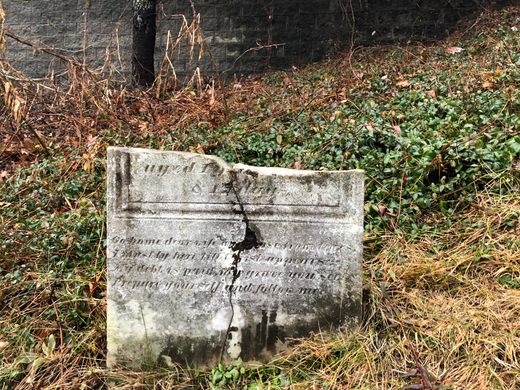
An historic Black graveyard is hidden in the parking lot of one of America's largest malls.  

The hulking Palisades Mall is among the largest “mega malls” in the United States. The vast concrete complex opened in 1998, swiftly becoming known as one of the ugliest malls in the country. Described by the New York Times as a, “series of interlocking coffins…lacking any discernible architectural theme,” the mall would be grim enough itself, were it not for the fact that there’s a small, historic cemetery lying largely unnoticed in the parking lot.

Around 20 million shoppers descend on the Palisades Mall every year, most of whom probably have no idea they’re passing by Mount Moor Cemetery, a Black graveyard listed on the National Register for Historic Places that lies dwarfed in the shadow of the Target parking lot and a Dick’s Sporting Goods.


Mount Moor was deeded in July, 1849, as a “burying ground for colored people.” The sloping hill is the final resting place for around 90 Black Americans, including veterans of the Civil War, the Spanish-American War, the two World Wars and the Korean War. 

The rise of the mega mall saw many family-run stores that been had been around for generations lost for good. The landscape and social history of many small towns were paved over to make way for these concrete cathedrals to consumer capitalism. And Mount Moor,, bounded by the New York State Thruway and Routes 59 and 303, soon fell under the greedy eyes of property developers. 


When Syracuse-based Pyramid Companies announced its intention to build one of the largest malls in America, it found the small, historic cemetery right in the middle of their plans. Offers to have the graves disinterred and relocated to another cemetery were swiftly met with short shrift. A reported offer of $100,000 to sell the cemetery was rejected by the Mount Moor Cemetery Association, who work doggedly to preserve and take care of the historic site. 

The property developers were forced to build their colossus around the tiny cemetery, which today can still be found on the sloping ground overlooking the car park. It is cared for diligently by members of the association and the descendants of those buried there. 

One particular grave belongs to Lafayette Logan, who fought in the Civil War with the Massachusetts 54th Regiment, the first Black regiment mustered by the North. Immortalized in the 1989 Academy award winning film Glory, he perhaps deserves more a dignified final resting place than in the shadow of a giant Bed Bath & Beyond. 


5 January 2023 - MASS GRAVES FOR 1928 HURRICANE VICTIMS - FLORIDA


 MASS GRAVES FOR 1928

 HURRICANE VICTIMS 

- FLORIDA  -


G'day folks,

This mass grave for victims of a massive hurricane remained hidden until 1991.  

When a hurricane struck the Florida coast in September 1928, it caused a dike on Lake Okeechobee to fail which resulted in an extensive loss of human life.

Of the victims in Palm Beach County, most of the White victims were buried in a mass grave in the prestigious Woodlawn Cemetery. However, segregation laws at the time prevented the burial of Black residents in that cemetery. More than 600 people of color were interred in a mass grave at the Paupers Graveyard at the corner of Tamarind Avenue and 25th Street.


While the mass grave at Woodlawn was marked with a memorial, the Tamarind Avenue site was largely forgotten until 1991, when a Nigerian religious service was held at the location. The site had passed through various owners over the years and was used as a garbage dump, slaughterhouse, and sewage treatment works.

The City of West Palm Beach purchased the land in 2000, and in 2003, a state historical marker was put in place by the city for the 75th anniversary of the storm. 

30 December 2022 - IRRIGATION CHANELS BUILT INTO MOUNTAINS


 IRRIGATION CHANELS

 BUILT INTO MOUNTAINS


G'day folks,

Medieval irrigation channels built into the sides of mountains provided Valais with water for hundreds of years.  

Some of the best places to hike in the state of Valais in Switzerland are ancient pathways that once used to bring water down from mountain streams to farms in the valleys and meadows below.


The creation of these channels, known as bisses, goes back at least as far as the 14th century, though some believe those medieval routes were built where Roman channels had previously been. In the aftermath of the Black Death in the mid-1300s, with a significantly reduced population across Europe, the grain fields in Valais were repurposed to grow hay to raise cattle for the rising demand of beef across the border in Italy.


Owners of the fields and pastures pooled their resources to build bisses for irrigation, which was more necessary than it had been for growing grain. A lot of resources were needed, since many of the bisses were built into the sides of mountains and cliffs, which made digging them particularly dangerous hundreds of years ago. They tended to be between 5 and 10 kilometers, though a few stretched more than 20 kilometers.

Over time, they came to be used by vineyards and orchards in the area as well. Those more wealthy landowners, who controlled the water supply, arranged for systems allowing the use of the water by the smaller farmers. The smaller farmers and their families, in turn, helped maintain the bisses, cleaning and repairing them every spring. Canal guards, who lived in cabins along the channels, kept regular watch over the flow of water, making sure it was not interrupted.

For the most part, the bisses that remain have become scenic tourist attractions and inspired hiking trails, though some are still in use. Some of the trails run alongside the bisses, but others are the bisses themselves, repaired and reinforced. Le Musée des Bisses offers a convenient itinerary of some of the most spectacular bisse-adjacent trails, the bisse of Sion, the bisse ‘Ayent, and the Bitailla, in addition to exhibits on the history of the Valais bisses.