This railway carts travelers to central Athens's highest peak, which offers stunning vistas of the city.
Running from the lower terminus in
Kolonaki to the upper terminus atop Mount Lycabettus, the Lycabettus
Funicular takes passengers on a 680-foot underground journey up to the
highest peak in central Athens.
Mount Lycabettus sits 908 feet above sea level. In 1960, construction
began on a funicular railway that would take visitors to the top of the
mountain. After much digging and hauling, the Lycabettus Funicular was
inaugurated on April 18, 1965.
The funicular ran uninterrupted for 38 years until 2002, when the
carriages were replaced and the mechanical and electrical systems were
renovated. Now, each car has a capacity of 34 people and the funicular
transports an average of 300,000 riders annually.
Atop the mountain is a panoramic view of all of Athens. On the higher
peak is the 19th-century Chapel of Saint George, a tiny Cycladic-style
chapel that was first used by a Monk in 1834 and sits on the grounds of
an ancient temple dedicated to the God Zeus as well as a café and
restaurant. On the lower peak sits a 4,000-seat Amphitheater.
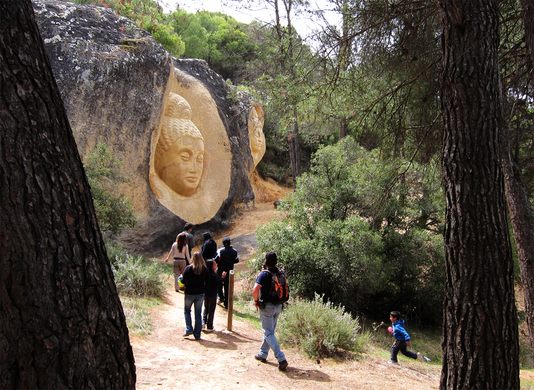
Numerous sculptures set along hiking trails symbolize and idealize the relationship between man and nature in Spain.
Intricate faces sculpted into the natural
facade of the environment merge with the already-beautiful and symbolic
landscape of the swamps of Buendia in a place known as the Ruta de las
Caras. The name translates to “Route of the Faces,” where a series of
hiking trails or “routes” take visitors along a cultural and artistic
journey of spiritual discovery.
The Buendia swamps are thick with dense pine forests and sandstone
rock, into which some 18 sculptures and bas-reliefs have been carved.
Several artists have combined over the years to create the impressive
collection, which features works ranging from 1 to 8 feet high.
Art and nature lovers alike come from miles away to enjoy these
sculptures, which break the bounds of traditional museums and leave more
commonly artistic urban areas behind for the quiet serenity of the
forest. The art serves to explore and magnify the deeply complementary
relationship between sculpture and nature, forth both artist and viewer.
Reflection
on this symbiosis is enhanced by the spiritual nature of the art, as
the faces have a mystical-religious meaning. The concept of human forms
written onto natural contexts, fully integrated into sandstone in this
case, is a notion deeply rooted in the human condition. Cultures have
always considered our relationship with the wider world by trying to
integrate the two, often through artistic sculpture, found all the way
from Pharaonic Egypt to these modern-day statues.
Buendia, Spain is a municipality in the province of Cuenca, near
Madrid. This was a perfect location for such a sculpture park, as Cuenca
and Guadalajara already offered an ideal environment for hiking. Hiking
trails include some for children, taking over 1 scenic hour to complete
but having a lower difficulty as hikes go, and flanked by unique
artwork all along the way.
For the more advanced, the Buendía swamp and other nearby trails
along the Sierra de Altamira offer long-distance views and lovely
scenery. Some of these trails are developed to connect the town directly
with the Route of the Faces, surrounded by the incomparable landscape
of the Sea of Castile, which in times of drought is more like a swamp.
In either case, the landscape offers waterways where one can practice
watersports, sailing, jet skis, motorboats, fishing and even bathe in
its waters, as so many locals do on their way to end from enjoying the
faces oddly, yet comfortingly, set in stone.
This forgotten chalk mine was reopened thanks to a massive effort from the local community.
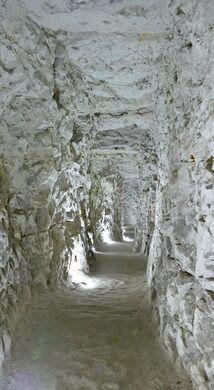
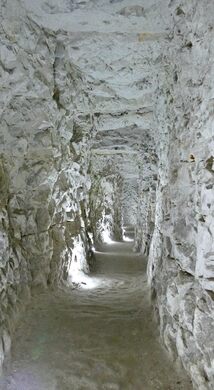
The Margate Caves is a subterranean
wonderland located underneath an unassuming street in Margate. The
caves are actually a forgotten chalk mine that was rediscovered during
the 18th-century.
The caves first opened to the public during the Victorian era as a
“Smugglers Cave,” and were important to Margate’s burgeoning tourism
industry. The caves changed ownership several times until they were
eventually closed in 2005 due to instability. In 2011, the owner of the
cave destroyed the entrance.
Not long after the entrance was closed, members of the community
formed the organization, Friends of Margate Caves. The group, along with
The Margate Caves Community Education Trust, worked together to raise
funds to save the caves. They were eventually reopened to the public.
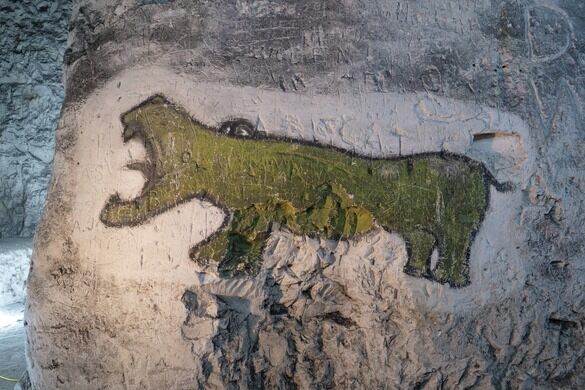
In 2019, the caves finally reopened to the public. Inside, visitors
can explore around 200 years of history and marvel at the bizarre
menagerie of paintings. The artwork dates between the early 1800s, to
the most modern being painted around the 1980s.
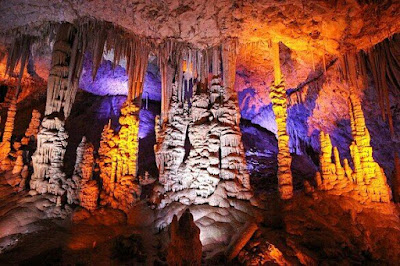
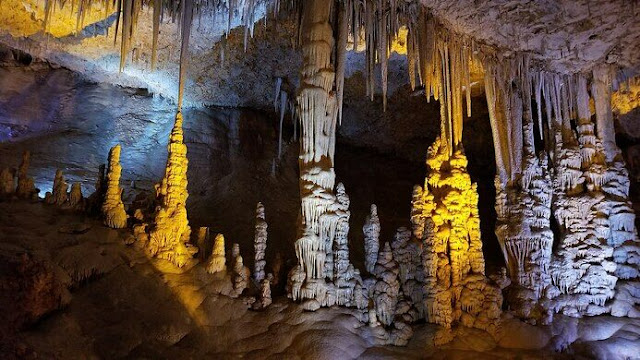
This amazing ancient cave was kept secret for seven years to protect it from the public.
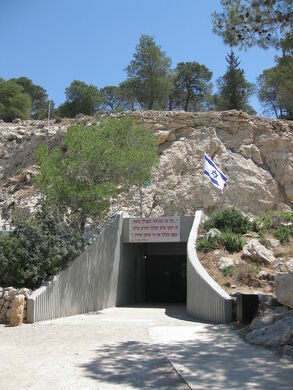
In May 1968, workers at the
Hartuv quarry in the Judean Hills were quarrying with explosives. Each
blast was much like the one before, until a strange gap opened up in the
rock face. Peering inside, the men discovered a large cave, its roof
dripping with stalactites, the oldest of which would later be dated to
around 300,000 years old.
After its discovery, local authorities decided to keep the cave a
secret, fearing the ancient formations would be damaged if it were
opened to the public. Seven years later, on March 16, 1975, the cave was
declared a nature reserve and its secrets were revealed.
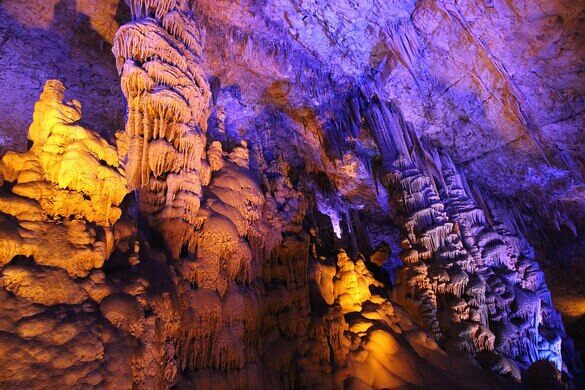
The Avshalom Cave, also known as the Soreq Cave, has since become one of Israel’s
most incredible natural wonders. From the roof of the
50,000-square-foot cavern hangs a forest of stalactites, the largest
more than 13 feet long, slowly formed over millennia by the slow
dripping of water through cracks in the ceiling. Rising up from the
floor beneath them are a series of towering stalagmites, while some
stalactites and stalagmites have joined to form pillars.
The result is a strange subterranean world of bizarre formations,
with organic-looking shapes that resemble coral reefs and tentacles.
Other formations have been compared to a whole range of objects:
elephant ears, ice cream cones, the Lion King, and the U.S. Capitol
Building.
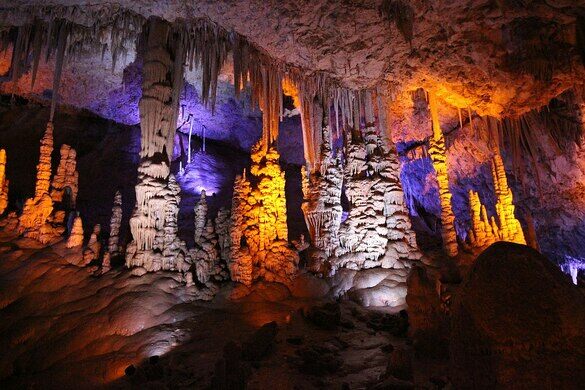
The whole effect has been made even more trippy since the
installation of a modern lighting system. For years, the cave was
illuminated by the white light of automobile headlamps. This, however,
triggered photosynthesis and the algae inside the cave began to grow,
threatening to cover the bare rock formations in a uniform smudge of
dark green moss. The park officials then tried using ultraviolet light
at night to kill the algae, but the algae eventually developed an
immunity to UV light.
In 2012, a new anti-algae tactic was employed. A lighting system was
installed that used only a limited part of the color spectrum, with
shifting shades of orange, blue and green. Not only did this help to
control the algae, it also gave the cave an otherworldly appearance that
made the whole experience all the more memorable.
At the time, some park officials had mixed feelings about the new
lighting, worrying it would detract from the cave’s natural beauty.
Boris Kripak, a Russian-born archaeologist who worked at the cave, told
the Los Angeles Times: “We don’t want to turn the cave into a
discotheque.” But he also admitted that the shifting colors, which range
from bright orange to deep purple, had given new life to the ancient
cavern, saying “It’s like the cave is breathing.”
Clancy's comment: Stunning to think that it was found by accident.
Chefchaouen is probably the bluest place in the entire world, and that
doesn’t mean that Muddy Waters and B.B. King set up home here! Rather,
virtually everything that can be has been painted blue by the locals.
The blueness that sets this city apart from all others has a very curious
history. During the 15th century, many Jews were expelled from or fled Spain.
Some came to Chefchaouen in Morocco, where they established themselves and
began the tradition of painting their homes blue.
For those medieval Jews, blue signified their heavenly Father. It’s amazing to
think that even after so many centuries this marvelous tradition has been
maintained by the locals.
With the historic founding of Israel shortly after World War II, almost all of
the city’s Jewish population took the chance to wave goodbye to Chefchaouen and
start a new life back in their true fatherland. However, the city has kept up
the Jewish tradition anyway.
It’s the blueness that has made Chefchaeouen one of Morocco’s most famous
places, despite being a small city of 43,000 inhabitants. Naturally, the local
council make sure the locals have enough paintbrushes to keep the place looking
so blue. Yet there is more than just color to see here…
The town center is where you’ll find the city’s old fortress. This was built
around the time of the town’s foundation (1471) to protect it from the
Portuguese.
Because Chefchaouen is built on a hill, walking around here can really take it
out of you, especially during the sunniest and hottest months of the year.
However, this is one day well spent, as you can see from these wonderful
photographs.
Clancy's comment: Enchanting place, and excellent for photographers.