Showing posts with label FOSSILS. Show all posts

4 February 2022 - MONTE ALPI'S FISH FOSSIL - ITALY


MONTE ALPI'S

FISH FOSSIL 

- ITALY -


G'day folks,

A fossil of a 30 million-year-old fish is unexpectedly hidden thousands of feet above sea level. 

Those who know where to look will spot a secret hiding in plain sight on the southern slopes of Monte Alpi. It’s hard to find, but an eagle eye will notice the fossil of an enormous fish barely visible against a large, gray stone slab.

The fossil is said to be a member of the Istiophoridae fish family, most likely a Blue Marlin. It’s believed to be about 30 million years old. The nearly eight-foot-long, three-foot-high fish was first noticed in 1982.

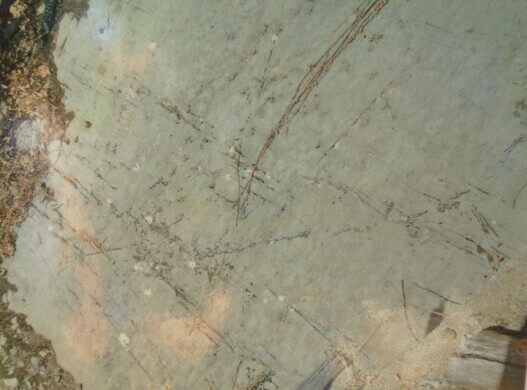
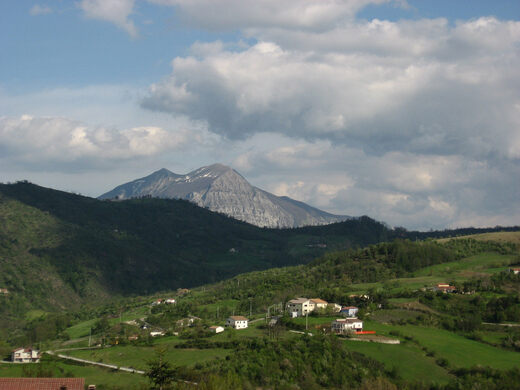

 Seeing this long-dead fish is an amazing look back in time. It’s fascinating evidence of when this mountain was submerged beneath the sea.

As it’s not easy to see the fossil between the rocks, bring some water and pour it over the stone slab. Darkening the rock this way makes the fish slightly easier to find, though it still requires a bit of imagination (a nearby sign also helps you visualize what you should be looking for).

The whole of Monte Alpi itself is interesting, too. Situated near the small town of Latronico, it’s one of the highest mountains of the Lucanian range of the Apennines and is one of the most interesting and untouched areas of the mountain range.

Clancy's comment: This is a stunning find. 

I'm ...


12 August 2019 - ANCIENT ANIMAL FOSSILS FOUND IN CHINA


 ANCIENT ANIMAL FOSSILS 
FOUND IN CHINA

G'day folks, 

The fossils from the Cambrian Period include dozens of new species and provide a window into life more than 500 million years ago.


The Cambrian was a time of vibrant, wonderful life. Fossil-packed sites like the Burgess Shale in Canada have revealed the unique nature of early animals around 508 million years ago. The strange creatures found in the rock are so delicately preserved that the ancient deposit seemed like a rarity, showing the unusual appendages and body shapes of the time.

In the century since the Burgess Shale discovery, however, other fossil wonderlands of similar age have been uncovered elsewhere on the planet. The latest to be recognized was found in southern China: the Qingjiang Biota.

In a paper published today in the journal Science, Paleontologist Dongjing Fu of Xi’an’s Northwest University and colleagues describes the Cambrian Period fossils. At 518 million years old, the collection is about 10 million years older than the Burgess Shale. The way the fossils formed, however, is similar to those in North America. Visible in high contrast as dark fossils on gray stone, the organisms of the Qingjiang Biota are preserved down to the finest details. The fossils include trilobites, jellyfish, shrimp-like arthropods and even tadpole-like animals from the earliest days of the vertebrate family.


Dozens of these species have never been seen before. “What makes the Qingjaing special compared to other Cambrian sites with soft parts preserved, such as the Burgess Shale and Chengjiang Biota [in southern China], is the fact that there is over fifty percent entirely new taxa of animals and algae that are previously unknown to science,” says University of Lausanne paleontologist Allison Daley. Even better, she notes, is that the fossils are of “truly exceptional quality,” preserving the anatomy of the species without some of the natural distortions that sometimes result from the fossilization process.


“It shows how we have these little windows back to the past and how finding another site can change what we know,” says University of Bristol paleontologist Jakob Vinther.

Some of the most beautiful specimens from the site are of soft-bodied creatures that don’t easily enter the geologic record. “The presence of so many stunning cnidarians was an absolute pleasure to see,” Daley says, referring to the jellyfish and sea anemones that thrived in this ancient ecosystem and are some of the key fossils that make the Qingjiang Biota stand out. “The significance of this site is in the way it fills several gaps in knowledge about key animal groups,” including cnidarians, strange invertebrates known as “mud dragons” and comb jellies. Representatives of all these groups are still alive today, making them some of the most ancient and successful animals in the world.


This wealth of squishy-bodied specimens hasn’t been visible at other Cambrian sites. “The diversity of cnidarians and ctenophores and sponges seems unique and therefore may give us a lot of clues to the origin and evolution of these groups that other sites couldn’t,” Vinther says.

The seeming flash fossilization of the Qingjiang Biota preserves an entire community of species, as close as paleontologists can get to time traveling back to 518 million years ago. “The fact that the assemblage of taxa is so different from other sites will also reveal the characteristics that influence what taxa live together in the same place at the same time,” Daley says, “and show us information about their ecological interactions.”


The Qingjiang Biota also adds a new wrinkle to the ongoing fossiliferous debate about the Cambrian explosion. The “explosion” was a dramatic diversification of life during the Cambrian Period, but paleontologists are still discussing whether the evolutionary event was a real, sudden change or if it simply looks that way because of incomplete fossil sampling. While the Qingjiang Biota doesn’t necessarily resolve the debate, Daley says, it adds to the picture of amazing evolutionary radiation during the Cambrian.


The identities and interactions of the Qingjiang Biota creatures have yet to fully come into focus. For now, they offer a new window to a time we know little about, and, Daley says, “I can’t wait to see the detailed studies on these amazing fossils in the future.”


Clancy's comment: Exciting stuff, eh? 518 million years old? Wow.

I'm ...