Showing posts with label ANCIENT SITES. Show all posts

3 October 2022 - CARACOL - ANCIENT MAYA SITE IN BELIZE


CARACOL 

- ANCIENT MAYA

 SITE IN BELIZE -


G'day folks,

This massive Maya archaeological site is home to the tallest man-made structure in Belize. 

The road begins near San Ignacio, a rugged town in western Belize not far from the Guatemalan border. About three hours down a winding, muddy jungle road and you’ll enter the site of Caracol, a vast, ancient Mayan city that thrived for 300 years and, at its peak, covered nearly 77 square miles (200 sq km)—larger than Belize City today. 

Even at its busiest, you won’t find crowds of tourists at Caracol. Although it is located only about 50 miles (75 km) from Tikal, the site at Caracol remains less visited, perhaps due to its relative inaccessibility and more recent archaeological interest.


Caracol was rediscovered in 1937, when a native logger named Rosa Mai came across its remains while searching for mahogany in the area. The site was surveyed the following year, but more significant investigation did not begin until 1985, when the Caracol Archaeological Project was established.

The site—which is only partially uncovered—includes several plazas, acropolises, and residential areas, along with many altars and stelae. More than 250 burials and 200 caches have been discovered at the site so far. The largest building, Caana (“sky palace”), remains the tallest human-made structure in Belize at 141 feet tall (43 m).


Archaeological evidence suggests that Caracol was an important Maya site that was occupied continuously from 600 B.C. to 1100 A.D. The city was at its largest and densest during the Late Classic Period, around 650. At its height, the population of Caracol is thought to be around 100,000 or more, easily exceeding Tikal’s peak population. But 300-400 years later, the central metropolis was mostly abandoned.

The name Caracol means “snail,” apparently in reference to the twisted road used to approach the site. 
26 December 2021 - THE FASCINATING MOGAO CAVES - CHINA


THE FASCINATING 

MOGAO CAVES 

- CHINA -


G'day folks,

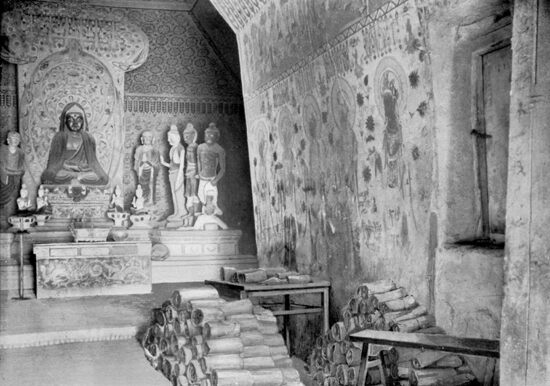
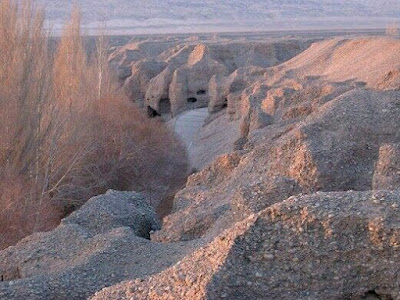
Hundreds of caves filled with thousands of centuries-old statues and murals exist in Mogao. 

Tucked away in a disused section of the Silk Road on the edge of the Gobi Desert, this place managed to stay under the radar for centuries. Along a one-mile long trail of cliffs beside the Dachuan River are the Mogao Caves, a complex of human-made caves and cells that preserve Buddhist statues and paintings spanning a whole millennium, from the fourth to the 14th centuries. A total of 492 of these caves have survived the test of time.

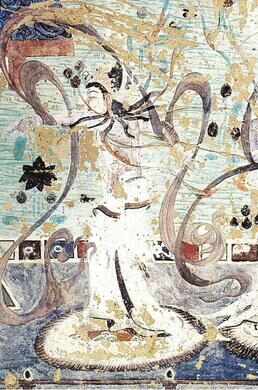
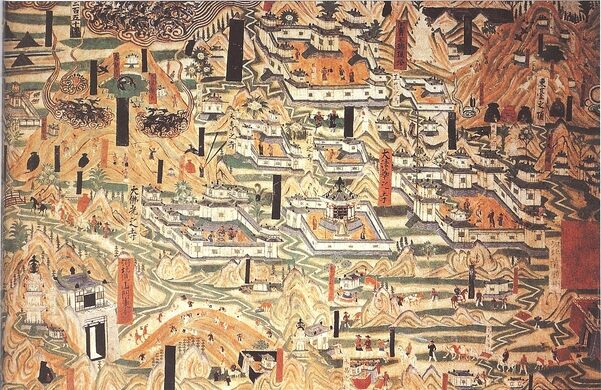
The caves house more than 2,000 statues and more than 480,000 square feet of murals, all created by monks. A keen eye will notice a fusion of different artistic influences, with hints of Roman, Indian, Persian, Turkic, Mongolian, and Tibetan traditions behind the more prominent Han Chinese style.

Each and every cave has its own artistic merits, but taken as a whole, they showcase the evolution of Buddhist art in the region. Many murals go beyond the religious theme and incorporate more mundane scenes, with valuable information about the political, economic, and cultural context of the time. Among the worldlier depictions are a camel pulling a cart and farmers at work.


Although the murals are in the caves, they were not painted on naked rock. The surface was covered with mud, straw, and reeds, which were commonly used for construction, and an additional layer of lime. The statues, on the other hand, are made of wood, straw, reeds and plaster. These are all easily perishable materials, and they likely survived due to the caves’ remoteness.

Part of this complex of caves and cells is also a library (Cave 17) that in addition to Chinese texts, also houses Tibetan, Turkic, and Hebrew documents. Unfortunately, most of the 50,000 documents found in the library were readily sold to foreign (mostly Western) hands. The most valuable of these was the Diamond Sutra, one of the oldest printed books in existence (now at the British Library in London).


 Clancy's comment: This place would be fascinating to visit.

I'm ...