Showing posts with label SINGERS. Show all posts

29 January 2022 - SONNY BONO MEMORIAL PARK - WASHINGTON DC


SONNY BONO

 MEMORIAL PARK 

- WASHINGTON DC -


G'day folks,

A small triangle of DC grass is the final resting place of one of Sonny and Cher's songs. 

Not every memorial in Washington, DC is a colossal, tourist-swarmed, marble and stone monument. Some, like Sonny Bono Memorial Park, are quiet, intimate, and easy to miss if you don’t know where to look. 

The small, triangular patch of grass where New Hampshire Avenue intersects 20th and O Streets has been a memorial to Salvatore “Sonny” Bono since his friend Geary Simon, a local real estate developer, dedicated the 800-square-foot space in 1998. Bono, who had achieved fame in his early life as a recording artist and producer, became friendly with Simon while serving as a representative for California’s 44th district, an office he held until his sudden death in 1998. The two men met at a martial studio owned by Simon’s girlfriend and attended by Bono’s children, and quickly developed a close friendship. Following Bono’s tragic ski accident, Simon approached the DC Department of Parks and Recreation, offering $25,000 of his own money for the development and maintenance of the unused space.
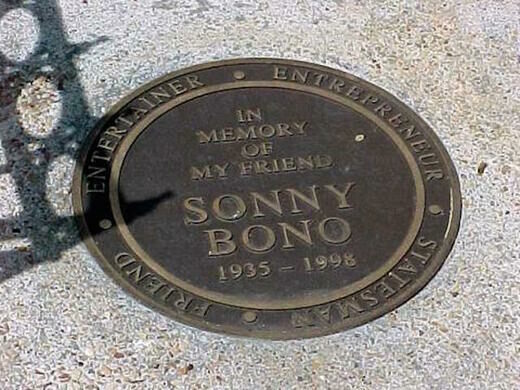
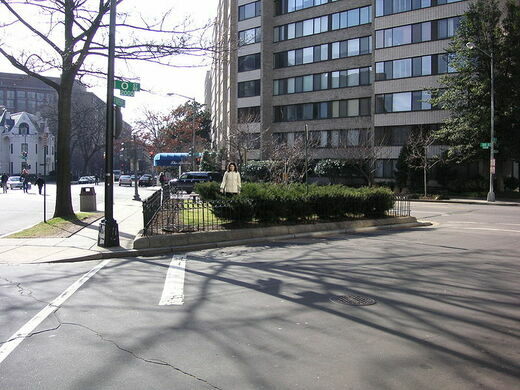
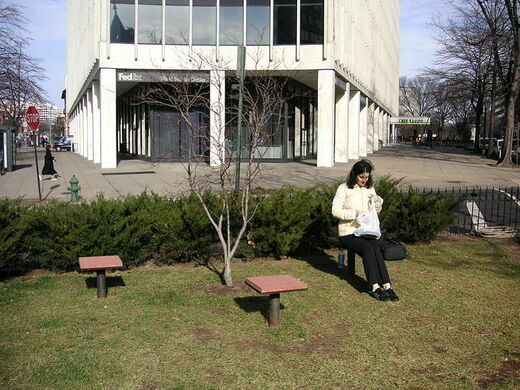

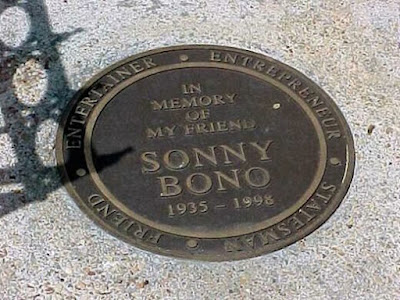
 Simon decorated the traffic island with shrubbery, small benches, a tree from Bono’s congressional district in Southern California, and a plaque reading “In Memory of My Friend Sonny Bono 1935-1998: Entertainer, Entrepreneur, Statesman, Friend.” Buried underneath the plaque is a small vault containing various memorabilia, including the original sheet music to Sonny & Cher’s “The Beat Goes On.”

Clancy' comment: A nice gesture for a friend, eh?

I'm ...


13 May 2021 - NAT KING COLE'S STRUGGLE WITH RACISM


NAT KING COLE'S STRUGGLE

 WITH RACISM

G'day folks,

February 15, 1965 — Nat King Cole, who died on this day, possessed a unique soft baritone voice which, to use the title of one of his most famous songs, was “Unforgettable”. But despite his talent and huge success as a recording artist his short life was plagued by incidents of racial discrimination.

Born in 1919, at the age of four he began learning to play the piano with help from his mother, a church choir director in their home town of Montgomery, Alabama.

At 15, he dropped out of school to become a jazz pianist. Cole said he "played piano at almost every beer joint from San Diego to Bakersfield”. Legend has it that at one of the venues a drunken customer jammed a paper hat onto the pianist's head and proclaimed, "Look! King Cole!" The name stuck.

He made his first professional recordings in 1936 and the following year put together what would become the King Cole Trio.

By the 1950s, Nat King Cole emerged as a popular solo performer with numerous hits including "Mona Lisa”, “Smile" and "Unforgettable”. He was to sell a total of 50 million records during his career.

He said later: “I started out to become a jazz pianist but in the meantime I started singing and I sang the way I felt and that's just the way it came out.”

In 1956 he became the first African-American performer to host a variety TV series – The Nat King Cole Show, which featured leading performers of the day. But it was scrapped the following year, Cole blaming its demise on the lack of a national sponsor.

This was seen as a reflection of the racial issues of the time, no company wanting to back a show featuring African-American entertainers. Cole later quipped: “Madison Avenue is afraid of the dark."

It was also in 1956 that Cole experienced racial discrimination in its most savage form. British music paper New Musical Express reported on April 13: "One of the world's most talented and respected singing stars, Nat King Cole, was the victim of a vicious attack by a gang of four men at Birmingham, Alabama, during his performance at a concert on Tuesday.

“His assailants rushed down the aisles during his second number and clambered over the footlights. They knocked Nat down with such force that he hit his head and back on the piano stool, and they then dragged him into the auditorium.

“Police rushed from the wings and were just in time to prevent the singer from being badly beaten up.” 


In her book, “Talking Swing, the British Big Bands”, Sheila Tracy recalls that the Ted Heath Orchestra – one of the star British acts of the time – were touring with Nat on that tour. She quotes saxophonist Ronnie Chamberlain as saying:

“We were booked to play in Birmingham, Alabama, and the guys in Nat’s trio were absolutely scared stiff, saying, 'We don't want to go there, man.' Recalling the attack on Cole, Chamberlain said: “I felt really sick and went outside and puked, it frightened me so much. Poor Nat was in a terrible state.”

Though this was an extreme incident, Cole had become used to – and philosophical about – racial discrimination. In 1948 he bought a house at the exclusive all-white Hancock Park development in Los Angeles, where former residents included Howard Hughes, Katharine Hepburn and Mae West.

The Ku Klux Klan responded by placing a burning cross on his front lawn. Members of the property-owners association told Cole they did not want any undesirables moving into the area.

Cole famously retorted: ”Neither do I. And if I see anybody undesirable coming in here, I'll be the first to complain."

He continued to live in the house until his death in 1965. A heavy smoker, Cole was just 45 when he died of lung cancer.

Clancy's comment: One of the best singers of all time. Simply, unforgettable.

I'm ...


4 April 2021 - THE BIRTH OF THE BEATLES


THE BIRTH OF 

THE BEATLES

G'day folks,

We've all heard rumours over the years, but here is a good one laid to rest.

January 1, 1962 — On this day, the Beatles – scruffy, clad in leather and unknown outside their home town of Liverpool – travelled through snow in a van for 220 miles to make a recording audition in London. And they were turned down.

In charge at the Decca studios where the audition was held was senior A&R man Dick Rowe. His assistant, Mike Smith, had seen the Beatles perform at what was to become the famous Cavern Club and had put forward the audition suggestion to their manager, Brian Epstein.

 It lasted about an hour and the Beatles – John Lennon, George Harrison, Paul McCartney and the original drummer, Pete Best – performed 15 songs. They were nervous and the session did not go particularly well but Smith told them afterwards that he “saw no problems” and they would have a decision “in a few weeks”.

Epstein let the “few weeks” pass, then, fed up with waiting, phoned Rowe and asked for a decision. It was not what he expected. “Groups with guitars are on the way out,” Rowe allegedly said, adding that he believed “the Beatles have no future in show business”.


Rowe, who died in 1986, always denied the story, saying it was actually Mike Smith who turned down the Fab Four. Another group, Brian Poole and the Tremeloes, also had an audition on the same day and according to Rowe: "I told Mike he'd have to decide between them. It was up to him – the Beatles or the Tremeloes. He said, 'They're both good, but one's a local group, the other comes from Liverpool.' We decided it was better to take the local group. We could work with them more easily and stay closer in touch."

Whoever made the decision, Rowe went on to redeem himself by subsequently signing, among others, the Rolling Stones, the Animals, the Moody Blues, the Small Faces and Tom Jones.

And on musical grounds, maybe it was the right verdict. Years later, George Martin, the Beatles’ legendary producer at EMI, said that he, too, would have turned them down on the basis of the mediocre Decca audition tape.


Clancy's comment: I still think they were one of the best. Just sayin' ...

I'm ...


25 July 2016 - PETER GABRIEL


PETER GABRIEL

G'day folks,

Welcome to some details on a very famous singer and songwriter. Once a member of the band Genesis, Peter Gabriel is a British singer and songwriter who had such hits as "Games Without Frontiers," "Sledgehammer" and "In Your Eyes."

Synopsis


British musician Peter Gabriel started the progressive rock group Genesis in the 1960s. After breaking from the band in 1975, he has gone on to enjoy tremendous success as a solo artist. His 1986 album So featured such hits as “Sledgehammer, “Big Time” and “In Your Eyes.” Gabriel later released Us (1992) and Up (2002). He is also one of the founders of the WOMAD Foundation and Real World Records. 

 Early Life


Born on February 13, 1950, in Woking, England, musician and singer Peter Gabriel has created such hits as “Shock the Monkey,” “Sledgehammer,” “Big Time” and “In Your Eyes.” He grew up on a farm in Coxhill near Chobham. His father Ralph was an electric engineer and avid inventor. His mother Edith passed down her love of music to her son. After attending local schools, Gabriel went to Charterhouse, a boarding school, at the age of 13.
At Charterhouse, Gabriel explored his interest in music. There he and friend Tony Banks perform together in a band called the Garden Wall and met fellow musicians Anthony Phillips and Mike Rutherford. The four eventually join forces to form the future progressive rock act Genesis. 


The Genesis Years 

Gabriel released his first single with Genesis in 1968, and the band released its first album From Genesis to Revelation in 1969. This record failed to attract much notice, but the group finally began to catch on with listeners by 1971’s Nursery Cryme. This album broke into the UK’s top 40 album chart. Their next effort, 1972’s Foxtrot, climbed higher, reaching the number 12 spot. The band was probably best known, however, for its live shows. 
 Gabriel gave intriguing performances on stage, often involving costumes and props. 

Genesis continued to thrive professionally over the next few years, but tensions began to emerge within the band. Gabriel took time away from the group to work on a project with director William Friedkin in 1974. "Genesis, at that time, were not into anyone having extracurricular activities," Gabriel told Rolling Stone. And there was also a certain jealousy, because as frontman I was being credited as sole creative source of the band, which was really unfair,” he added. Gabriel’s last album with Genesis was 1974’s The Lamb Lies Down on Broadway. 


Successful Solo Artist 

After leaving Genesis, Gabriel soon embarked on a solo career. He put his first self-titled album in 1977, which featured the song “Solsbury Hill.” Quickly following up this initial effort, Gabriel released his second self-titled record the following year. One of the album’s best known tracks was “D.I.Y.” With 1980’s Peter Gabriel, he experienced his first major success on the music charts. The song, “Games Without Frontiers,” was a top 5 hit in Britain and made the top 40 in the United States. Another track from the record “Biko,” written about slain anti-Apartheid activist Steve Biko, “became a very important song for me,” Gabriel wrote on his website. “I’d not written an overtly political song before and was wondering if it would be accepted.” Interested in many of types of creative expression, he helped found the World of Music, Arts and Dance Foundation, better known as WOMAD, around this time.

 The organization held its first festival two years later. Gabriel also branched out into different music genres, composing the score for the 1984 film Birdy.
 Gabriel reached even greater heights with So, his fifth studio album, in 1986. The energetic, catchy song “Sledgehammer” became a big hit for him, propelled in part by the accompanying creative video. “Big Time” was another popular, rhythmically driven track from the album. Gabriel also demonstrated his gift for slower, more dramatic songs such as “In Your Eyes” and “Don’t Give Up.” "In Your Eyes" drew a cult following after it was featured in the soundtrack of Cameron Crowe's iconic 1989 teen romance film Say Anything.


To support human rights, Gabriel participated in two tours for Amnesty International around this time. He also went on to win his first Grammy Award in 1989 for Passion: Music from The Last Temptation of Christ, which he wrote for Martin Scorsese’s film The Last Temptation of Christ. Around this time, Gabriel also helped establish the Real World Records label. He returned to the rock music scene with 1992’s Us, which featured such popular songs as “Steam” and Digging in the Dirt.” For both of these tunes, Gabriel picked up Grammy wins for their imaginative videos.

Nearly a decade after Us, Gabriel released Up (2002), which failed to match the success of his earlier efforts. Still songs such as “Signal to Noise” and “The Barry Williams Show” received positive notice. More recently, Gabriel worked on a pair of themed albums. First came Scratch My Back in 2010, which offered listeners Gabriel’s take on the music of other artists. Many of these artists returned the favor by covering some of Gabriel’s classic songs on And I’ll Scratch Yours (2013). In 2016, he announced that he will be touring with Sting that summer.

 Personal Life 


Gabriel is married to Meabh Flynn. The couple has two sons, Isaac and Luc, together. Gabriel also has two daughters, Anna and Melanie, from his first marriage to Jill Moore.


Clancy's comment: Good for him. 

I'm ...