Showing posts with label MEDICAL. Show all posts

8 August 2022 - WILLARD ASYLUM FOR THE CHRONIC INSANE ABANDONED


WILLARD ASYLUM FOR

 THE CHRONIC INSANE 

ABANDONED


G'day folks,

Here is an abandoned asylum where patients have gone but their possessions remain. 

The stately Victorian buildings may be falling to pieces, but the contents inside them betray a lot about the sometimes happy, sometimes tragic lives of patients at Willard Asylum for the Chronic Insane.




Though asylums often carry connotations of dark and torturous existences, Willard and other institutions like it were intended to be a better alternative to systems in place for taking care of the mentally ill. In the early 19th century, those without anyone to care for them and incapable of taking care of themselves were left to almshouses (basically shelters) which were overcrowded and under resourced. In response to these squalid conditions, New York’s Surgeon General Dr. Sylvester D. Willard proposed a state-run hospital for the insane. Abraham Lincoln himself signed off on the proposal a mere six days before his death. 

Willard welcomed its first patient in 1869. She was a woman named Mary Rote, described as “demented and deformed”, who had spent ten years confined to an almshouse. The theme of horrific neglect would follow in patients admitted later. One girl had been shackled in a cell since childhood, another patient arrived at Willard in a chicken crate. The dreadful situations patients were arriving from coupled with the lack of understanding of mental disability meant that Willard essentially became a dumping ground for undesirables. Patients’ afflictions ranged from severe mental and physical handicaps to “nervousness”, “chronic” to “acute” insanity, “feeblemindedness”, and “lunacy.”


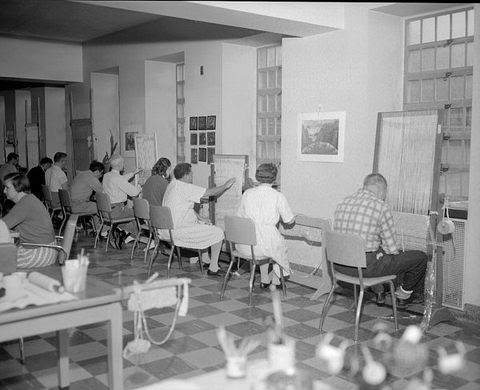
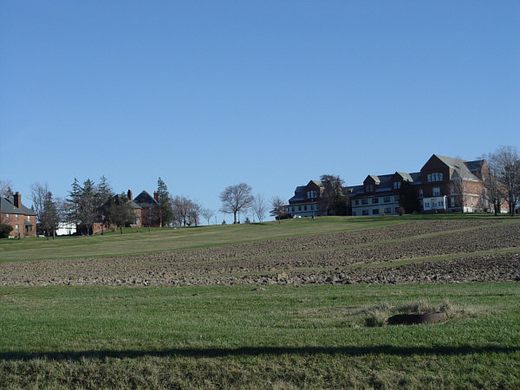
The asylum was built in the same style as many other Victorian institutional facilities. The campus was divided between a women’s side and a men’s side with a violent end and a non-violent end. Administration buildings sat in the middle. The land had originally been designated for agricultural purposes, so the hospital ran its own farm with crops grown and tended by patients. Patients were unconfined, able to walk about as they pleased (though unable to leave the premises). There was a bowling alley, a movie theater, and a gymnasium, and patients took part in camp-like activities like sewing classes. It was still a hospital though, and there were entire buildings devoted to treatments like electro-shock therapy and ice baths, as well as operating theaters and a morgue. A cemetery on the grounds features markers with numbers, no names, for the thousands buried there.

After Geraldo Rivera’s 1972 expose on the deplorable conditions at Willowbrook Asylum, numbers in large institutions declined sharply. Willard Asylum discharged its final patient in 1995 and shuttered its doors for good. Now some of its buildings are used as training facilities and dormitories by the Department of Correctional Facilities, which maintains the grounds, but many of them have been left to rot for so long that they are totally unusable. In these, asylum life has been preserved in the artifacts left behind by staff and patients.

If you’ve heard of Willard Asylum, it’s probably because of the suitcases. A cleaning person stumbled upon hundreds of dusty suitcases in the attic, brought by patients upon their admittance to the hospital. They contained mementos that piece together a bittersweet picture of their owners, who were identified on handwritten luggage tags: Earl B. brought a newspaper clipping on a “Smuggling Plot”; Virginia W. brought a clown doll. The patients died at Willard, and their personal effects went unclaimed anyone outside the institution. The staff, apparently unable to throw them away, meticulously stored and catalogued the suitcases in the attic. The Willard Suitcase Project now compiles information on the owners of the suitcases. Photos of the luggage, carefully packed by the inmates and their families, indicate they believed they were just passing through. 

We simply didn’t know what to do with these people who could not fit into the social norms of the 19th century, so they were often shelved away into institutions. Though the people who lived and died at Willard have faded into the tapestry of history, their belongings left behind at the abandoned asylum boldly assert their existence. 

19 January 2016 - WHAT'S HAPPENING INSIDE OUR BODY


WHAT'S HAPPENING INSIDE
OUR BODY

G'day folks,

Ever wondered what happens inside our bodies at any given moment? Check this out.


Clancy's comment: Feel better? What a machine, eh?

I'm ....


14 January 2015 - FIRST AID


FIRST AID

G'day folks,

You might not be a doctor, but you can help yourself, and others, in an emergency. Here are some first aid tips that should help you, courtesy of the Lonely Planet's Book of Everything.

A Little History

There are records from the 11th century showing that religious knights provided care to pilgrims, and trained other knights to treat battlefield injuries.

In 1863, four nations met in Geneva to form what has become the Red Cross.  Initially the organisation's aim was to treat wounded soldiers on the battlefield.

In the USA, the Civil War (1861-65) prompted Clara Barton to organise the American Red Cross.

The term "first aid" was coined in England in 1878, at the same time that civilians were taught first aid.

Today there are first aid training organisations in many countries including Australia, Canada, Ireland, Singapore and the Netherlands.

Simple Principles

Preserve life
Prevent further harm
Promote recovery
All sounds good to me. Let's go…


Nosebleeds

1. Sit; lean forward slowly; keep the mouth open.
2. Pinch the lower part of the nostril; hold for 15 minutes (victim breathes through the mouth).
3. Release slowly. Don't touch the nose, or blow it; you might start the bleeding again.
4. If bleeding has not stopped after 20 minutes, seek medical attention.

Hiccups

Most of the time, hiccups are not medically significant. Doctors dismiss the many folk remedies. But if your favourite cure works, go with it!

1. The most efficient "cures" concentrate on relaxing or stimulating the diaphragm; many of them feature odd ways of drinking water.

2. So try this one: stand up; take a sip of water; turn your head upside down and swallow slowly.

Minor burns

1. Remove watches, bracelets, rings or constricting clothing before the burned area begins to swell.
2. Hold the burn under cold running water for a few minutes.
3. Apply a cold compress until the pain diminishes.
4. Dress the area with clean (if possible, sterile) non-fluffy material.


Major burns

1. If clothes are on fire, douse the victim with water.
2. Wrap the injured person in a blanket; place him or her on the ground. Do not try to remove clothing that is stuck to wounds.
3. Cover exposed burned areas with clean, dry non-fluffy material to stop infection; secure with a bandage.
4. Do Not:
• Use adhesive dressings
• Apply butter or oil
• Apply lotions or creams
• Prick burn blisters
• Use fluffy materials


Motion sickness

It's caused by constant movement of the organ of balance in the inner ear, and also by the anxiety produced by previous attacks.

1. Various drugs are available to prevent or control motion sickness. Antihistamines help if taken about an hour before the start of a journey.

2. Tip: tell sufferers to focus on a point on the horizon rather than on nearby objects.

Blisters

They are best left to heal by themselves.

Do not prick or burst blisters, because the underlying tissue could become infected. (The fluid inside a blister is a serum that has leaked from blood in the skin underneath after a minor injury, such as that caused by a tight-fitting shoe. The serum is sterile, and provides protection to the damaged tissue.)


Sunburn

1. Apply calamine lotion or sunburn cream.
2. Protect burned skin from further exposure.
3. Take analgesics (painkillers) to relieve tenderness.
4. Extreme burning may require a cream containing corticosteroid drugs prescribed by a doctor.

Heat stroke

Heat stroke differs from heat exhaustion (where the victim sweats profusely) in that sweating stops completely, the body becomes dry and flushed, and breathing is shallow.

1. Seek medical help immediately.
2. Move the victim to a cool shady place; remove clothing. Place the victim in a sitting position, leaning back slightly.
3. Cover with a wet sheet and keep it wet.
4. Fan with a magazine (or other suitable object) until their temperature drops to a normal range.

What to Keep in Your First Aid Kit

Just pack necessities – your kit must be portable:
• adhesive tape
• antiseptic cream
• antiseptic wipes
• aspirin
• bandages: absorbent gauze, adhesive, elastic
• calamine lotion
• foil or "space" blanket
• roll of sterile cotton
• rubbing alcohol
• safety pins
• scissors
• torch (check batteries!)
• tweezers

If possible, including a mobile phone in your kit. (Put an old one in there. It still needs a battery to turn it on, but even if your contract has expired, the emergency number in the country you are travelling in should still work.)


Clancy's comment: Hope this has helped.
I'm ...


Think about this!