Showing posts with label FAMOUS AUTHORS. Show all posts

1 May 2019 - The Eagle and Child Pub in Oxford - Favourite pub for famous authors


The Eagle and Child Pub in Oxford
 - Favourite pub for famous authors -

G'day folks,

J.R.R Tolkien, C.S. Lewis, and other "Inklings" met at this Oxford pub to discuss the now legendary fantasy stories they were writing. 


During the 1930s, a small, unofficial club was formed in the intellectual hub of Oxford University. Every week, a group gathered to drink a few beers and discuss the latest adventures in worlds inhabited by lions, wizards, and hobbits, which were slowly materializing from the fertile imaginations of its most famous members: J.R.R. Tolkien and C.S. Lewis. 


 The group, called the Inklings, consisted of professors, thinkers, and writers who lived around the university town. Warren Lewis, C.S Lewis’s older brother and also a writer and an Inkling, wrote that, “Properly speaking, it was neither a club nor a literary society, though it partook of the nature of both. There were no rules, officers, agendas, or formal elections.” 


Beginning in the 1930s, formal meetings were organized every Thursday evening at Lewis’s university rooms and more casual lunches were held at different local pubs, most frequently The Eagle and Child. Most Mondays or Tuesdays, the group gathered in the backroom of the pub they referred to as the “The Bird and the Baby,” to discuss their own writing and other matters of the day. At this time, Lewis was crafting his Space trilogy, comprising Out of the Silent Planet, Perelandra, and That Hideous Strength, and Tolkien was writing the Lord of the Rings series.


The pub now sports pictures and prints related to these hugely popular books and a plaque records the role it played in their creation. 

Clancy's comment: A cool place for authors to meet and drink. How civilized, eh?
I'm ...


23 September 2015 - TIPS FOR WRITING FICTION


TIPS FOR WRITING FICTION

G'day folks,

Here are a few tips for you writers from those who should know; courtesy of an Irish and British author.


Roddy Doyle


1 Do not place a photograph of your ­favourite author on your desk, especially if the author is one of the famous ones who committed suicide.

2 Do be kind to yourself. Fill pages as quickly as possible; double space, or write on every second line. Regard every new page as a small triumph ­–

3 Until you get to Page 50. Then calm down, and start worrying about the quality. Do feel anxiety – it's the job.

4 Do give the work a name as quickly as possible. Own it, and see it. Dickens knew Bleak House was going to be called Bleak House before he started writing it. The rest must have been easy.

5 Do restrict your browsing to a few websites a day. Don't go near the online bookies – unless it's research.

6 Do keep a thesaurus, but in the shed at the back of the garden or behind the fridge, somewhere that demands travel or effort. Chances are the words that come into your head will do fine, eg "horse", "ran", "said".

7 Do, occasionally, give in to temptation. Wash the kitchen floor, hang out the washing. It's research.

8 Do change your mind. Good ideas are often murdered by better ones. I was working on a novel about a band called the Partitions. Then I decided to call them the Commitments.

9 Do not search amazon.co.uk for the book you haven't written yet.

10 Do spend a few minutes a day working on the cover biog – "He divides his time between Kabul and Tierra del Fuego." But then get back to work.


Helen Dunmore


1 Finish the day's writing when you still want to continue.

2 Listen to what you have written. A dud rhythm in a passage of dialogue may show that you don't yet understand the characters well enough to write in their voices.

3 Read Keats's letters.

4 Reread, rewrite, reread, rewrite. If it still doesn't work, throw it away. It's a nice feeling, and you don't want to be cluttered with the corpses of poems and stories which have everything in them except the life they need.

5 Learn poems by heart.

6 Join professional organisations which advance the collective rights of authors.

7 A problem with a piece of writing often clarifies itself if you go for a long walk.

8 If you fear that taking care of your children and household will damage your writing, think of JG Ballard.

9 Don't worry about posterity – as Larkin (no sentimentalist) observed "What will survive of us is love".


Clancy's comment: Hope these points have helped you. Always good to have reminders.

I'm ...


1 July 2015 - GREAT QUOTES FROM WRITERS


GREAT QUOTES FROM WRITERS

G'day folks,

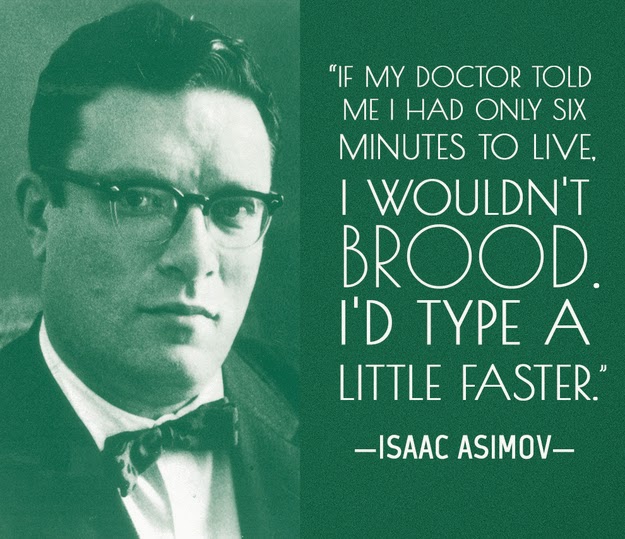
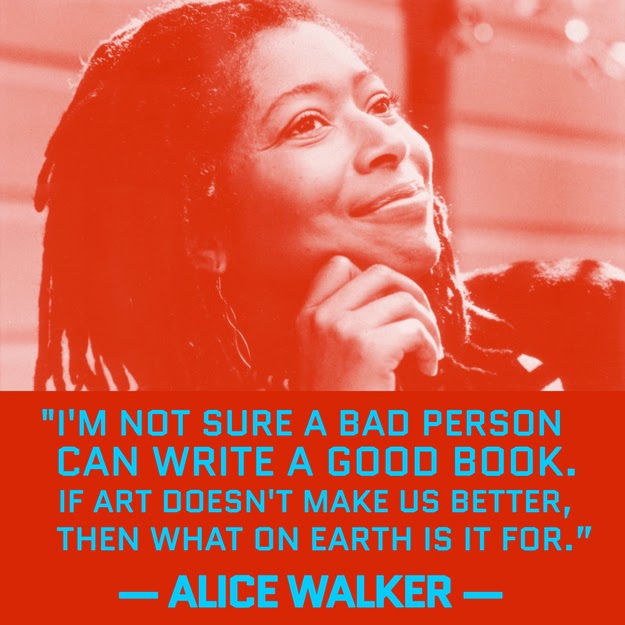
This has always been a very popular post. Hope you enjoy some of these quotes from some famous authors.


Clancy's comment: I hope some of these comments have stirred up your creative spirits.


I'm ...


4 May 2013 - FAMOUS AUTHORS


 FAMOUS AUTHORS

G'day guys ,

How do you know when you're famous? Me? Easy. I live comfortably, not filthy rich - simple and happy,  and just write, take photographs and spend swags of time aggitating for change on issues that should have already changed. What about you guys? What's your vision as a writer?

Not everyone has the skill or talent to write well. It’s an art through which one can express his or her most inner thoughts and thought process in words. Furthermore one needs a vocabulary through which he or she can explain exactly what they mean in a clear and coherent manner. Most writers are keen observers and thinkers; soaking up their surroundings and formulating opinions.


All the famous authors have a few characteristics in common that led them to become known as the best writers of all time.


For one thing, most of them had to deal with all sorts of obstacles and rejection in the beginning. Indeed, Stephenie Meyer, author of the Twilight Series received a response from only one of the 15 agencies she had applied to. The first barrier these authors overcame was a personal one. It was a promise to ensure that their passion to accomplish something was not to fade in the face of rejection or disapproval of others. Moreover, most of these authors did not set out to achieve commercial success. Instead they wrote because it is what they loved to do and in the process earned success and fame.


The contribution that Famous Authors have made to literature is incalculable. Each and every author on the list of FamousAuthors.org has in his or her own way made an impact in the world, leaving their mark on society. Their spirit lives on in the works that they produced in the course of their lives. This work can include biographical accounts of the finest writers such as the Diary of Anne Frank or fictional books like those of R.L Stine.
 
One is enabled to view the world through the perspectives of writers from different parts of the world and different walks of life in terms of religion, culture and society. It allows us to gain comprehension and insight into the workings of their minds.


The famous authors have gained acclaim for their ability to express themselves in prose in such a way that stirs and evokes strong emotions in the reader be it sadness, happiness, amusement or just something that provokes your thought process, so on and so forth.
 
It is interesting to note that many authors were inspired to write upon reading the works of other “famous author’s. Hence, these authors provide inspiration to aspiring authors to write encouraging future work of art.

Clancy's comment: Mm ... I guess it's subjective. Having been a full time writer for a long time, I have met many wannabe writers who have no idea what is involved. Trust me. Being an accepted published writer is the toughest journey I've ever encountered. But, I continue. Why, because I feel I am a natural story-teller and it's wonderful therapy. Writing a manuscript for me takes three months, but it's an adrenalin rush. When finished, I feel as though a truck has dragged me along a highway. Are you prepared for the changing world of publishing? Think about it. 

If the answer is ' Yes', think of something you're passionate about and write passionately about it. It can be a rewarding but frustrating experience. 

Now ... here is a humorous video about the future of paper in the digital age ...


I'm ...