Showing posts with label CRICKET. Show all posts

25 October 2022 - DICKIE BIRD STATUE - ENGLAND


DICKIE BIRD STATUE 

- ENGLAND -


G'day folks,

Welcome to a tribute to a beloved cricket umpire; a magnet for risqué pranksters. 

It’s unusual for a sports official like a referee or an umpire to achieve the same iconic status as the players. But anyone who knows cricket knows the name Harold “Dickie” Bird.

Bird’s now retired from his role as an international cricket umpire, but when he was active, he was one of the best-loved and most highly respected sports officials ever to take on the often controversial role. There’s no doubt that in the game of cricket, he was—and remains—a legend because of both his attention to detail and the unflinchingly fair way he oversaw the games.


In Bird’s umpiring career (which started in the domestic game in 1970), he officiated more than 66 multi-day Test matches (a world record at the time) and 69 one-day international matches (including three World Cup Finals). Though Bird retired in 1998, he came out of retirement for a special match in 2007.

In 2009, this life-size bronze statue of Bird was erected in his hometown of Barnsley. The statue, which was built by Graham Ibbotson, shows him standing in a familiar pose: one arm outstretched and pointing his index finger, indicating that a batsman is out.

It’s perhaps inevitable that this pose has regularly attracted the attention of rowdy late night revelers, particularly on Friday and Saturday nights. Bras, panties, and condoms were frequently left dangling from the outstretched finger on Dickie’s right hand. In 2013, the authorities in Barnsley raised the statue from its ground-level position onto a five-foot high plinth to discourage the pranksters. But this has not proved completely successful, as the odd, inappropriate item does still make its way onto the outstretched digit.


 

25 June 2022 - WHEN CRICKET'S T20 WAS BORN


WHEN CRICKET'S 

T20 WAS BORN

G'day folks,

Faced with dwindling crowd support and falling sponsorship, in 2003 the England Cricket Board were looking around almost desperately for something to reverse their fortunes. 

In response, their marketing manager, Stuart Robertson, proposed a new fast-paced form of the game in which each team would be restricted to 20 overs. The chairmen of the county cricket clubs were sceptical, but voted 11-7 in favour of the idea.

English county teams played the first official Twenty20 matches on 13th June that year, with one of them, Hampshire v Sussex, being shown live on television at 5pm.

An unconvinced Daily Mail commented: “Whoever chose the traditionally unlucky Friday the 13th to launch this bold format had better hope there is nothing to the superstition.

For cricket cannot afford to fail with a new tournament that the authorities hope will tonight attract a whole new audience and revitalise the game.

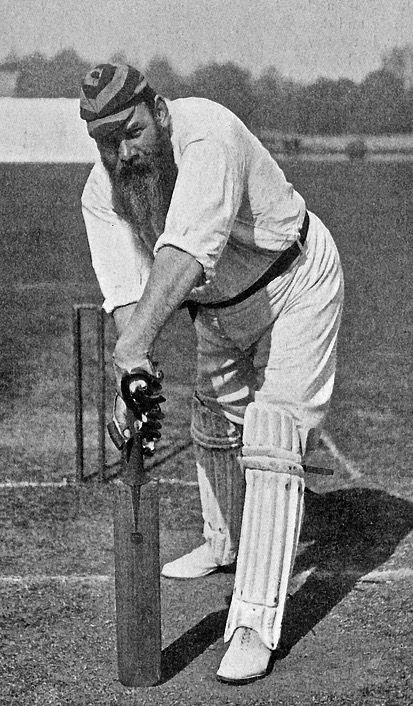
At just 20 overs apiece, this breakneck, knock-out game is all done in three hours. What on earth would W. G. Grace have thought?


We will never know how the legendary Mr Grace would have reacted, but the rest of the cricketing world enthusiastically embraced the new format, complete with its American-style cheerleaders, flame-throwers and wild celebrations.

It all led in 2007 to the first T20 World Cup (officially the ICC World Twenty20), a fast and furious knock-out contest between 16 international teams.

Many of the wildly enthusiastic supporters might agree with playwright Harold Pinter who once said: “I tend to think that cricket is the greatest thing that God ever created on Earth – certainly greater than sex, although sex isn’t too bad either.”


28 April 2018 - SIR DONALD BRADMAN


 SIR DONALD BRADMAN

G'day folks,

Welcome to some background on one of Australia's greatest sportsman.
 

Sir Donald Bradman is the greatest batsman ever to grace the game. His test average remains far above anyone else. In 52 tests he managed 29 hundreds and scored just below 6,000 runs at an average of 99.94. If he had scored 6 runs on his last test innings at Lords in 1948, he would have finished with an average of 100. However, the greatest cricketer of the era was out for a duck – a paradoxical end to a stupendous career.


Donald Bradman was so dominant that the English team resorted to ‘bodyline’ bowling on the Australian tour of 1933. It was in the era of the great depression, when cricket provided a relief from the gloom of the Great Depression. The Australians were up in arms at the ‘uncricket’ like nature of the English bowling. The tactics were criticised back in England and were even raised in parliament. Don Bradman finished the series with an average of ‘only’ 53. If it had not been for the second world war, Don Bradman’s career would have been even more amazing.


 During the war, he initially volunteered for the RAF, but was later persuaded to join the army (a safer option). However, in 1941, he suffered a bout of fibrositis. Due to the pain he was invalided out of the army, and suffered bouts of fibrositis throughout his life.


After the war, he was able to return to the national side. His final tour was the 1948 tour of England, which captivated a nation. It was said, Bradman was second only to Churchill in the degree of fame. Despite his waning powers, he still managed to score 11 centuries and 2,432 runs on tour. The Australians won the tour 4-0. In the last test at Lords, Bradman went out to bat with an average of 101. He was given a standing ovation as he left the famous Lords pavilion. But, he was bowled for 0. England lost by an innings and he never batted again. 


After retirement Sir Donald Bradman remained a great ambassador for the sport. He was knighted for his services to cricket and remained open to an adoring public, even though he remained publicity shy throughout the period. In 2001, the Australian Prime Minister, John Howard, said he was the greatest living Australian.


Clancy's comment: A great average for a cricketer.

I'm ...