9 January 2022 - OYA HISTORY MUSEUM AND CAVE - JAPAN


OYA HISTORY MUSEUM 

AND CAVE

- JAPAN - 


G'day folks,

This massive, beautifully-lit underground quarry leaves visitors in awe.  

Ōya stone is an igneous green tuff renowned for its warm texture and flexibility, famously used by Frank Lloyd Wright to build the Imperial Hotel in Tokyo. It was the same material used to create the Venus of Gyoza and is a specialty of Utsunomiya City, quarried in its namesake town of Ōya.

The earliest usage of Ōya stone dates back to the 6th-century when it was used to build burial mounds and sarcophagi for local lords. The mass quarrying of Ōya stone was initiated during the mid to late Edo period, around the 17th-18th-centuries. 

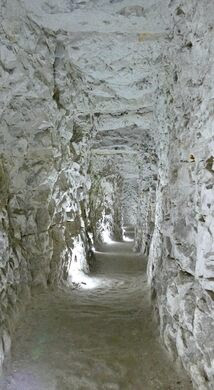
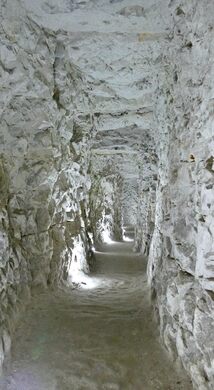
From 1919 to 1986, Ōya stone was quarried underground, resulting in a massive hollow space known today as the Subterranean Cave. Large enough to contain an entire baseball field, it’s quite an impressive, awe-inspiring sight. Today, this location is often used as a filming location and for concerts, weddings, and traditional Noh plays.


It’s quite cold in the Subterranean Cave, which is generally about 46.4 degrees Fahrenheit (8 degrees Celsius) on average. During World War II, the underground quarry was used as a weapon factory and then as a government storage facility for rice after the war.

In 1979, the Oya History Museum was established and the subterranean quarry finally opened to the public. The old quarry is beautifully lit in many colors, giving the so-called “underground temple” a surreal, quasi-sci-fi look from time to time. Aboveground, the museum also explains the history and geology of the area while exhibiting a variety of mining tools.

Nearby, there is a temple called Ōya-ji which is home to several Ōya stone sculptures allegedly created by the legendary monk Kūkai in 810 CE. There is also a public park about a 10-minute walk away from the temple where the Heiwa Kannon statue stands. It’s an 88-foot-tall stone sculpture of Guan Yin dedicated to those who died in the Pacific War.

Clancy's comment: What an amazing history.

I'm ...


8 January 2022 - BUNJIL'S SHELTER - AUSTRALIA


BUNJIL'S SHELTER

 - AUSTRALIA -


G'day folks,

This ancient rock shelter features cave art and is one of the most culturally important sites in the country.  

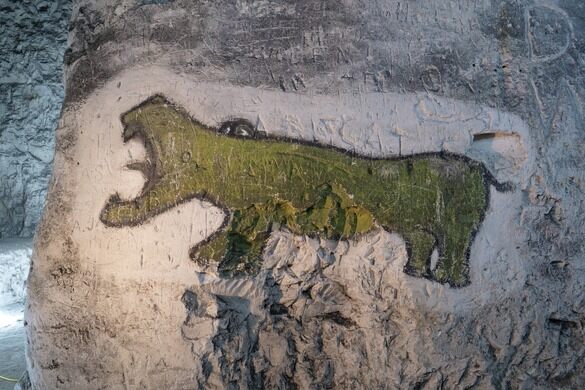
The exact age of the painting in this cave is unknown, but it’s estimated that the artwork is well over a thousand years old. 

According to creation stories from Aboriginal Australians, Bunjil is a principle legendary hero, the creator who provides for all and remains a protector of the natural world, his people, and their beliefs. 

It’s believed Bunjil created the land, water, plants, and animals. It’s also a belief that Bunjil established the laws and religion of the region.


When Bunjul finished his creation works, it’s said he transformed into an eagle and flew into the sky where he lives today. 

The rock painting inside the cave depicts Bunjil and two helpers. Bunjil appears in many Aboriginal Australian creation stories. The Bunjil Shelter sits within the Gariwerd, a cultural landscape that supports people both physically and spiritually.

Clancy's comment: I must get to see this. It's only two hours from my home. 

I'm ...


14 January 2022 - RWANDAN GENOCIDE SHOULD NOT BE FORGOTTEN


RWANDAN GENOCIDE 

SHOULD NOT BE FORGOTTEN


G'day folks,

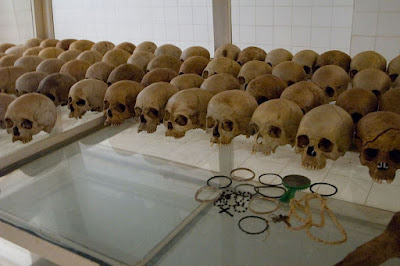
Over a period of 100 days in 1994, in the small but densely populated East African country of Rwanda, one of the worst and most brutal genocides in modern history occurred.

More than 800,000 Tutsi people, Twa and moderate Hutu were murdered by Hutu extremists. The genocide came at the climax of the Rwandan Civil War, which had been raging since 1990, but followed a long history of tension between the groups.

Rwandan President Juvénal Habyarimana had signed peace accords with the rebels in 1993, since neither side was able to gain an advantage in the conflict. His assassination on April 6, 1994, created an immediate power vacuum in the country and ended the accords. The Rwandan crisis committee that took power following his death, led by Théoneste Bagosora, immediately began issuing orders to kill Tutsi. The killings were large-scale and highly organized, perpetrated primarily through the Interahamwe, originally a far-right Hutu paramilitary group. Many believe the genocide had been planned for over a year.


Road blocks were set up throughout Rwanda and any person showing Tutsi identification was killed immediately. Hutu extremists went from house to house slaughtering Tutsi, regardless of age. Churches were burned with people in them, such as at Ntarama were killed by guns, grenades, fire or machete.

The international community has long been criticized for its failure to intervene. The genocide caused worldwide revulsion and shock, but the killings only stopped when the Rwandan Patriotic Front led by Paul Kagame (still the President of Rwanda as of 2020) enacted a swift military victory over the Rwandan government and ended the civil war.

Many responsible for the genocide were never punished given the vast number of participants, though some of the main organizers were imprisoned by the International Criminal Tribunal for Rwanda.


Clancy's comment: Shameful stuff!


I'm ...


17 January 2022 - ANNE FRANK - MASTER STORYTELLER


ANNE FRANK 

- MASTER STORYTELLER -


G'day folks,

 Anne Frank received a present on  her 13th birthday. It was a diary and the entries she would go on to make in it would make her tragically short life an inspiration to millions. 

Her first words, written on that day, were: “I hope I shall be able to confide in you completely, as I have never been able to do in anyone before, and I hope that you will be a great support and comfort to me.”

The daughter of a Jewish industrialist, Anne was born in 1929 as Annelies Marie Frank at Frankfurt, Germany. Her father, Otto, was a German businessman who served as a lieutenant in the German army during the First World War.

But amid rising anti-Semitism and Nazi persecution of Jews, Otto moved his family to Amsterdam in the autumn of 1933. The Franks were among 300,000 Jews who fled Germany between 1933 and 1939.

In Amsterdam Otto ran a company called Opekta that sold spices and pectin used in the manufacture of jam.

Anne and her sister Margot went to a local school and were relatively happy. That began to change on 10 May 1940 when the German army invaded the Netherlands.

Two years later, on 5 July 1942, Margot received an official summons to report to a Nazi work camp. Her father was having none of it so the next day the Frank family went into hiding, moving into a secret annex in the offices of Otto's company.

Hiding alongside them were another Jewish family and, later, a Jewish dentist. They all spent two years in this hiding place, never once stepping outside. The entrance to the annex was concealed by a large bookcase.

Four of Otto’s loyal employees brought food and other necessities as well as news about the outside world. They knew that if they were caught they would be executed for helping Jews, but they did it anyway.

Anne passed much of the time reading and writing in her diary. She started each entry with the words “Dear Kitty”, an imaginary friend. Written over the course of two years, the diary details the time that her family spent in hiding as well as the feelings of a frustrated and “ordinary” teenager, struggling to live in a confined space.

For all its passages of despair, the diary is essentially a story of faith, hope and love in the face of hate. On 15 July 1944 Anne wrote: “It's difficult in times like these: ideals, dreams and cherished hopes rise within us, only to be crushed by grim reality. It's a wonder I haven't abandoned all my ideals, they seem so absurd and impractical. Yet I cling to them because I still believe, in spite of everything, that people are truly good at heart.

“It’s utterly impossible for me to build my life on a foundation of chaos, suffering and death. I see the world being slowly transformed into a wilderness, I hear the approaching thunder that, one day, will destroy us too, I feel the suffering of millions.

“And yet, when I look up at the sky, I somehow feel that everything will change for the better, that this cruelty too will end, that peace and tranquility will return once more. In the meantime, I must hold on to my ideals. Perhaps the day will come when I’ll be able to realise them!”


Anne’s suffering was to take a decisive plunge on the morning of 4 August 1944 when the Gestapo stormed into the secret annex and arrested everyone inside. For years it was believed that someone called the Germans and told them that Jews were living in the Opekta premises.

However, the identity of this alleged caller was never confirmed and a later theory suggests that the Nazis may have discovered the annex by accident while investigating reports of ration-coupon fraud and illegal employment at Opekta.

The occupants of the annex were taken to a transit camp in the Netherlands. Because they were in hiding when arrested they were considered to be criminals and were punished with hard labour.

Then it was on to the notorious Auschwitz concentration camp in Poland. Upon arrival at Auschwitz, all men were separated from their families and all prisoners considered unfit for work were sent to the gas chambers, along with everyone under the age of fifteen. Anne had turned fifteen three months before being captured so she was spared.

Women and girls not selected for immediate death – Anne being one of them – had to strip naked and were then disinfected. Their heads were shaved and an identity number tattooed on their arms. Anne and Margot spent several months enduring hard labour at Auschwitz, lifting heavy stones and cutting rolls of turf.

During the winter of 1944, the two sisters were transferred to Bergen-Belsen concentration camp in Germany, without their mother, Edith, who fell ill and died of hunger at Auschwitz.


At Bergen-Belsen diseases such as typhoid fever raged through the camp and in early 1945 a typhus epidemic killed about 17,000 prisoners including, it is believed, Anne and Margot – just a few weeks before the camp was liberated by British forces. The exact date of Anne’s death is not known but it is thought she died in either February or March of that year.

Otto was held at Auschwitz until its liberation in January 1945 and afterwards returned to Amsterdam, learning of his wife’s death en route. He learned of his daughters’ deaths in July 1945 after meeting a woman who had been at Bergen-Belsen with them.

Following the arrest of those in the annex, Anne’s diary was retrieved by Miep Gies, one of the trusted friends who had helped the Franks during their time in hiding. Gies gave the diary to Otto in July 1945 following confirmation of Anne’s death by the Red Cross.

Otto eventually gathered the strength to read it. He was awestruck by what he read and later had it published. "There was revealed a completely different Anne to the child that I had lost," he wrote in a letter. "I had no idea of the depths of her thoughts and feelings."

Published as The Diary of a Young Girl, the work has been translated into as many as 70 languages and more than 30 million copies.

Anne Frank's diary endures, not only because of the remarkable events she described, but due to her extraordinary gifts as a storyteller and her indefatigable spirit through even the most horrific of circumstances.

Clancy's comment: Having read her book as a teen, I visited the place where she hid in Amsterdam. From there, I went on to visit four concentration camps in Europe, and I'm still reading books about this horrible period. Sadly, decades later, we have learnt nothing. 

I'm ...


7 January 2022 - MARGATE CAVES - ENGLAND


MARGATE CAVES 

- ENGLAND -


G'day folks,

This forgotten chalk mine was reopened thanks to a massive effort from the local community.  

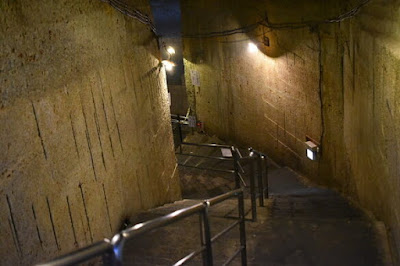
The Margate Caves is a subterranean wonderland located underneath an unassuming street in Margate. The caves are actually a forgotten chalk mine that was rediscovered during the 18th-century. 

The caves first opened to the public during the Victorian era as a “Smugglers Cave,” and were important to Margate’s burgeoning tourism industry. The caves changed ownership several times until they were eventually closed in 2005 due to instability. In 2011, the owner of the cave destroyed the entrance. 


Not long after the entrance was closed, members of the community formed the organization, Friends of Margate Caves. The group, along with The Margate Caves Community Education Trust, worked together to raise funds to save the caves. They were eventually reopened to the public. 

In 2019, the caves finally reopened to the public. Inside, visitors can explore around 200 years of history and marvel at the bizarre menagerie of paintings. The artwork dates between the early 1800s, to the most modern being painted around the 1980s. 

Clancy's comment: This would be worth visiting.

I'm ...


13 January 2022 - STUNNING PHA NANG KHOI CAVE - THAILAND


 STUNNING 

PHA NANG KHOI CAVE 

- THAILAND -


G'day folks,

The long underground cave's curiously shaped stalagmites have inspired many legends. 

The Pha Nang Khoi Cave, located in the Phrae province of Thailand, is about a mile long with many twists and turns that lead around uniquely shaped stalactites and stalagmites that have been the source of much folklore. 

At the end of the cavern lies a stalagmite that resembles a woman holding a child. In front of that is a stalactite shaped like a heart. A legend says a woman once stood here waiting for her lover to return, and when he he did, she turned to stone. Some say the woman is Princess Aranyani who fled with her child to protect her lover, who was a commoner. 


There are also two colorful Buddha shrines in the cave, which was formed millions of years ago from the limestone in that region. Today the walls are illuminated by multicolored lights which bathe the limestone in bright colors.

Clancy's comment: Amazing nature, eh? Grateful thanks to Marco Capriz for photography.

I'm ...


12 January 2022 - KOPU LIGHTHOUSE - ESTONIA


KOPU LIGHTHOUSE 

- ESTONIA -


G'day folks,

One of the oldest lighthouses in the world has been in continuous use since it was first built in 1531. 

In the 16th century, the construction of a warning marker for risky and shallow waters around the island of Hiiumaa was ordered by the Hanseatic League in order to secure the important trade routes along the Baltic Sea. The structure was built about 40 years after the request and the lighthouse was completed in 1531. Initially, the building was just a stone tower without any rooms and was used as a daymark. For more than 100 years the tower was not lighted and could only be seen during daylight.

The light was introduced in 1649, when outside stairs were added and a fire was ignited every night. The most accessible material for burning was wood but soon nearby forests were exhausted. Live fire was also troublesome since it was often extinguished by storms and needed an entire team of workers to keep it alive.

In 1810, the tower was modernized. An inner stairway and windows were cut in the tower with some adjacent rooms for maintenance. A lantern room was added to the top and three oil lamps now provided the light. The system was replaced in 1860 with a rotating lantern. A new, more technologically advanced lantern was installed in 1901.


 The tower was bombed during World War II, but only the lantern and optical systems were damaged. In 1963 the tower was fully automated and an experimental light system with a magnetic rotation mechanism was added.

Through all these changes, the outer view of the tower has remained largely unchanged. The general form is a square prism with heavy buttresses that are arranged by the compass directions. Major outer repairments were done in the 1970s. The building was covered with reinforced concrete and painted yellow. As later turned out the paint actually blocked humidity that was detrimental to the tower, so in 1989-90 some emergent restoration works were needed. It has been better maintained and overpainted many times after that.

The tower itself is 37.7 meters (124 feet) high and it is built on the highest point on the island, making the focal height 103.6 meters (340 feet). Although the building is not close to the sea, its elevated location makes it visible to 26 nautical miles. In 2020 the lights were changed for a new LED system that now makes Kõpu lighthouse one of the most powerful LED light sources in the world. It remains one of the best-known symbols on the Estonian island.

Clancy's comment: What an extraordinary construction.

I'm ...


11 January 2022 - TOWER OF HERCULES - OLDEST ROMAN LIGHTHOUSE


TOWER OF HERCULES 

- OLDEST ROMAN LIGHTHOUSE -


G'day folks,

 The oldest Roman lighthouse is still in use. 

The ancient Tower of Hercules is easily the most well preserved lighthouse remaining from the classical Roman age, and it is also the only one still in use. According to myth, it also marks the resting place of one of Hercules’ greatest conquests. 

Built around the 2nd century and originally known as the “Farum Brigantium” or “Brigantia Lighthouse” the structure looks as though it could have been built just decades ago. The beacon is located atop a small hill promontory that was likely chosen by its ancient Roman builders not only for its view of the sea, but the spot may also have been a sacred space dedicated to the demigod Hercules.


As part of one of the mythic Twelve Labors of Hercules, the super strong son of Zeus is said to have killed the giant Gerylon with an arrow dipped in Hydra’s blood. Then in a gesture that is more Celtic than Roman, the legend says that Hercules buried the giant with his weapons and ordered a city built atop the burial site. While the area where the tower is built was rather barren when it was originally built, the surrounding city of Corunna has sprung up around it across the millennia. While there are not actually titanic bones beneath the tower, the legend is so pervasive that an image of the tower atop a skull and bones is the centerpiece of the city’s coat of arms.

Today the Tower of Hercules is still used as a lighthouse. It was refurbished in the 18th century which accounts for its well preserved condition in the present. 


Clancy's comment: This is in extraordinary condition, and still operating.

I'm ...