Showing posts with label DEFENCE. Show all posts

4 June 2022 - BRATISLAVA'S HIDDEN BUNKERS - SLOVAKIA


BRATISLAVA'S HIDDEN

 BUNKERS - SLOVAKIA


G'day folks,

A line of disused military bunkers built to defend against Nazi invasion lies hidden on the outskirts of the city. 

In Petržalka, the very edge of the city of Bratislava on the western bank of the Danube, sits a string of concrete bunkers scattered across a variety of fields and woods. These are the best-preserved remnants of an expensive border defense system that was constructed throughout the country over 80 years ago.

In the 1930s, what was then Czechoslovakia invested in a line of military fortifications to defend against invasion by Nazi Germany, which by 1938 following the annexation of Austria (Anschluss), also threatened Bratislava, which sits on the Danube mere miles from the Austrian border.

At the time of building the bunkers were state of the art, but ultimately proved of little use. Under the Munich Agreement brokered between Britain, France, and Germany, Czechoslovakia was forced to give up most of its borderlands, including the bunkers. This left the country with a new, poorly defended border and soon afterward the entirety of what was Czechoslovakia fell under Nazi control.


There are 14 surviving bunkers along the stretch of border. The largest and best preserved is BS-8, which is maintained as a museum by a team of dedicated volunteers. If you are lucky or make advance contact, they will give tours allowing you access inside the restored bunker. BS-8 is located next to a small World War I cemetery and a slightly incongruous picnic area and playground. Other smaller bunkers, BS-9, and BS-7 can also be found nearby.

Standing at BS-8 you can see a nearby road across a field; this road is where the border with Austria lies. Standing at the bunker looking across the perfectly flat fields, you get a sense of the vulnerability the young nation that created these bunkers must have felt.

 

6 May 2022 - THE OSTWALL FORTIFICATION - POLAND


THE OSTWALL FORTIFICATION 

- POLAND  -


G'day folks,

What was once an underground Nazi city is now Europe's largest bat reserve. 

When the Nazis built the imposting Ostwall Fortification in the mid-1930s the intention was to create a defense against invading Russian forces, but they clearly could not have foreseen the invasion of bats that would overtake the tunnels once they were abandoned.   

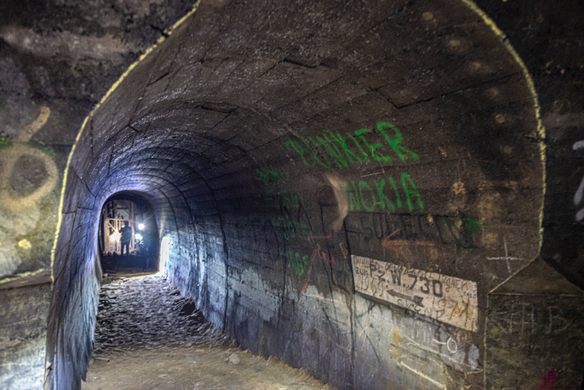
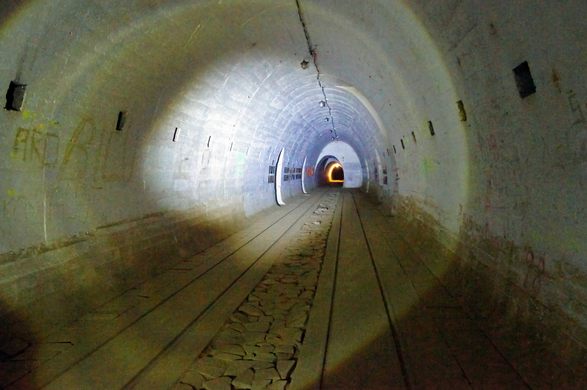
The Ostwall Fortification, otherwise known as the tongue twisting “Festungsfront Oder-Warthe-Bogen,” was constructed as a massive self-sufficient bunker defense system that was connected by almost 25 miles of tunnels and underground support chambers. The underground complex connected around a hundred pillbox bunkers creating one of the largest and most extensive defense lines Nazi Germany ever created. It was estimated that at full capacity and operation the system could house 24,000 soldiers comfortably. 


The bunker system was seen as a bit of a revolutionary endeavor at the time, both in terms of efficiency and efficacy. However when the attack on the base actually came, there were just 1,000 soldiers manning the massive defense. The Nazi’s impressive defensive juggernaut fell in just three days.

After the Nazi’s fled from their bunker city the site was essentially abandoned by humans but became home to some new tenants: tens of thousands of bats! Attracted to the tunnels thanks to the dark, temperate atmosphere and shelter for their winter hibernation, the flying mammals took to the tunnels in droves.

Today the tunnel complex has become the largest man-made bat reserve in Europe, holding around 37,000 bats during the packed winters during which tourists are not allowed in the tunnels. Many portions of the tunnels are open to visitors at other times of the year, but during bat season the Ostwall Fortification provides a safe space for the animals to rest defended from the outside world. The Nazis could only have wished it would’ve been so effective for them.   

Clancy's comment: The Nazis built extraordinary infrastructures during the war, many of which were never fully used.

I'm ... 


5 May 2022 - THE HIDDEN SECRETS OF VIS ISLAND, CROATIA


THE HIDDEN SECRETS OF 

VIS ISLAND, CROATIA


G'day folks,

Formerly Yugoslavia's "forbidden island," this sleepy little city still holds the abandoned remains of military strongholds. 

While the Croatian island of Vis, the furthest from the mainland, has been inhabited for centuries it was not until the mid-20th century that it reached a pinnacle of strategic importance, a time that is still remembered by the handful of abandoned and repurposed military installations throughout the now quiet island.


While had been inhabited for hundreds of years previous, it was during World War II that Vis came under the control of Yugoslavian leader Josip Broz Tito, who began establishing new military fortifications around the island. The site had been the home of previous military bases as well, but it was not until Tito took the island for Yugoslavia that most of the major remaining structures were created. After WWII ended the island officially went to Yugoslavia and their army made it their central naval base, installing such features as an imposing concrete submarine dock that led right into the island hills, and long tunnels that ran under the surface. However when the island reverted to Croatian control in the early 1990’s, most of the structures were simply abandoned.

Since the military use of the Vis installations ceased, many of the remaining structures were repurposed for civilian needs, while others simply remained empty. Today, Vis is a sleepy island that actually makes a fair amount of revenue from tourists eager to see the disregarded Cold War-era installations, as well as some of the islands more ancient features such as the classical artifacts displayed in the island’s central museum (itself housed in a disused base).


Clancy's comment: What a charming place for an author.

I'm ...


28 April 2020 - THE FAMOUS TOBLERONE LINE in SWITZERLAND


THE FAMOUS TOBLERONE
 LINE in SWITZERLAND

G'day folks,

This long line of cement defensive wedges is named after the famous chocolate bar for obvious reasons. 


During World War II, Switzerland was in a uniquely tough spot amidst the seats of fascist power such as Germany and Italy. Shoring themselves up against possible invasion, the country created the Promenthouse Line, which still exists today under a much sweeter name - the Toblerone Line. 


 The Promenthouse Line is a long trail of anti-tank defenses that consisted of 12 fortresses linked by miles of cement wedges known as “dragon’s teeth.” Running from the Jura mountains to Lake Geneva, the line was more of an inconvenience than a wall. The 16-ton hunks of concrete presented an impassable obstacle for tanks but could easily be destroyed by explosive ordnance. Luckily the defenses never needed to be tested, and the trail of stone teeth remains to this day.


While there have been motions to dismantle the defensive line, it still survives to this day, albeit by a different name. Thanks to the defense’s resemblance to the distinctive Swiss chocolate bar, Toblerone, the increasingly moss-covered dragon’s teeth have taken the company’s name for their own.


A Toblerone trail has even been built up along some portions of the line, with paths and stairs for hikers and bikers.  Visitors can also visit some of the fortresses along the way.

Clancy's comment: Wow. Each block weighed 16 ton!

I'm ...