Showing posts with label Authors. Show all posts

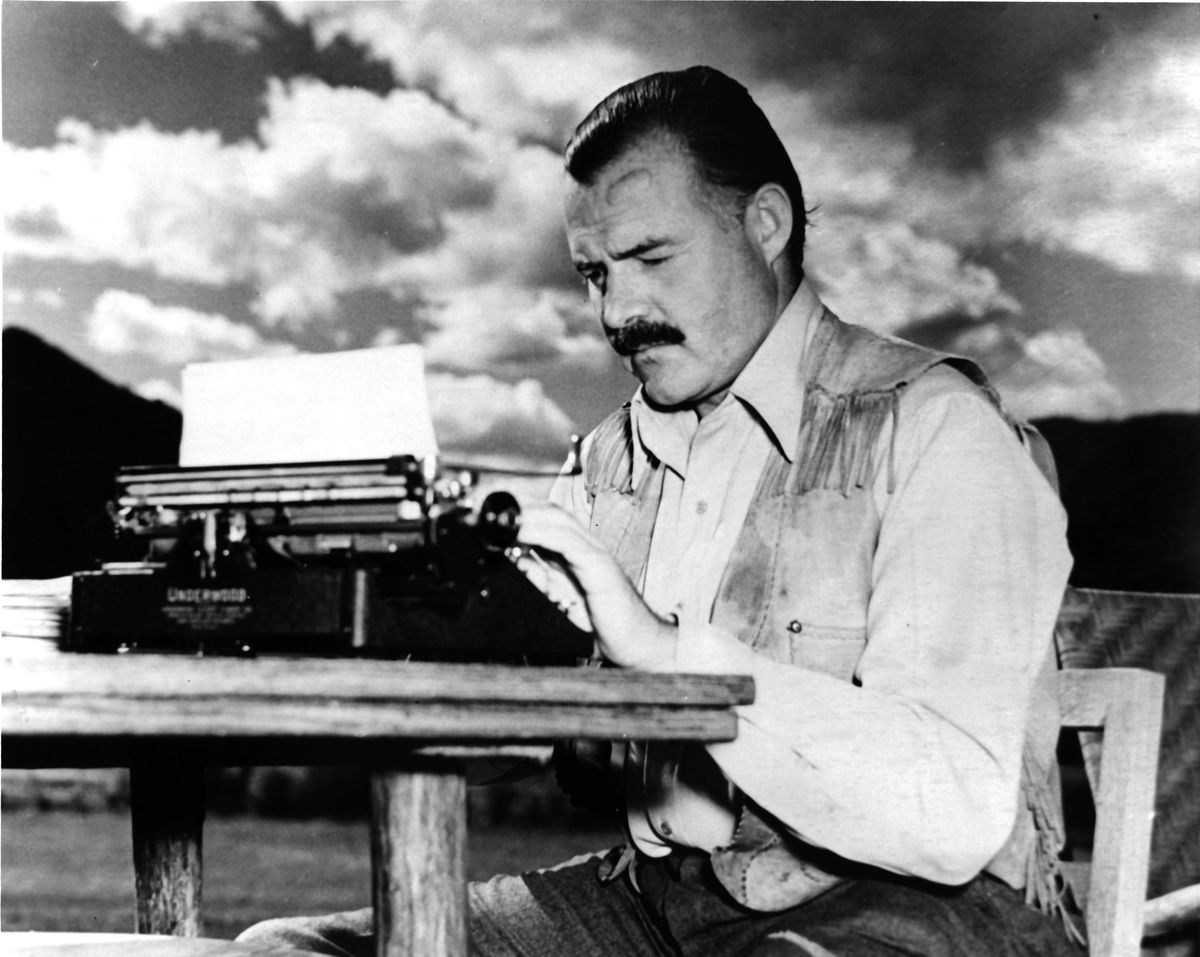
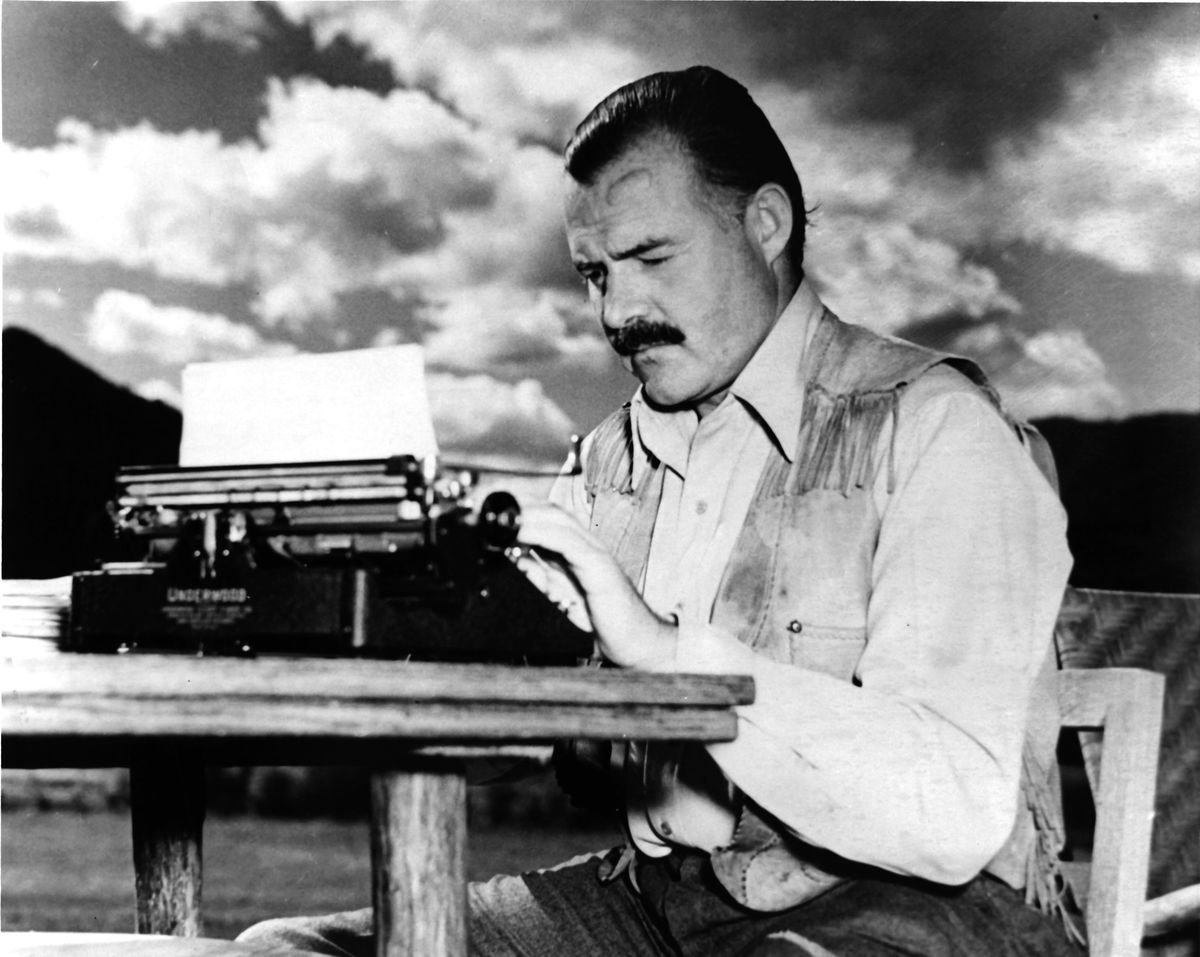
2 August 2022 - THE FINAL HOURS OF ERNEST HEMINGWAY


THE FINAL HOURS OF

 ERNEST HEMINGWAY


G'day folks,

Ernest Hemingway, the Nobel Prize-winning author, adventurer, war correspondent, bullfighter, drinker and all-round macho man, blew his own brains out in 1961. His fourth wife, Mary, said that he killed himself accidentally while cleaning his double-barrelled 12-gauge shotgun. 

But did he? Controversy has surrounded the death of the 61-year-old celebrity since the fatal shooting at his home in Idaho and over the years writers, researchers – and psychiatrists – have delved into the mystery.

In 2006, American psychiatrist Christopher D. Martin said: “The accumulating factors contributing to Hemingway’s burden of illness at the end of his life are staggering.” He listed bipolar mood disorder, depression, chronic alcoholism, repetitive traumatic brain injuries and the onset of psychosis.


Some commentators have suggested that Hemingway’s problems – and depression – began in 1928 when his father, Clarence, committed suicide by shooting himself in the head. But his grandfather, brother, sister, and granddaughter all killed themselves. And besides suicide, the Hemingway family history is also laced with the inherited condition of hemochromatosis, it has emerged.

Swiss scientist Sebastian Dieguez wrote in 2010 that Hemingway's recorded behaviour and symptoms were misdiagnosed, and his death was not an accident, but a suicide driven by the pain of this untreated disease.

Hemochromatosis is a rare iron-overloading disorder that causes internal damage of joints and organs, diabetes, cirrhosis of the liver, heart disease, and depression. It is also known as the Celtic Curse, and when it goes untreated can cause severe pain, suffering, and death. It is worse when mixed with the kind of excessive drinking in which Hemingway frequently indulged.

In physical decline, then, Hemingway found around 1960 that he faced another devastating and cruel blow – he could no longer write. The words wouldn't come. Deepening depression came instead, according to English writer and researcher John Walsh.

In the spring of 1961, Hemingway was asked to contribute a single sentence to a presentation volume marking John F. Kennedy's inauguration. He could not oblige. He told his lifelong friend and biographer, A.E. Hotchner: "It just won't come any more," and wept.

Walsh concludes: “Building and sustaining the image of ‘Hemingway the Man's Man’ took courage and determination, but it was something he needed to do – and when it dwindled, along with the all-important capacity to write, he had no answer except to go the same way as his father.”


11 December 2021 - QUOTES FROM FAMOUS WRITERS


QUOTES FROM 

FAMOUS WRITERS


G'day folks,

Welcome to some great quotes from authors and writers.


Clancy's comment: Pass them onto anyone who needs them.

I'm ...


16 November 2021 - PROFOUND COMMENTS FROM HARPER LEE


PROFOUND COMMENTS

 FROM HARPER LEE


G'day folks,

Nelle Harper Lee was born on April 28, 1926, in Monroeville, Alabama. Her novel To Kill a Mockingbird, which was published in 1960, turned Lee into a literary celebrity and won her a Pulitzer Prize. 
 
Despite the book’s huge success, Harper Lee never published another novel in her lifetime. In 2015, long after the public had given up on seeing anything more from her, a manuscript which she had submitted in 1957, before To Kill A Mockingbird, and was thought to be lost had resurfaced mysteriously. It was published a year later under the title Go Set a Watchman. Many years after Lee became a household name, she would say straightforwardly that the success of her first novel overwhelmed her, making it impossible for her to write a follow-up book. 


And To Kill A Mockingbird indeed was, and still is, a phenomenon. Its enduring success was unprecedented. Only a week after its publication, the novel jumped to the top of the best-seller list and remained there for 88 weeks. It was translated into some 40 languages and sold more than 40 million copies worldwide. Its appeal, in part, is due to the universal themes it grapples with, empathy, identity, and compassion. Harper Lee died in 2016, in her hometown of Monroeville, where she spent the latter part of her life. Here are some of the most remarkable and enduring quotes she left us.


Clancy's comment: Simple but wise words.

I'm ...


19 October 2021 - WILLIAM SYDNEY PORTER - O. HENRY - 1862-1910


WILLIAM SYDNEY PORTER

 - O. HENRY - 1862-1910 -


G'day folks,

Athol Estes Porter died from tuberculosis, then known as consumption, in 1897. The event is significant because her husband, William Sydney Porter, who had been on the run after being charged with embezzlement, was arrested when he returned to be at his wife’s deathbed.

Porter was sent to prison in Columbia, Ohio, for five years and while there produced a body of written work that would help establish him as one of the world’s great short story writers. He wrote them under the pseudonym O. Henry.

He was born in North Carolina in 1862, the son of a medical doctor. Tragically, his mother was to die from tuberculosis when Porter was just three years old – the same disease which, 32 years later, would cause the death of his wife.

When he was 17 he began work in an uncle’s drugstore, and qualified as a pharmacist two years later. But poor health, specifically a persistent cough, made him decide on a move to Texas where he stayed at a friend’s sheep ranch, hoping that a change of air would help his cough.

An avid reader since childhood, Porter dived into classic literature while staying at the ranch. He also worked as a baby-sitter, a shepherd and a cook and learnt a smattering of German and Spanish from the culturally diverse ranch-hands.

His career and his life took a significant turn when he moved to Austin, Texas, in 1884. Porter liked to enjoy himself and became known among Austin’s younger set for his wit, story-telling and musical talents. He not only played guitar and mandolin, but sang in a church choir and became a prominent member of a quartet of young men who sang at social occasions.

One 17-year-old who was captivated by him was Athol Estes and the pair began a romantic attachment, much to the displeasure of Athol’s mother who wanted her daughter to concentrate on improving her health. She, like Porter’s mother before, was suffering from tuberculosis.

As a result of the parental opposition, the pair eloped and were married in 1887. Four years later Porter landed a job as a book-keeper and teller at Austin’s First National Bank, but his career there was cut short when he was accused of embezzlement. The police were not called but he was fired.

If he had hoped that was the end of the matter his hopes were dashed two years later when federal auditors checked the bank’s accounts and discovered missing money. Porter was charged with embezzlement.

On the day before he was due to stand trial he fled, first to New Orleans and then to Honduras. In his writing he described Honduras as a “banana republic” – the first known use of the phrase. He was on the run for a year until he heard that his wife was dying of the same disease that had killed his mother. Porter returned to Austin to be at Athol’s bedside.

He was arrested, found guilty at his trial of embezzling $854 from the bank and sent to prison for five years. It was said that he needed the money partly to pay his wife’s medical bills. She died five months after his return to Austin.

While in prison Porter wrote many short stories including in 1899 "Whistling Dick's Christmas Stocking” – the first to bear the O. Henry pseudonym.


Released after three years for good behavior, he went to live in New York, where his flow of stories began in earnest until, by his death, he had produced more than 600. His stories were distinguished for their witty approach, effects of coincidence on their characters and most often for their surprise endings. His readers loved them.

The world’s other great short story writer, France’s Guy de Maupassant, obviously penned thoughts that were of no appeal to Porter. He said: “I have been called ‘the American De Maupassant.' Well, I never wrote a filthy word in my life, and I don't like to be compared to a filthy writer.”

William Porter had long been a heavy drinker, and he died in June 1910 of cirrhosis of the liver, complications of diabetes, and an enlarged heart, aged just 47.

In 2012, political science professor P.S. Ruckman Jr. and Texas attorney Scott Henson filed a formal application seeking a posthumous pardon for the writer. Previous attempts had been made to obtain such a pardon under Presidents Woodrow Wilson, Dwight Eisenhower and Ronald Reagan. It was never granted.

Cancy's comment: Mm ... an interesting life, but cut short. Hail all short story writers!

I'm ...


29 August 2021 - CHARLES DICKENS HAD 10 KIDS


CHARLES DICKENS 

HAD 10 KIDS


G'day folks,

 Charles Dickens and his wife Catherine had ten children – an expensive number that the author apparently resented, having said privately that he wanted to stop at four.

Before he became famous and rich Dickens certainly found that supporting ten children was a challenge to his income. Astonishingly, he blamed his wife – who herself had come from a large family – for the predicament.

He also, it seems, was disappointed that none of his children appeared to possess the drive and determination that had been a feature of his own life, lamenting that he had “brought up the largest family ever known with the smallest disposition to do anything for themselves.”

This is not to say Dickens did not love them. On that fatal day of April 14, 1851, his oldest daughter Mary recorded that her father had spent much of his time "playing with the children and carrying little Dora about the house and garden.”

Dora Annie Dickens was two days short of being eight months old. She was born at the time her father was writing David Copperfield and he gave her the same name as the child-bride of the book’s main character.

Some time after Dora’s birth her mother suffered a psychological breakdown and Dickens sent her to the countryside – Malvern in Worcestershire – to help her recover.

He visited her there frequently and did so on that terrible day of April 14. Dickens returned to London from Malvern because he was due to give a speech at the annual dinner of the General Theatrical Fund.


He was accompanied to the dinner by his friend, the biographer and critic John Forster. In his book, The Life of Charles Dickens (1871), Forster tells how he informed the author of his daughter’s death:

"Half an hour before [Dickens] rose to speak I had been called out of the room by one of the servants from Devonshire-terrace [the author’s London home] to tell me his child Dora was suddenly dead. She had not been strong from her birth; but there was just at this time no cause for special fear, when unexpected convulsions came, and the frail little life passed away.

“My decision had to be formed at once; and I satisfied myself that it would be best to permit his part of the proceedings to close before the truth was told to him. But as he went on . . . to speak of actors having to come from scenes of sickness, of suffering, aye, even of death itself, to play their parts before us, my part was very difficult.”

In a book of reminiscences about her father Mary wrote: "I remember what a change seemed to have come over my dear father's face when we saw him again . . . how pale and sad it looked.”


The next task for Dickens was to pass on the awful news to his recuperating wife Catherine. Fearing how she would be affected, he decided not to speak of death but to say that Dora was “very ill.” He wrote:

My Dearest Kate,

Now observe, you must read this letter very slowly and carefully. If you have hurried on thus far without quite understanding (apprehending some bad news) I rely on your turning back and read again.

Little Dora, without being in the least pain, is suddenly stricken ill. She awoke out of a sleep, and was seen in one moment to be very ill. Mind! I will not deceive you. I think her "very" ill.

There is nothing in her appearance but perfect rest. You would suppose her quietly asleep. But I am sure she is very ill, and I cannot encourage myself with much hope of her recovery. I do not – and why should I say I do to you, my dear? – I do not think her recovery at all likely.

. . . You will not like to be away, I know, and I cannot reconcile it to myself to keep you away. Forster, with his usual affection for us, comes down to bring you this letter and to bring you home, but I cannot close it without putting the strongest entreaty and injunction upon you to come with perfect composure — to remember what I have often told you, that we never can expect to be exempt, as to our many children, from the afflictions of other parents, and that if, – if – when you come, I should even have to say to you, "Our little baby is dead," you are to do your duty to the rest, and to shew yourself worthy of the great trust you hold in them.

If you will read this steadily I have a perfect confidence in your doing what is right.

Ever affectionately, Charles Dickens


Dora was interred in a tomb at London’s Highgate Cemetery where she would be joined by her mother when she died 28 years later.

Clancy's comment: Ten! My grandparents had nine ... lucky me, eh?

I'm ...


8 September 2021 - THE SAD LIFE OF GEORGE GISSING - AUTHOR


THE SAD LIFE OF 

GEORGE GISSING - AUTHOR


G'day folks,

Many of our early authors did not live a long life, and here is one of them.

Novelist George Gissing may have had a way with words but he certainly lacked a way with women. Both his marriages were disastrous and his diary entry on this day shows just how far apart he and his wife Edith had fallen:

**To-day, the little boy [their son Walter] has not been very well, owing to wet weather. At eight o’clock to-night, as E did not come down to supper, I went quietly to the bedroom door, to listen, as I often do, whether the boy was asleep.

To my amazement I heard E call out ‘Stop your noise, you little beast!’ This to the poor little chap because he could not get to sleep.

And why not? Because the flaring light of a lamp was in the room. I have begged – begged – again and again that she will never take a lamp into the bedroom, but she is too lazy to light a candle, and then uses such language as I have written.

But for my poor little boy, I would not, and could not, live with her for another day. I have no words for the misery I daily endure from her selfish and coarse nature.**

George Robert Gissing was born in Wakefield, England, in November, 1857. His father, Thomas, ran a chemist’s shop and George was the eldest of five children.

He was educated at a Quaker boarding school, then at university, where his academic career was brilliant, producing many prizes. In 1874 he took his BA exam at the University of London where he was placed first in England for both English and Latin.

But his academic career came crashing down when he fell in love with Marianne Harrison, a young prostitute known as Nell. Gissing tried to look after her financially though he could not afford to do so and stole money from other students to support her. He was caught, prosecuted, sent to prison with hard labour for one month and, of course, expelled from university.

He tried to start over in America, failed to do it, returned home and married Nell in 1879. They lived in rented lodgings and he earned money tutoring children of wealthy families, while Nell, an alcoholic, was often ill.

Their marriage was plagued with poverty and they were frequently separated while Nell was institutionalised for alcoholism, according to writer Elaine Showalter in her introduction to Gitting’s book, The Odd Women.

By 1883 Nell was back at work as a prostitute. Gissing left her, lived alone, tried and failed to get a divorce, and never saw her again until after she died in a London slum in 1888 at the age of 29.

Two years later he married another uneducated young woman, Edith Alice Underwood, a stonemason's daughter and settled in rural England at Epsom in Surrey. Either through poor judgement of character, or plain bad luck, this marriage also proved to be disastrous.


They had two sons – Walter and Alfred – but husband and wife constantly quarrelled and Edith descended into madness. She suffered uncontrollable and violent rages, Gissing told a friend.

The couple separated in 1897, but it was not a clean break, Gissing spending much time dodging Edith, afraid that she might seek a reconciliation, according to the Oxford Dictionary of National Biography. In 1902 she was certified insane and confined to an asylum.

Edith died in her forties of "organic brain disease" in 1917, outliving her husband by nearly fifteen years.

George Gissing died in 1903, aged 46. He wrote 21 novels, most notably New Grub Street and The Private Papers O. Henry Ryecroft, and 16 short stories.

His work is noted for its unflinching realism, dwelling on the ugliness and frustration of life for the working class. George Orwell described Gissing as “perhaps the best novelist England has produced”.

Clancy's comment: Well,  he wrote a lot of books, and was considered to be a good author, but .... I wonder how history will judge us?

I'm ...


9 FEBRUARY 2021 - HOW F. SCOTT AND ZELDA FITZGERALD MET


 HOW F. SCOTT AND

 ZELDA FITZGERALD MET

G'day folks,

We have all heard about them, and read their work, but how did they meet?

You’d think the couple that pretty much embodies the roaring 20s would meet in a more typical fashion, like being introduced by some famous author friends. But the truth is that F. Scott Fitzgerald and Zelda Syre met in a much more ordinary and coincidental way - at a dance. In fact, it was a dance F. Scott Fitzgerald wasn’t even supposed to attend. In July 1918, the aspiring author was stationed at Camp Sheridan in Montgomery, Alabama, awaiting orders to fight overseas in World War I.

To pass the time and blow off some steam he decided to attend a nearby country club dance. At 18, Zelda Syre was already a prominent figure in Montgomery's social circles. She completely charmed Fitzgerald at the dance, but despite his claim that he was on the verge of literary fame, Zelda doubted his financial prospects and rejected him at first. Still, Fitzgerald pursued her fiercely for two years, and she finally agreed to marry him in 1920 after his first novel 'This Side of Paradise' was picked up by a major publishing house.

Although their marriage is notorious for being tumultuous, the two greatly inspired each other’s literary careers. The famous line 'I'm glad it's a girl. And I hope she'll be a fool--that's the best thing a girl can be in this world, a beautiful little fool,' said by Daisy Buchanan in 'The Great Gatsby', was actually taken from Zelda’s personal diary.


Clancy's comment: There ya go. Now, you know.

I'm ...