Showing posts with label AFRICA. Show all posts

31 January 2023 - SLAVE MARKET MEMORIAL - ZANZIBAR


SLAVE MARKET 

MEMORIAL

 - ZANZIBAR -


G'day folks,

This monument is a stark reminder of the horrors of the Zanzibar slave trade.  

In 1873 the world’s last open slave market closed. The last vestige of this horrific institution was located in Stone Town, Zanzibar. Enslaved people were transported to Zanzibar via overcrowded dhows. With little food, rampant disease, and appalling conditions, not all of the captives survived long enough to reach Zanzibar. Those who didn’t were thrown overboard. For those that did make it, another ordeal awaited, as they were sold at this site and then were likely shipped off to various Arab countries.


Zanzibar was home to one of the largest slave markets in the world.  Although the slave trade took place all over the island, three major markets saw the bulk of these inhumane transactions. The market in Stone Town was infamous for being the most brutal. The pit and the Slave Market Memorial is in the same location where enslaved people were gathered to be brought and sold.  This memorial was created in 1998 by Clara Sornas of Scandinavia.

On one side of the memorial is a mansion housing the slave cellar, one of fifteen low-ceiling chambers. Dim, suffocating, and with no toilets, these chambers were crammed with enslaved people, where they awaited the auction block. Captives were summoned to the yard and marched to the pit. There, they would be inspected by potential buyers.

On the other side of the memorial is an Anglican church, from which you can see a mosque. A circle of white stones at the altar marks the place where the whipping post once stood  The value of enslaved people on Zanzibar was often based on how much pain they could endure at this post. An outer circle of red stones represents the bloodshed that took place. Unveiled in 1998, the Slave Market Memorial is a reminder of the sordid history of this island.

21 November 2022 - TSWAING METEORITE CRATER - SOUTH AFRICA


TSWAING 

METEORITE CRATER

 - SOUTH AFRICA -


G'day folks,

Welcome to an ancient impact crater on the outskirts of Pretoria. 

Tswaing, meaning “place of salt” in the Setswana language, is an ancient impact crater outside the metropolis of Pretoria in South Africa’s Gauteng province. The Tswaing Crater formed some 220,000 years ago when a giant meteorite slammed into the Earth, creating a half-mile-wide crater and destroying all vegetation within a 25-mile radius.

Today, a blind salt lake lies at the bottom of the crater, and the area is surrounded by dense tree growth. This natural wonder is a feature in the region that even a fair amount of locals aren’t unaware of. Yet it is clear that early humans in the area knew of the crater site. Stone Age implements and pottery have been discovered at the crater rim, where deposits of salt were collected by these early inhabitants from the lake at the bottom of the hole.


In the early 20th century, salt and soda ash were mined commercially from the crater lake. The mining went on for nearly 50 years, lasting until the 1950s. The remains of these activities are still present as ruins around the crater. At the center of the crater lake, you can see the remains of several boreholes from the drilling that helped confirm the meteoric origin of the crater.


The Tswaing Crater now lies within a protected reserve, with several hiking trails leading up to the crater rim and down to the lake. 

10 November 2022 - SIERRA LEONE'S NATIONAL RAILWAY MUSEUM


SIERRA LEONE'S 

NATIONAL RAILWAY MUSEUM


G'day folks,

After Sierra Leone's railways shut down in 1974, a collection of engines and other artifacts spent decades hidden away in this old workshop—now a museum. 

The Sierra Leone railroad system was built in 1897, with one line to Daru in the eastern part of the country (and a small branch to Makeni the largest town in the north).

The railroad system operated until 1974, then shut down due to a combination of increased car traffic and country policy. Since that year, some of the locomotives were bought and shipped to Wales, the others were kept in the capital city of Freetown. They were stored in the former train workshop, with the intention to convert it into a museum.


The collection survived despite years of neglected upkeep, and the workshop turning into a shelter during Sierra Leone’s civil war. From 1992 to 2002, some 50,000 people lost their lives and hundreds of thousands more lost their homes. Many of those displaced people found the former workshop complex and turned it into a temporary shelter.

 After the war’s end, the collection of railway engines was located and restoration work began. A team set about cleaning and repairing the engines as well as the workshop space. The museum officially opened in 2005, and has continued to grow since then. The museum shows maps of the railroads, their history, and photos of the stations. One of the unusual items in the museum’s collection is a couch specially made for Queen Elizabeth II to use while traveling through the country in 1961 (she never wound up using it), located on a tank locomotive built in 1915.

21 June 2022 - ANCIENT FOOTPRINTS FOUND in TANZANIA


ANCIENT FOOTPRINTS 

FOUND in TANZANIA


G'day folks,

Human ancestor’s 3.6 million year-old footprints found in Tanzania. 

Roughly 3.6 millions years ago the Sadiman Volcano erupted covering the surrounding ground in ash; rain soon followed making a soft and muddy ground over which prehistoric animals trekked. More ash then erupted from the volcano covering and, in effect, preserving the prehistoric tracks.


Forward to 1978, when a group of researchers (led by paleoanthropologist Mary Leakey) discovered the preserved tracks, within which were the oldest known footprints of human ancestors. From the prehistoric footprint’s shape, length, and toes it was evident that these hominids were bipedal and were walking upright on two legs, before even the use of stone tools. The prints were left by two or three hominids (one or two adults and a child) and show that these early humans walked in a very similar manner as modern humans.

Today, the actual footprints have been covered up in hopes of protecting them, but due to fear of erosion they are planned to be uncovered again. Whether the prints remain at their discovered location (with a possible museum built over them) or are to be cut-out and moved entirely is currently under debate.

For now visitors can visit the covered up site of discovery and the nearby Olduvai Gorge Museum, which features casts of the prints and related artifacts.


27 June 2022 - LAKE NATRON - TANZANIA


LAKE NATRON 

- TANZANIA -


G'day folks,

A salty red wasteland in Tanzania is a breeding spot for endangered flamingos. 

Don’t let the ring of salty marshes along the edge of Lake Natron fool you. This body of water is one of the most inhospitable areas on Earth.

Colored a deep red from salt-loving organisms and algae, the lake reaches hellish temperatures and is nearly as basic as ammonia. Although most human settlements throughout history have formed around lakes and rivers, the barren landscape around Lake Natron tells a clear story of a place no one ever wanted to live.


Africa’s Great Rift Valley is known for some of its environmentally extreme regions such as the Erta Ale and Dallol. The saline environment of Lake Natron certainly qualifies. Water is supposed to give life, yet this salty world seems content to make life almost impossible… almost.

Although most species cannot handle the 120-degree lake water, cyanobacteria have made Natron their home and turned the lake its trademark reds and oranges. This algae growth has also fostered the developments of Lesser Flamingo nests. Amazingly, 2.5 million flamingos make Lake Natron their home and it is considered one of their only breeding grounds, making preservation of the lake an environmental concern.

In fact, bringing in fresh water would greatly upset the ecological balance of the lake and many in Tanzania have actively fought against bringing in water from the Ewaso Ng’iro River. If the salinity of the lake decreases, the cyanobacteria will also decrease and cause a loss of habitat for the endangered flamingos. Besides losing a bird habitat, the world would also lose a beautiful and salty natural wonder if too much water is diverted south to Natron.


26 June 2022 - 'DEAD VLEI' - A DEAD MARSH IN NAMIBIA


 'DEAD VLEI' 

- A DEAD MARSH IN NAMIBIA -


G'day folks,

This "dead marsh" sits among the largest sand dunes in the world - a forest frozen in time. 

Among the towering red dunes of Namib-Naukluft National Park in the central Namib Desert is an area known as Sossusvlei. It is a strange and alien landscape. The rich red dunes that surround the area owe their hue to age—over the thousands of years, the sand has literally rusted.

Sossusvlei is a wide, flat, salt-covered expanse with a dense and compact layer of clay in the subsoil. When dry, Sossusvlei is hard and arid, and when wet, as it gets every 5-10 years when fed by the Tsauchab River, it becomes sticky and plastic. The area is the river’s final destination. Even in the wettest of years, the water soaks into the salt/clay pan, giving the area its nickname: “place of no return.” Altogether the blue sky, red dunes, and white pans make a striking vision, reminiscent of movies such as The Fall, The Cell, and Steel Dawn.


Nearby is yet another “place of no return” this one even older, and much more dead than Sossusvlei. Known as Dead Vlei or “dead marsh” (vlei being Afrikaans for a type of marsh), it is found among the tallest dunes in the world—some reach 1,312 feet high, which is almost as lofty as the Empire State Building. Dead Vlei was once like Sossusvlei, with the river draining into it nourishing desert life and even trees. But no longer. Some 900 years ago the climate dried up, and dunes cut off Dead Vlei from the river.

It became too dry in Dead Vlei for the trees to even decompose. They simply scorched black in the sun, monuments to their own destruction. The trees, now over 1000 years old, form a barren forest. The area, however, is not entirely without life. Salsola shrubs and clumps of Nara melon stay alive by subsisting off of morning mists.

It is a 44-mile drive from the park gates to the dunes of Sossusvlei and Dead Vlei. One of the many reasons to go is to experience the sunrise (or sunset) over the huge red sand dunes of the Namib desert. The skies are among the clearest on the planet.


20 June 2022 - MYSTERIOUS FAIRY CIRCLES in NAMIBIA


MYSTERIOUS FAIRY 

CIRCLES in NAMIBIA


G'day folks,

Unexplained bald patches in the landscape grow and recede over time, as though they are somehow alive. 

Whether in the thickly tufted prairie grass of the southern plains or in the dry stalks of vegetation in the dusty foothills, something is happening in Southern Africa. It doesn’t really matter what the climate or soil conditions are, or who is there to see it or not, or what grazing pattern the local wildlife happens to follow. Rings are forming in the ground.

Perfectly round, almost too-good-to-be-true rings, in fact. But they are true, and they are naturally occurring, so far as anyone can tell. The small, circular patches of bare ground form like bald spots in the otherwise thick grass or fields in Namibia and South Africa, where humans often don’t set foot. Their mysterious origin has lead them to be called “Fairy Circles” colloquially, and legends ranging from local tales of god’s footprints to international recognition as a “UFO hot spot” have sprouted up in short order.


But the Fairy Circles are not grand designs like their distant paranormal cousins, crop circles, and bona fide scientific research has led to the conclusion that not only do they occur naturally, but they grow and shrink over time, as if they were alive. Examination of the soil in and around the circles reveals no abnormal insects or parasites, no unusual fungus to speak of. All science has discovered thus far is that they’re not a hoax.

Popular hypotheses about their cause include mold or spores that kill off the grass, the radiating pattern of growth of which would certainly explain the odd circular shape; or wind or soil erosion, which would do less to explain the patterns but has been observed elsewhere and found to cause “bald spots.”

For now, the odd formations are both intriguing and entertaining to nearby residents as well as botanists and UFO enthusiasts the world over. For all the predictable supernatural talk about the Fairy Circles occupying, representing or otherwise creating a path to another world, they do in fact occupy a strange and unreal dimension—that rare place and time after which a phenomenon has been discovered, but before it is blandly explained away like so many lights in the sky. For now, the only certainty is the mystery.


29 May 2022 - NELSON MANDELA AND 27 YEARS OF PRISON


NELSON MANDELA 

AND 27 YEARS OF PRISON


G'day folks,

Born in 1918, Nelson Mandela belonged to a royal family of the Xhosa-speaking Thembu tribe in the South African village of Mvezo, where his father was chief.  

After he died in 1927, nine-year-old Mandela was adopted by a high-ranking Thembu regent who saw his young ward as a future tribal leader.

Their relationship came to an end some years later when Mandela learned that his guardian had arranged a marriage for him. Rather than go through with it he fled to Johannesburg and took a job as a night watchman.

It was a sad turn of events for a man who had been the first in his family to receive a formal education. Mandela — then known by his birth name, Rolihlahla — had completed his primary studies at a missionary school.

At the time it was common practice for teachers to give African students English names. So when he was seven years old Rolihlahla became Nelson. In later years, as a sign of respect, many people referred to him as Madiba, his Xhosa clan name.

Mandela may have needed the night watchman job to earn money but he moved on to study law at Johannesburg’s University of the Witwatersrand, and qualified as a lawyer in 1942 at the age of 24.

Two years later, disturbed by the racial prejudice that had become rife in South Africa, he joined the African National Congress (ANC), a political group seeking equal rights for black people.

It faced a monumental challenge in its struggles after the 1948 election victory of the Afrikaner-dominated National Party, which introduced its formal system of racial classification and segregation — apartheid (separate development).

While maintaining white minority rule, apartheid meant that by law the basic rights of non-whites were heavily restricted. Not only were they unable to serve in government, they weren’t even allowed to live in the same areas as whites or go to the same schools. They could not share a table in a restaurant with whites, nor sit next to them on a train or bus.

In retaliation, the ANC launched its Campaign for the Defiance of Unjust Laws and called for boycotts, strikes, civil disobedience and other non-violent protests. Mandela travelled across the country to organise protests.

His activities became too much for the authorities so in 1956 he was arrested on a trumped-up charge of treason. Mandela was held at a prison in Johannesburg for five years before the charge was dropped and he was released.
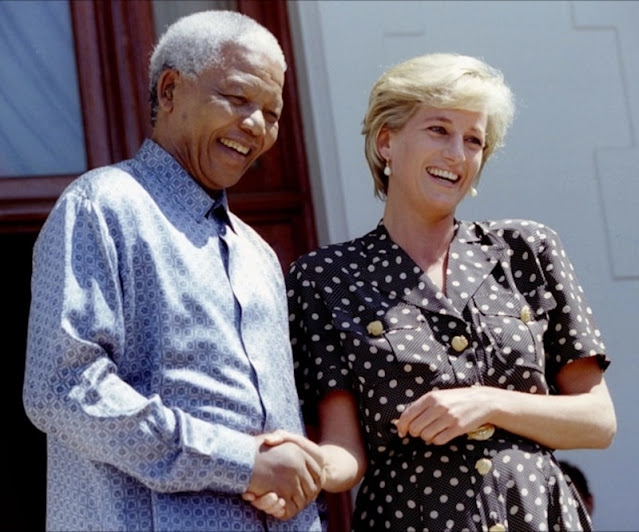


The ANC, which became a banned organisation while Mandela was behind bars, had always advocated peaceful protest. But after he came out of jail Mandela and other ANC leaders decided to set up a secret military group called Umkhonto we Sizwe, or Spear of the Nation.

It was a fateful decision. In 1963, the police found weapons and documents belonging to the secret group, which led to the arrest of Mandela and seven others. They were charged with plotting to overthrow the government and each was sentenced to life imprisonment.

Mandela would spend the next 27 years in jail, initially on Robben Island, seven miles off the coast of Cape Town. After 18 years he was transferred to the first of two inland prisons.


Whilst behind bars he was quoted as saying: “I have cherished the ideal of a democratic and free society in which all persons live together in harmony and with equal opportunities. It is an ideal which I hope to live for and to achieve. But if needs be, it is an ideal for which I am prepared to die.”

Over the years he became one of the world’s most famous prisoners and there were international campaigns to ‘Free Nelson Mandela’. At the same time South Africa came under increasing pressure to abolish the apartheid system and by the mid-1980s it found itself among the world’s pariah states, the subject of economic, sporting and cultural boycotts that affected almost every aspect of life.

It all came to a head in 1989 when President (Pieter Willem) “P.W.” Botha suffered a stroke. The reforming (Frederik Willem) “F.W.” de Klerk, who had held secret talks with Mandela in his cell, took his place – first as party leader, and later as President.

Knowing that the apartheid system was leading to both economic and political bankruptcy, de Klerk was bent on reform. As President, he released all important political prisoners in 1990, including Mandela, and lifted the ban on the ANC. His government then began systematically to dismantle apartheid.

Mandela became President of the ANC in 1991 and worked with de Klerk in bringing an end to apartheid while introducing equal rights for all. They shared the Nobel Peace Prize in 1993 “for their work for the peaceful termination of the apartheid regime, and for laying the foundations for a new democratic South Africa."

The country’s first all-race elections, held in April 1994, saw the ANC win a majority of seats in the new National Assembly. Mandela became South Africa’s first black President with de Klerk as his deputy in a government of national unity.

An iconic figure around the world symbolising peace, equality and determination, Mandela retired from politics in 1999 and set out to live a quiet life with his third wife, Graça. He said: “I have retired, but if there's anything that would kill me it is to wake up in the morning not knowing what to do.”

A lung infection brought his days to an end and he died in December 2013 at the age of 95. The world mourned his loss.
Clancy's comment: What an interesting life. 

I'm ...


23 April 2022 - GANVIE LAKE VILLAGE


GANVIE LAKE 

VILLAGE 


G'day folks,

Welcome to Venice on stilts.

In colonial Brazil, runaway slaves and free natives formed communities deep within the Amazon as a means of escaping the brutality of Portuguese slavery. A combination of dense vegetation, waterways, and perilous wildlife and disease separated these societies from the slave traders who pursued them.

A small group of people outside of what is now Cotonou, Benin, took advantage of a different set of circumstances to evade capture by the Portuguese. At the time, the powerful West-African Fon tribe was hunting and selling other native tribesman to the Portuguese. While there were few physical impediments protecting the ancestors of today’s Ganvie village from outside attack, Fon religious practice forbade their raiders from advancing on any peoples dwelling on water, laying the groundwork for the Ganvie Lake Village.


Ganvie is a village of roughly 20,000 people that stands on stilts in the middle of Lake Nokoue. The founders of the village fled there to avoid Fon warriors, and in the roughly 500 years that have passed since, Ganvie has developed an intricate and prosperous culture within the constraints of life on the lake.

A school is the only one of Ganvie’s 3,000 buildings that exists on land, although a cemetery mound is currently under construction. The villagers of Ganvie travel almost exclusively by boat, and the few domesticated land-animals they maintain live on plots of grass that spring up from the water. Without a good supply of domesticated animals, Ganvie relies on a complicated network of underwater fencing to corral and farm various fish populations.

The village sits several miles from the nearest shoreline and is about a 4 hour journey from the capital. Ganvie is Africa’s largest lake village.

Clancy's comment: Where there is a will, there is a way. 

I'm ...