15 February 2022 - FIRST PASSENGER TRAIN REACHES 15 MPH


FIRST PASSENGER TRAIN

 REACHES 15 MPH


G'day folks,

 For the first time in history a steam locomotive carried passengers on a public railway in 1825. The engine was called Locomotion No. 1 and in control was its designer, the engineer George Stephenson.

It belonged to the Stockton and Darlington Railway, which operated across the North East of England. Apart from 36 wagons filled with sacks of coal and flour, the train included a purpose-built passenger coach called The Experiment. Bone-shaking and springless, the carriage resembled a shed on wheels and was occupied by various dignitaries.

The rest of the passengers stood in open coal wagons, though a few had the "luxury" of temporary wooden benches.

The directors had allowed room for 300 passengers, but the train left carrying between 450 and 600 people, some travelling on top of wagons full of coal.

As the train set off, watched by hundreds of curious onlookers, it was led by a man on horseback with a flag and managed to cover eight and a half miles (14km) in two hours at an average speed of 8mph (13km/h).

The historic journey came about after a meeting between Stephenson, who had built steam engines to work in local collieries, and Edward Pease, the son of a wool merchant.

Pease rode round the country buying fleeces from farmers and in the course of his travels became convinced of the need for a railroad to carry coal from the collieries to an East Coast port. In 1821, with a group of businessmen, he formed the Stockton & Darlington Railway company.

Then he came up with a plan for an eight-mile (12.9km) line to exploit a rich vein of coal. The coal wagons would be pulled by horses.


When he heard of the scheme, Stephenson contacted Pease and told him that he should consider building a locomotive railway and that he had already built a locomotive that was "worth fifty horses".

Pease saw the engine at work, realised Stephenson was right and offered him the post of chief engineer at the railroad company.

So it was that the historic "passenger train" made its first run. But it was not the only railway "first": it was also the scene of the first recorded accident involving a passenger. When the horseman ahead of the train was out of the way and the train was going down a slope, Stephenson opened the throttle and his train reached the staggering speed of 15mph (24km/h).

This so unnerved one passenger that he fell off and his foot was crushed by the following wagon.

Clancy's comment: Well, there ya go. Now, we have trains doing amazing speeds.

I'm ...


8 February 2022 - PIRATE RADIO AND THE BBC


PIRATE RADIO 

AND THE BBC


G'day folks,

Former pirate radio DJ Tony Blackburn presented the BBC’s new Radio 1 station in 1967. The first disc he played was Flowers In The Rain by Sixties’ rock band The Move.

The rise of rock ’n’ roll music and bands such as The Beatles and the Rolling Stones in the early Sixties created a huge demand by radio listeners across Britain. It was a demand, however, not met by the then rather stuffy and conservative BBC.

As a result, pirate radio stations flourished, broadcasting on the medium waveband from ships anchored off the coast, the most famous of them being Radio Caroline and Radio London. They were safe from restrictive UK regulations because they were operating from international waters.

Reception was primitive by today’s standards, but pop music fans were grateful for what they could get and by 1967 ten pirate radio stations were broadcasting to an estimated daily audience of 10 to 15 million. The entrepreneurs who had set up the stations were also pulling in an estimated advertising revenue of more than £2 million a year.

In response to this phenomenon, the BBC was forced to do some heart-searching and decided to reorganise its radio channels. Out went its flagship Light Programme, featuring light entertainment, to be replaced by Radio 2. The Home Service, taken up by news, drama and discussion, became Radio 4. Radio 3 was devoted to classical music.


And so, with a fanfare and much eager anticipation, came Radio 1, with an endless stream of pop music, mainly from the charts, introduced by a group of DJs who were to become household names.

Leading them was Tony Blackburn, who cheerily announced: “And good morning everyone! Welcome to the exciting new sound of Radio 1.” And with a clap of thunder, The Move launched into Flowers In The Rain.

Blackburn had been recruited by the BBC after broadcasting on both Radio Caroline and Radio London. He left the BBC in 1984 to work for other broadcasters but was re-hired by the corporation in 2010.

Finally, he was sacked in February 2016 after a row with the management. He continues to present a show on a local commercial radio station.

Clancy's comment: I recall how popular these were when I was a teen.

I'm ...


12 February 2022 - BRITAIN'S FIRST TV ADVERTISEMENT


BRITAIN'S FIRST

 TV ADVERTISEMENT


G'day folks,

 The first ever advertisement on British television appeared in 1955. It went out at 8.12pm during a broadcast from London’s Guildhall of a dinner to celebrate the launch that day of the Independent Television network (ITV). Until then the BBC held an uncontested monopoly on broadcasting.

Under the umbrella of the Independent Television Authority, four major companies – Granada, ABC, ATV and Associated-Rediffusion – set about challenging the BBC’s supremacy. One of their first targets was the “Toddlers’ Truce” – an established arrangement whereby all television broadcasts were banned between 6pm and 7pm so that parents could more easily put their children to bed!

The truce meant that the BBC – funded then, as today, by a television licence fee – could save money by reducing its hours of transmission. The fledgeling independent companies, on the other hand, were hit by the loss of an hour’s advertising revenue each day and they fought for abolition of the policy.

The BBC would have none of it, nor would it agree to reduce the truce to 30 minutes. In the end a senior politician settled the dispute. The now defunct ministerial post of Postmaster General was held at the time by Charles Hill whose responsibilities included broadcasting.

He said of the “Toddlers’ Truce”: “This restriction seemed to me absurd and I said so. It was the responsibility of parents, not the state, to put their children to bed at the right time. I invited the BBC and the ITA to agree to its abolition.”

When no agreement was reached, Hill took the issue to Parliament and MPs voted for abolition in October 1956. The two broadcasting sides then squabbled over a date, leaving Hill to pick Saturday February 16, 1957.

That first TV ad was for Gibbs SR toothpaste – a product described as “tingling fresh”. To reinforce the message, the ad showed a tube of the toothpaste enclosed in a block of ice in a shimmering stream. TV presenter Alex Macintosh announced: "The tingling fresh toothpaste that does your gums good too. It's tingling fresh. It's fresh as ice. It's Gibbs SR toothpaste."


It was not only the first TV ad, it was also the first ad to use trickery. Brian Palmer, then a 26-year-old advertising executive who wrote and produced it, admitted years later that although a block of ice was used in the long shots, the “ice” was in fact plastic for closer work.

“The lights they used in those days were very hot indeed, and ice would have melted very quickly, so we used a plastic block for the close-ups,” he said.

The ‘SR’ in the name of the toothpaste referred to sodium ricinoleate, its active ingredient, which is the sodium salt of ricinoleic acid, the principal fatty acid derived from castor oil. Though the name was changed in the 1990s to Mentadent SR, the product continued to be marketed worldwide by its owners, Unilever, until 2018 when it was discontinued.

The arrival of TV advertising in 1955 led to protests by church leaders, teachers, academics and politicians, some of them condemning it as “crass and vulgar.”

Labour MP John Wilmot went further. He declared in Parliament that "the nightly poison of advertising which boosts the sale of goods to the working class is against the national interest".

Clancy's comment: Mm ... and haven't we come a long way since then?

I'm ...


11 February 2022 - AND GOD CREATED BRIGITTE BARDOT


AND GOD CREATED 

BRIGITTE BARDOT


G'day folks,

Brigitte Bardot, one of the leading sex symbols of the 20th Century, was born in Paris in 1934, to wealthy bourgeois parents. Originally intending to become a ballerina, Bardot's life began to change when she modelled in a French fashion show in 1949 and later in the same year for a fashion magazine. 

This led in 1950, when she was just 15, to her appearance on the cover of Elle – France's leading women's magazine – drawing her to the attention of a young film director, Roger Vadim.

He not only introduced her to the world of movies, but guided her career and carefully developed her public and screen image as an erotic, sensuous and amoral child of nature.

After a few undistinguished movies, she took the world by storm in 1956 when Vadim directed her in the sensational film, Et Dieu Créa La Femme (And God Created Woman), having told her to dye her naturally dark hair and become an alluring blonde.

Filmed at St Tropez on the French Riviera, where Bardot has lived ever since, it tells the story of an immoral teenager's escapades in a respectable small town. The film was a global triumph not so much for its plot, but for Bardot's screen magnetism. It turned her into an international star.

Breaking taboos of the time against nudity, the film set box office records in Europe, the United States and other parts of the world.

Vadim married Bardot in 1952 when she was 18 – a marriage that would last less than five years, though they would remain close. The stated reason for the divorce was Bardot's alleged affairs with two other men.

She retired in 1973 at the age of 38 having appeared in 47 films, performed in several musical shows and recorded over 60 songs. Her legion of fans included John Lennon and Paul McCartney, but Bardot was never impressed with her own abilities. She said in her autobiography: "I started out as a lousy actress and have remained one."

Nevertheless, Time magazine described her as "the princess of pout, the countess of come hither. Brigitte Bardot exuded a carefree, naive sexuality that brought a whole new audience to films."

After her retirement from the entertainment business Bardot began devoting her life to animal rights and in 1986 established the Brigitte Bardot Foundation for the Welfare and Protection of Animals. She raised millions to fund the foundation by auctioning off jewellery and personal belongings.

"I gave my beauty and my youth to men. I am going to give my wisdom and experience to animals," she said, adding: "Animals have never betrayed me. They are an easy prey, as I have been throughout my career. So we feel the same. I love them."


Her fourth husband, Bernard d’Ormale is a former adviser to the National Front, a party with strong anti-immigration and anti-Muslim views. Bardot supported the National Front candidate in the 2012 elections and has been fined five times for remarks considered to incite racial hatred. In her 2003 book, A Scream in The Silence, she warned against the Islamisation of France and the dangers from Muslim immigration.

Looking back on her life in which she attempted suicide on more than one occasion, Bardot said: "I have been very happy, very rich, very beautiful, much adulated, very famous – and very unhappy."

And to criticism of her appearance in some parts of the media: "What could be more beautiful than a dear old lady growing wise with age? Every age can be enchanting, provided you live within it."

Clancy's comment: God must have been in a good mood when he created her. Sadly, her sadness makes you wonder about beauty and fame.

I'm ...


5 February 2022 - MADAME TUSSAUD'S BLOODY BACKGROUND


MADAME TUSSAUD'S

 BLOODY BACKGROUND


G'day folks,

Anna Maria "Marie" Tussaud, the woman behind one of London’s most famous tourist attractions, died in 1850 at the age of 89. She had spent a lifetime creating lifelike waxworks of the famous and the infamous from murderers to monarchs; from pop stars to politicians; from the beautiful to the beastly.

The seeds of her unlikely destiny were sewn two months before she was born at Strasbourg in 1761 when her father, a German soldier, was killed in battle. His death forced his young widow to find a job and she became housekeeper to a doctor named Philippe Curtius in Berne, Switzerland.

The doctor had a passion for wax modelling and owned a collection of heads and busts. It was a pastime that enthralled the young Marie and she became an enthusiastic pupil of the art.

When Curtius landed a fashionable position in Paris he took with him his housekeeper and his young apprentice, then six years old.

As she grew older Marie was able to move among the members of high society who had taken Curtius under their wing. She met King Louis XVI and in the 1780s was employed as an art teacher to his sister, Madame Elizabeth.

But her connection with the royal circle nearly cost her life. After the French Revolution broke out she was perceived as a royal sympathiser and held in prison for three months where her head was shaved while awaiting execution.

She was saved by Jean-Marie Collot d’Herbois, a leading revolutionary who was a friend of Curtius. Even so, to prove her allegiance to the Revolution she was forced to make death masks of guillotined nobles, including the King and Queen.

She was particularly distressed when forced to make a cast of the severed and bloodied head of Princess de Lamballe, a friend of Marie’s, who had been hacked to pieces by the mob. She also modelled the guillotined heads of both Marie Antoinette and Robespierre.

Curtis survived the Reign of Terror but died in 1794 when he left his huge collection of waxworks to Marie.

She took them to England in 1802 and earned a living by displaying them at various centres around the country. Eventually, she set up a permanent exhibition centre – Madame Tussaud’s – in London.

A fire in 1925 claimed many of the exhibits and much of the rest were destroyed by German bombs in 1940. But the casts survived, allowing many of the historical waxworks to be re-created.

The oldest is that of Madame du Barry, made by Curtius in 1765 and there is one of King George III. Some sculptures still exist that were done by Marie Tussaud herself.


As she moved into her eighties, Marie, who created a self-portrait that is on display at the entrance to the museum, liked to sit at a table collecting the entrance money from visitors. There is a painting from 1845 showing her doing just that.

Probably the most controversial waxwork is of Adolf Hitler. In 2008 an angry visitor fought off guards and beheaded a life-sized waxwork of the Nazi dictator only minutes after it went on display at a newly opened branch of Madame Tussauds in Berlin.

In London, the Hitler model became a regular target for hate attacks ranging from spitting, egg-throwing and physical damage. A spokeswoman for Madame Tussauds said no other waxwork had ever attracted the level of hatred and abuse that the Hitler model had endured. In 2016 it was finally removed after a campaign on social media.

Madame Tussauds – there is no longer an apostrophe – has branches around the world and is now owned by the Merlin Entertainments group, which also runs Legoland and other theme parks.


Clancy's comment: I visited her works in London many years ago, and found it stunning. Now, I know more about her personal life.

I'm ...


4 February 2022 - MONTE ALPI'S FISH FOSSIL - ITALY


MONTE ALPI'S

FISH FOSSIL 

- ITALY -


G'day folks,

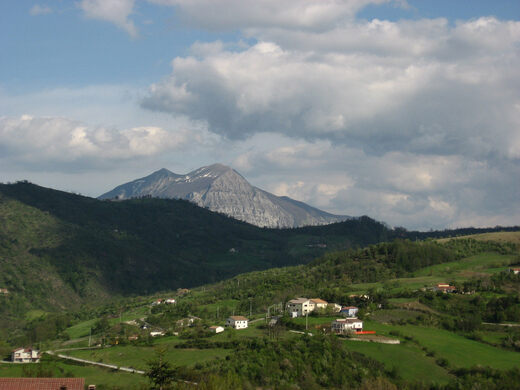
A fossil of a 30 million-year-old fish is unexpectedly hidden thousands of feet above sea level. 

Those who know where to look will spot a secret hiding in plain sight on the southern slopes of Monte Alpi. It’s hard to find, but an eagle eye will notice the fossil of an enormous fish barely visible against a large, gray stone slab.

The fossil is said to be a member of the Istiophoridae fish family, most likely a Blue Marlin. It’s believed to be about 30 million years old. The nearly eight-foot-long, three-foot-high fish was first noticed in 1982.


 Seeing this long-dead fish is an amazing look back in time. It’s fascinating evidence of when this mountain was submerged beneath the sea.

As it’s not easy to see the fossil between the rocks, bring some water and pour it over the stone slab. Darkening the rock this way makes the fish slightly easier to find, though it still requires a bit of imagination (a nearby sign also helps you visualize what you should be looking for).

The whole of Monte Alpi itself is interesting, too. Situated near the small town of Latronico, it’s one of the highest mountains of the Lucanian range of the Apennines and is one of the most interesting and untouched areas of the mountain range.

Clancy's comment: This is a stunning find. 

I'm ...


6 February 2022 - THE CUTE VILLAGE OF MONSANTO - PORTUGAL


 THE CUTE VILLAGE 

OF MONSANTO

 - PORTUGAL -


G'day folks,

Here, houses are tucked between, on, and underneath giant boulders.

In 1938, the village of Monsanto was dubbed the most “Portuguese town in Portugal.” Yet at first glance, Monsanto certainly does not seem representative of the entire country. For one thing, most Portuguese houses are not sandwiched between gigantic boulders.

Defined by its landscape, Monsanto hangs off a mountaintop overlooking the Portuguese countryside, with views for miles.The mountaintop has actually been extremely important strategic position since prehistoric times. It’s crowned by the remains of a Templar castle, which was partially destroyed by an explosion, in the 19th century.

The village has hardly changed in hundreds of years, and enjoys distinction in Portugal as a living museum. Due to this standing, Monsanto cannot be changed and has retained its classic village charm.


Its tiny streets wind at a steep grade past red-roofed cottages tucked against mossy boulders. Some of the boulders are actually fitted with doors, leading to structures carved right into the rocky landscape.

While the mountainous town seems a bit unorthodox, it is actually a unique twist on classic Portuguese architecture.

Walking along the cobbled streets it soon becomes evident that Monsanto is a microcosm of Portugal. The architecture even incorporates the Portuguese Manueline style on a number of buildings and a church. While it certainly represents the classic Portuguese village style, visitors will no doubt be more impressed with the cottages built in boulder chic than medieval Romanesque or Manueline.

Clancy's comment: What a gorgeous place to live.


I'm ...


3 February 2022 - BEER BARON ROW - CHICAGO


BEER BARON ROW 

- CHICAGO -


G'day folks,

These mansions date back to Chicago's days as a brewer's paradise. 

Evidence of time’s passage in Chicago’s Wicker Park can be found in the pockets of stunning late-19th century mansions that survived through the “bad old days.”  

The so-called “Beer Baron Row” of elaborate single-family homes stretches for about two blocks on Hoyne Avenue north from Pierce. Many of these mansions were built by German immigrants who made a fortune in the brewing business, like John Raap,  a beer merchant and wholesale liquor retailer who built a stately red brick home at 1407 North Hoyne Avenue. The size and stature of these homes provide a clue as to how important the craft of brewing was to the area. 


Chicago was incorporated as a town in 1833 and that very same year, the Haas and Sulzer Brewery, the town’s first commercial brewery opened. German immigrants poured into the midwest, bringing along their yeasts, their lagers, and their biergartens. Beer was so culturally significant that it became a flashpoint in one of Chicago’s earliest riots: the 1855 Lager Beer Riot. A new Know Nothing mayor, eager to target immigrants and curtail alcohol consumption, banned beer sales on Sundays and raised the the cost of a liquor license astronomically. German and Irish immigrants responded by storming downtown en masse.

By 1860, Chicago had 32 breweries and changes in process and technology (like pasteurization) allowed beer production to soar. Chicago even had a special school, the Siebel Institute of Technology, where different beer-making techniques were tried and tested. However, as time went on, the Great Fire in 1871 and Prohibition slowed production down enough that what was left was unable to compete with national beer brands when Prohibition was finally reversed, and the industry fell into decline. 

Clancy's comment: Ah ... the good old days.

I'm ...